
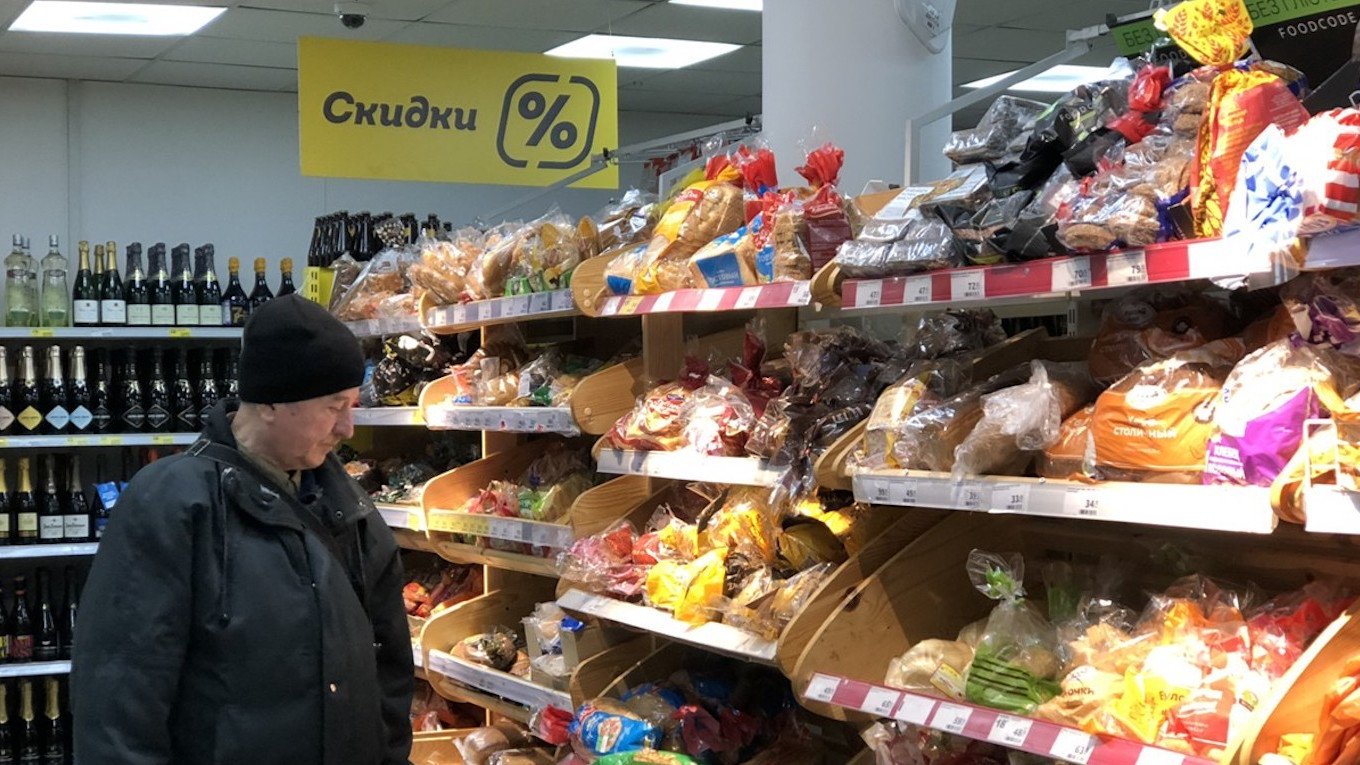
Russians are complaining on social media that the weight of food products in stores has decreased: chocolate bars no longer weigh 100 grams, but only 73, and milk bottles contain 900 milliliters instead of a liter. Economists say that shrinking packaging is a common practice during periods of high inflation. In the case of Russia, the problem is even more disturbing: the price of products has increased, although the quantity has decreased.
Blogger Nastia Sîsoeva films in the supermarket “Piatioroșka” and lists the products that have “shrunk”, but have become more expensive:
“Who remembers that a chocolate used to weigh 100 grams, forget it — such a thing will no longer exist. Now this ‘leaf of chocolate’ weighs only 75 grams. One kilogram packages of cereals — you can keep them only as a warm memory from the past. The 500-gram bag of pasta has dropped to 450, then to 400.”
She also notes that eggs are sold in boxes of 6, not 10, kefir has only 430 ml instead of 500, and the milk bottle has been reduced from 1 liter to 900 ml.
Another blogger picks up a chocolate bar from the shelf:
“It costs 200 rubles and seems very light… 73 grams! Since when do chocolates weigh 73 grams? They were 100! ‘Alpen Gold’ now weighs 80 grams.”
The publication SOTAvision compared the price and weight of products between 2021 and 2025:
-
The “succulent” sausages have shrunk by 9%, but have become 77% more expensive.
-
Lay’s chips — 22% lighter, but 82% more expensive.
-
The “Brest-Litovsk” sour cream lost 15 grams, but the price increased by 22%.
-
The “Eko-Milk” butter lost 11% of its weight, but doubled in price. In some stores, this butter is protected from theft with special hard-to-open plastic packaging.
Buyers say that, due to price increases, they have to save not only on food, but also on medicines.
Manufacturers call these changes “packaging adjustments”. Buyers — “hidden price increases”. Economists use a technical term: shrinkflation, that is, delivering a smaller quantity of a product, at the same price or even higher. And consumers often discover the difference only after they pay: when they compare the amount on the receipt with the volume of food received.
Source: https://www.currenttime.tv