
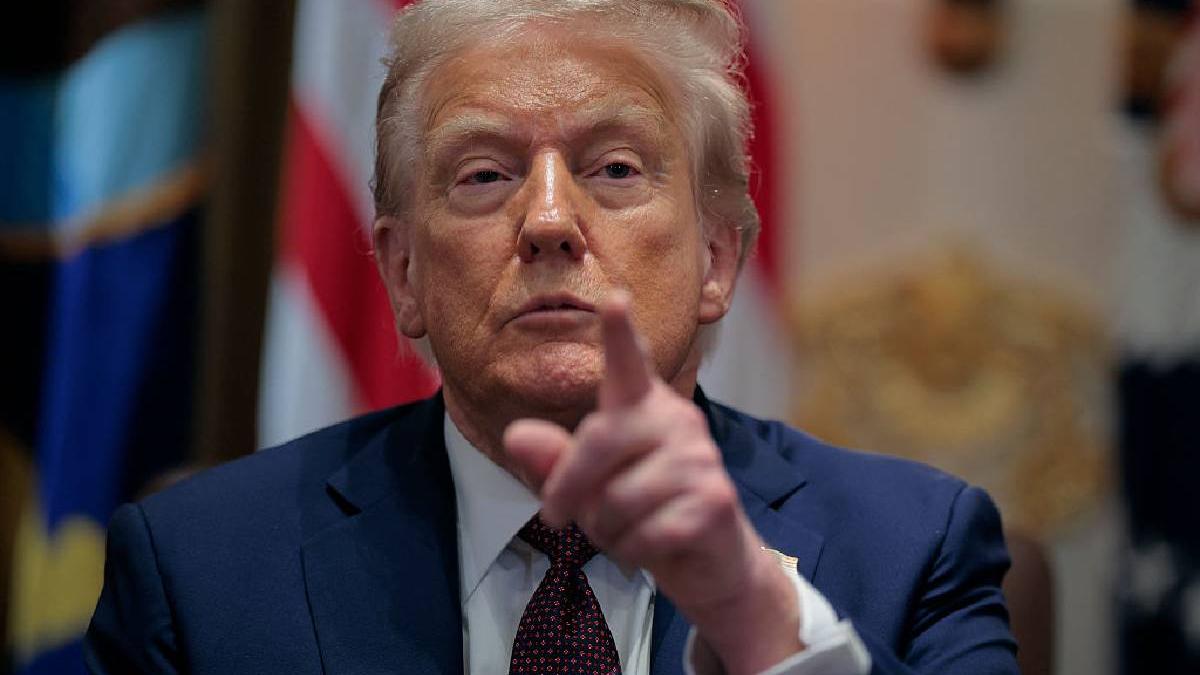
From Greenland and trade tariffs to Iran, NATO or migration, Donald Trump does what he knows best: turning foreign policy into a spectacle. Not because he’s interested in details or solutions, but because he perfectly understands the golden rule of modern politics – attention means power, writes Catherine De Vries in The Guardian.
When the American president assured that he would not use force to “acquire” Greenland, after days of veiled threats, he only demonstrated once again that his agenda is not solving problems, but capturing attention. The fact that the idea itself was unlikely matters less. What’s important is that Europe, once again, reacted.
Trump does not react to events. He provokes them. In a world suffocated by information, where data and analyses are not lacking, the only truly rare resource is attention. Whoever controls it, controls the debate, argues De Vries.
His former strategist, Steve Bannon, described this tactic with the famous phrase “flood the zone with shit” – flooding the public space with scandals, so that opponents, the press and public opinion no longer know what is really important. The same logic, applied for years in American domestic politics, is now exported to foreign policy.
Greenland, an example of “geopolitical clickbait”
The threats related to Greenland were not simple impulsive outbursts, but an example of “geopolitical clickbait”. A subject dramatic enough for headlines, vague enough for speculation, and distant enough for few voters to have real knowledge about it. Perfect for dominating the news cycle and pushing European governments into a defensive, reactive mode.
The episode generated real anxiety. Greenland touches on sensitive issues: NATO solidarity, Arctic security, the vulnerability of a semi-autonomous territory. Denmark has already strengthened its military presence, with discreet support from other European countries.
But the central issue was not whether Trump would act, but the fact that Europe was forced to respond. While European capitals coordinate positions and issue statements, Trump moves on to the next challenge – tariffs, Iran, Venezuela, NATO – leaving behind diplomatic confusion and lack of direction.
European leaders become extras in a play whose script is written in Washington
Behind the spectacle, however, there is a coherent agenda. The security strategy of a second Trump term clearly shows that Europe is no longer seen as a partner in an international order based on rules, but as a declining liberal bloc that hinders the rise of nationalist forces. American support is no longer presented as a common interest, but as a transaction: favors for ideological allies, pressures for the others.
Details, HERE