
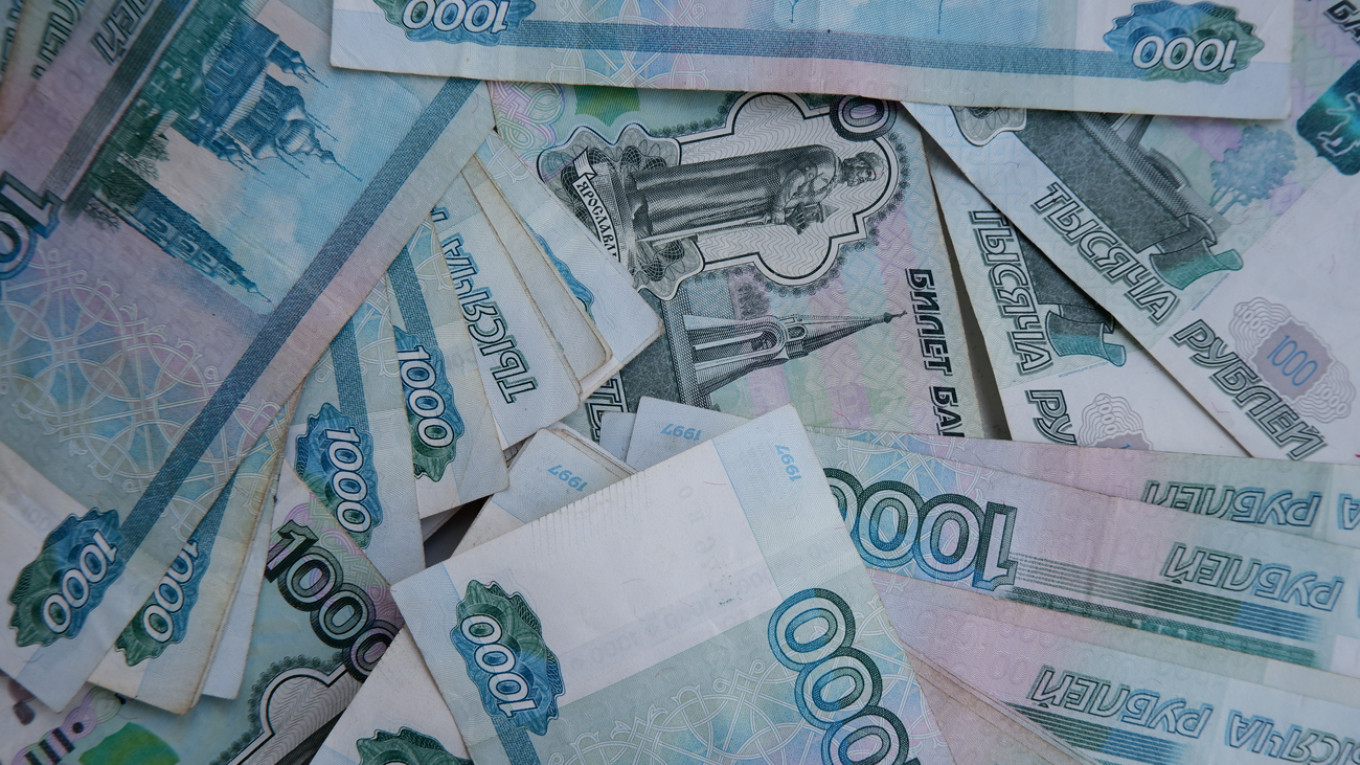
The ruble has begun its fifth consecutive week of depreciation, despite the rapid rise in Russian oil prices. In Russia’s ports, oil is selling for over 70 dollars per barrel, while in India’s ports it reaches almost 100 dollars per barrel.
On the Moscow Exchange, the yuan’s exchange rate against the ruble reached on Monday the highest level since the beginning of September last year — 11.84 rubles for one yuan. On the over-the-counter market, the dollar climbed to 81.51 rubles, the highest level since December, and the euro surpassed for the first time since January the threshold of 93 rubles.
Since the beginning of March, the ruble has lost 6% against the Chinese yuan, 5% against the US dollar and 2.5% against the euro, recording four consecutive weeks of decline — a situation that has not been observed on the market in the last six months.
According to analyst Vladimir Cernov from the company Freedom Finance, the ruble is depreciating due to the reduction of state support for the exchange rate.
On March 4, the Russian Ministry of Finance suspended currency sales from the Russian National Wealth Fund, carried out on the basis of the so-called “budget rule”, in order to conserve the fund’s reserves. Since the beginning of the war, the authorities have already withdrawn about two thirds of its liquid assets to cover the budget deficit.