
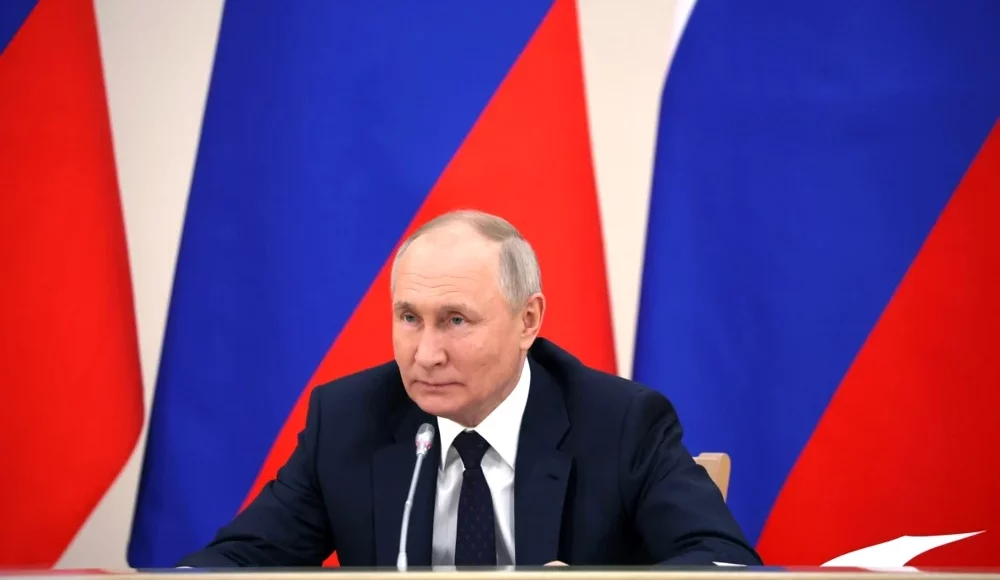
Moscow is unlikely to escalate the conflict with the West in the near future, even if the latter makes decisions in favor of Ukraine, such as the recent permission to strike deep into Russian territory with long-range weapons, the Robert Lansing Institute believes in an analysis of the current situation in Ukraine.
Ukraine’s operation on Russian territory (in the Kursk region) has shown that the Kremlin’s rhetoric about the so-called “red lines” is a psychological operation designed to put pressure on US and EU leaders. This suggests that the West is mistaken in believing that some of its decisions will lead to an escalation of the conflict and its spread to NATO member countries.
“With conspiracy theories dominating the Kremlin’s thinking, Moscow is convinced that Ukraine’s defense operations on Russian territory are part of a Western plot,” writes IRL.
However, the Ukrainian operation in the Kursk region, launched in August 2024, serves several strategic purposes. First, it disrupts Russian plans for offensive operations from Kursk in northern Ukraine, especially in the Sumy region, and diverts Russian forces from key conflict areas in eastern Ukraine.
Ukraine’s Supreme Commander-in-Chief Oleksandr Syrskii has stated that the operation also aims to create a “security zone” and take Russian prisoners of war, ultimately weakening Russia’s morale and defensive position in other regions.
Redistribution of military resources
Ukrainian forces have established control over certain areas of Kursk, which has forced Russia to redistribute significant military resources – some 60,000 troops – from the Ukrainian front line to defend this region.
This shift is particularly significant, as it has reduced Russian artillery dominance in places like Pokrovsk, where the Ukrainian-Russian ratio of artillery fire has fallen from 12:1 to 3:1. Despite this, the operation remains extremely risky for both sides, as Russia is expected to mount counteroffensives to regain lost ground.
In a broader context, Ukraine’s breakthrough in Kursk has not drastically changed the military situation in eastern and southern Ukraine, but it has given Kiev increased leverage for potential future diplomatic negotiations.
The operation signals that Ukraine can strike deep inside Russian territory, strengthening its position in potential talks to end the war.
“Medvedev’s statements reflect his psychological state, exacerbated by alcohol abuse”
“We are convinced that the operation in the Kursk region has exposed the limits of Russian resources, as Moscow has been forced to redeploy units stationed in Africa. This indicates a lack of forces and means in the event of an invasion of Russia from its western and eastern borders. Despite the Kremlin’s threats to reconsider its nuclear doctrine and to conduct exercises simulating the use of tactical nuclear weapons, Moscow has not seriously considered such a scenario in response to the shift of hostilities to the Kursk region,” the analysis says.
“Former President Dmitry Medvedev’s statements reflect his psychological state, exacerbated by alcohol abuse and depression caused by the lack of prospects in Russian politics and the loss of influence in the Kremlin. Thus, we are confident that Russia will not escalate the conflict in response to Western decisions, such as granting Ukraine permission to strike deeper into Russian territory. It is likely that the current situation has crossed a threshold beyond which the Russian leadership is unwilling to further intensify its confrontation with the West. This reluctance is also determined by the sharp decline in Vladimir Putin’s approval rating. The potential expansion and deepening of the conflict is not in the Kremlin’s interest, especially after the escalation of hostilities on Russian territory, as it would lead to a continued decline in the regime’s popularity,” according to the analysis.