


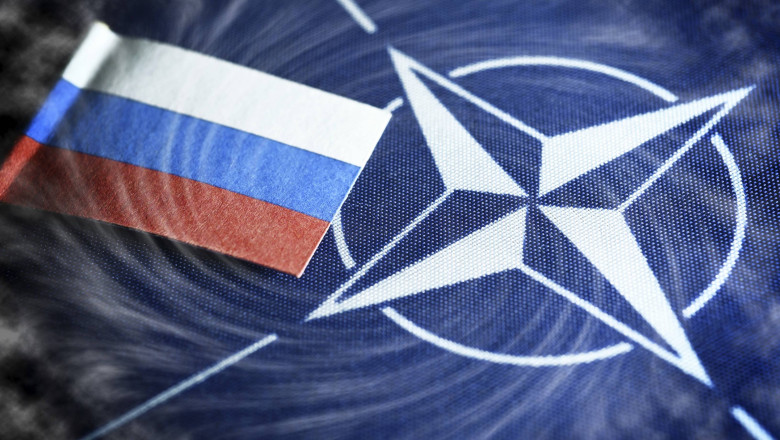
The romantic relationship between a Spanish NATO commander and a Russian-origin citizen he met on Tinder has shaken the North Atlantic Alliance. The military man, who was stationed at the British base in Northwood — the main command center for all the Alliance’s naval operations — was investigated by the military organization’s security services and by the authorities in Madrid, for fear that he could constitute a breach for Russian espionage.
The high-ranking naval commander was suspended last summer, according to an investigation by The Telegraph newspaper, which had access to the judicial documents of the case. The case of the Spanish commander has brought back to the forefront the security concerns of the intelligence services from allied countries and community institutions regarding the risk of espionage in dating applications.
In April 2023, the German counterintelligence services warned that Russian spies were using Tinder to connect with German politicians and military personnel, with the aim of obtaining information related to the war in Ukraine. The head of the Australian national security agency had warned about the vulnerabilities of dating apps as early as 2022.
Applications can be used to locate soldiers and military personnel on the front lines, to gather information and make contact with targets, as well as for recruitment, according to details from a report by EuvsDisinfo, cited by El Pais.
The Spanish soldier, now suspended, met his partner, J. W., through the dating app Tinder at the end of 2024. She, aged 49, of Russian origin and with dual citizenship – Polish and British – had just separated from her husband. The Spaniard had also separated from his wife, with whom he has two children. Shortly after they met, they moved in together, according to the British newspaper, and he began to take his new partner to some events.
This triggered alarm signals within the military organization. The Northwood base (northwest of London) is NATO’s main nerve center tasked with monitoring, tracking, and counteracting Russian naval activity in Europe’s strategic waters. Among other things, it oversees critical submarine infrastructure and the so-called shadow fleet or phantom fleet of the Kremlin, through which Moscow evades sanctions to transport its hydrocarbons.
Read more HERE