





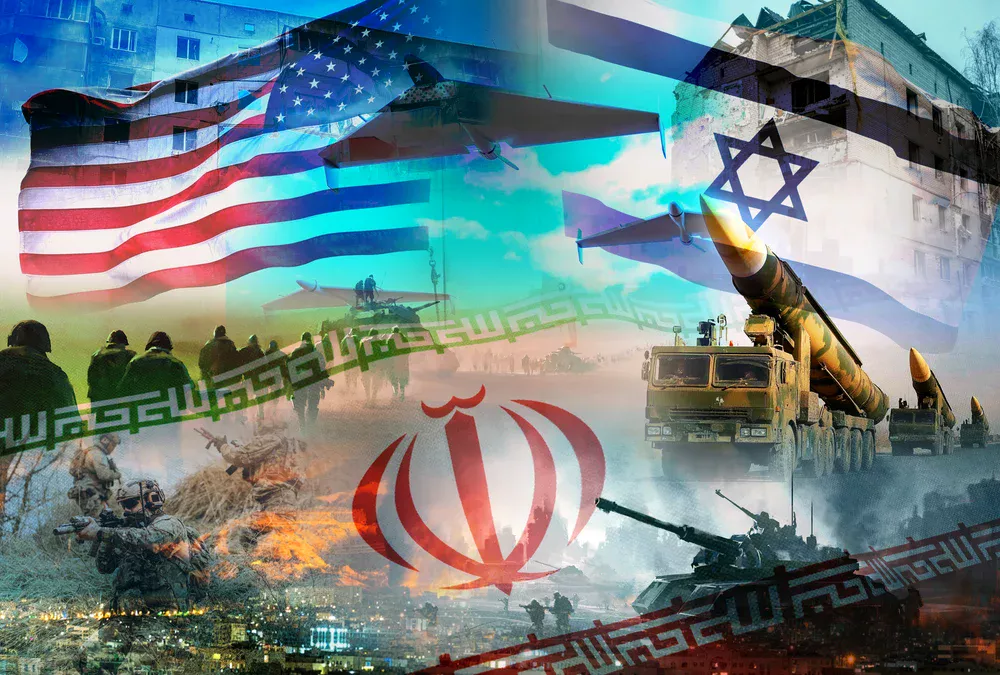
An agreement between the USA and Iran could halt hostilities, but the balance of the past three months of war indicates a profound shift in the power equation in the Middle East.
The Middle East is going through one of the most severe crises in recent decades, but the regional balance of power remains largely unchanged. While Tehran is consolidating its political position, the confidence of the Gulf states in the security guarantees offered by the United States has been deeply shaken, according to diplomats, analysts, and some governmental sources from the region, quoted by Reuters.
Iran continues to represent a significant military force, capable of threatening neighboring Arab states and global energy transport routes. On the other hand, the evolution of events has once again highlighted the limits of American military action in the face of a resilient adversary.
For Washington, the ceasefire agreement represents a way to end a costly confrontation that has not achieved its major strategic objectives, such as the capitulation of Tehran or the dismantling of its nuclear and ballistic programs. For Iran, the outcome represents a crucial success: the survival of the regime. Despite the intense attacks launched by the US and Israel, the political structure of the Islamic Republic remains intact, maintaining its negotiation levers.
The Impact on the Gulf Monarchies
The Memorandum of Understanding (MoU) provides for a cessation of hostilities for a period of 60 days, during which the parties will negotiate a permanent agreement, including the management of Iran’s enriched uranium stocks.
The greatest shockwaves, however, are felt in the Sunni Arab states of the Gulf. The stability that has underpinned decades of economic growth in the region has been directly affected. From this perspective, the Gulf monarchies emerge as the main losers of the conflict: spectators to decisions that have reshaped their security environment and now forced to manage the economic consequences.
A high-ranking government source from a Gulf state described the situation as being decidedly inferior to that before the outbreak of war, even if any de-escalation is viewed positively. This crisis accelerates a strategic reorientation, prompting capitals in the region to seek more of a coexistence formula with Tehran rather than open confrontation.
Read more HERE


