
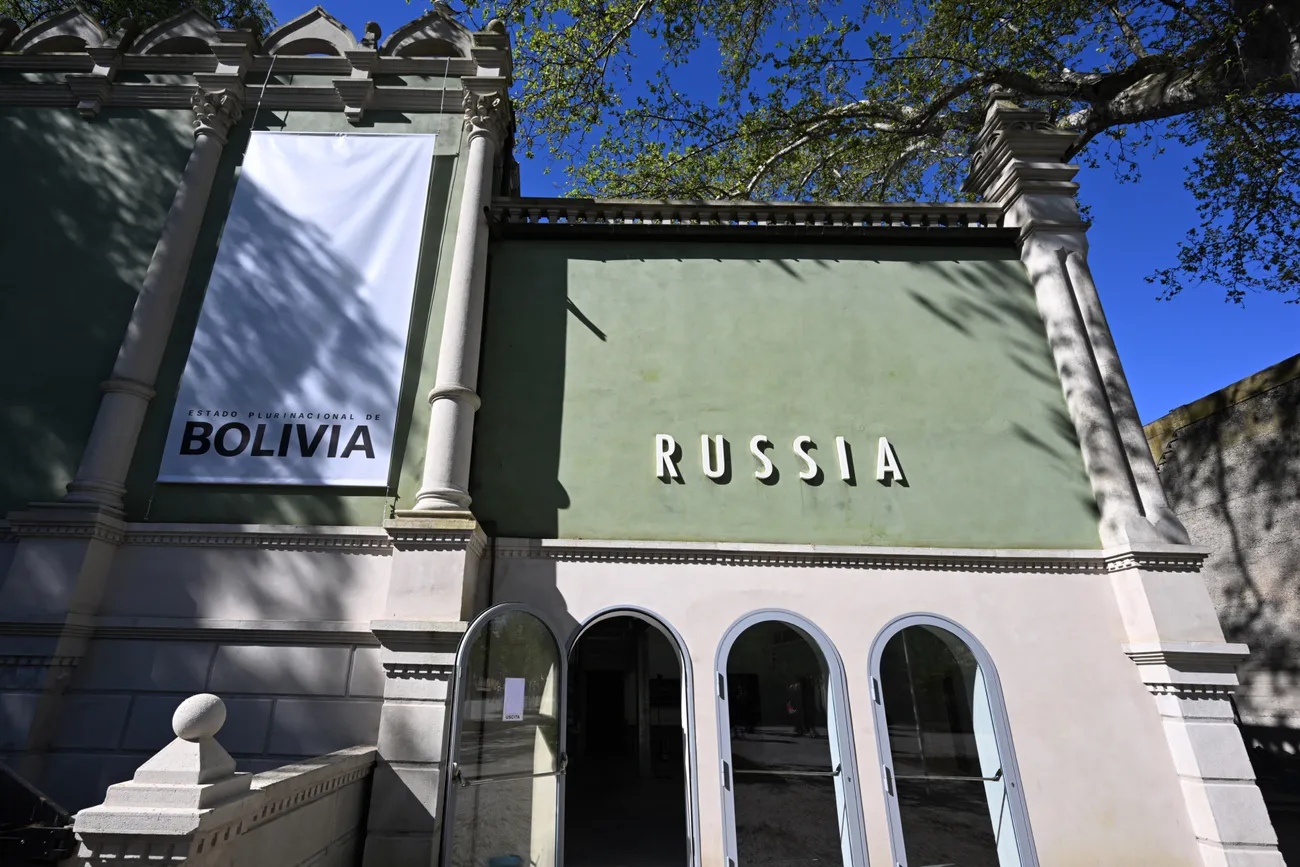
Russia’s return to the Venice Biennale, for the first time since the large-scale invasion in Ukraine, is causing strong controversies both in the European political environment and in the international artistic community.
The European Commission has “firmly” condemned this decision, warning that art should not be used as a platform for propaganda at a time when Russia continues its war against Ukraine. European officials have conveyed that Moscow’s participation is incompatible with the European Union’s collective response to Russian aggression and suggested that even the suspension of European funding granted to the Biennale Foundation could be considered.
However, the exhibition organizers emphasize that the national pavilions are not directly controlled by the Biennale institution, and the participating states decide for themselves what projects they present. This has allowed Russia to return with its own artistic project, even though its official participation had been de facto suspended after the invasion in 2022.
The return was announced by the special representative of the Russian president for international cultural cooperation, Mikhail Shvydkoi, who claims that Russia “never left the Biennale”. In reality, the Russian pavilion has not been used for artistic exhibitions since 2021.
In 2022, the artists who were to represent Russia – among them Kirill Savcenkov – refused to participate in protest against the invasion of Ukraine. The pavilion remained closed, and in the following years, Russia rented it to other international projects.
For the 2026 edition, Russia is preparing an unusual project: a series of sound performances gathered under the title “The Tree is Rooted in the Sky”. The project is coordinated by the Russian Academy of Music Gnessin and involves about 38 musicians, poets, and philosophers from different countries, including artists from Africa and Latin America.
The unusual format – without a clear curator and with dozens of participants – has sparked skepticism in the artistic environment. Some critics believe that the project’s structure deliberately avoids any direct political message, in a context where any explicit position could generate harsh reactions from Russian authorities.
At the same time, the Russian opposition and part of the artistic community are preparing public reactions in Venice. Activist and artist Nadezhda Tolokonnikova, a member of the collective Pussy Riot, has already announced an alternative artistic project during the biennale. According to her, the action will express solidarity with Ukraine, with the victims of the war, and with political prisoners in Russia.
Context
The controversy surrounding Russia’s participation reveals an older tension in the world of contemporary art: to what extent can major cultural events remain neutral in a geopolitical context dominated by war and sanctions.
On the other hand, for many governments and part of the artistic community, Russia’s participation in the midst of war is perceived as an attempt to return to the international cultural space and to “normalize” Moscow’s image.
In this sense, the dispute is not only artistic but also geopolitical: art becomes an instrument of influence and symbolic competition between states.
The 2026 edition of the Venice Biennale will take place between May 9 and November 22, and political and artistic reactions suggest that the Russian pavilion could become one of the most controversial points of the exhibition.