
Close Menu

    Subscribe to Updates

    Get the latest creative news from FooBar about art, design and business.

    Marina Ovseanikova, four years after she went live with an anti-war placard: If you stay in Russia, you can’t work for independent media

    24 February 2026

    The cost of Ukraine’s reconstruction, after four years of war: “Three times larger than the GDP”

    24 February 2026

    Four years into the war, Zelenski declares that Putin has not achieved his objectives in Ukraine. EU leaders have arrived in Kiev.

    24 February 2026
    Facebook X (Twitter) Instagram
    Facebook X (Twitter) Instagram
    DISINFO.MD
    • Moldova
    • Foreign Affairs
    • Reviews
    • Analysis
    • Stopfake
    • English
      • Romanian
    DISINFO.MD
    Prima pagină » How European countries spend their Defense budgets in the face of the Russian threat. Divergent acquisition strategies
    Foreign Affairs

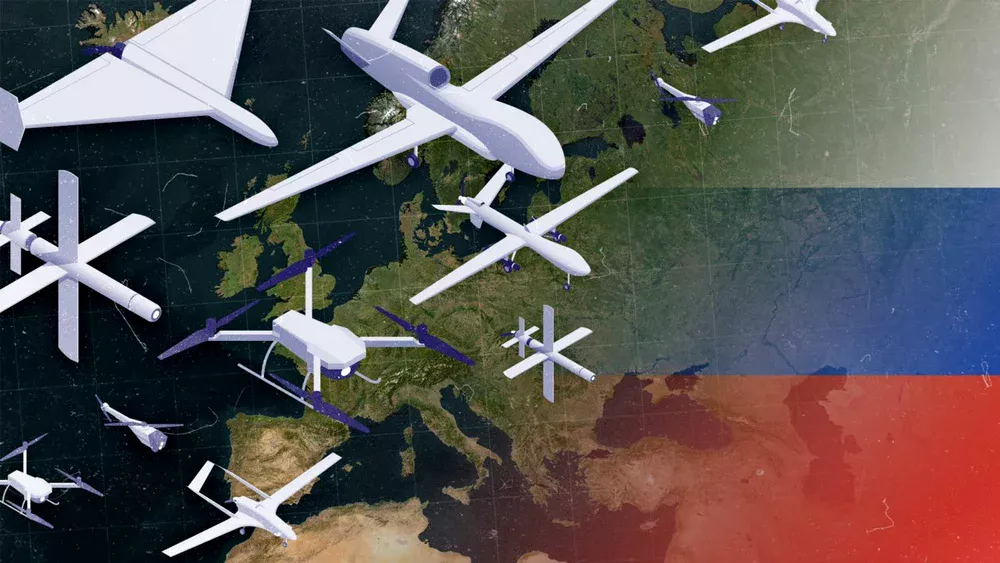
    How European countries spend their Defense budgets in the face of the Russian threat. Divergent acquisition strategies

    24 February 2026
    Facebook Twitter LinkedIn Email VKontakte Telegram WhatsApp Copy Link
    Share
    Facebook Twitter LinkedIn Email Copy Link

    As defense budgets increase across the continent, differences between national procurement strategies and blockages of emblematic projects raise questions about Europe’s ability to transform declared political unity into credible deterrence.

    In a context where Washington signals a reduced willingness to maintain the dominant role in the transatlantic security architecture, and Russia extends its military production beyond the needs of the war in Ukraine, European governments have increased defense spending. However, instead of converging around common planning and procurement, the member states of the European Union largely follow national approaches.

    Euractiv warns that this fragmentation deepens the difference between political rhetoric about unity and operational reality on the ground.

    Expenditures increase, coordination lags

    The President of Ukraine, Volodimir Zelenski, has repeatedly urged Europe to strengthen its defense posture. At Davos, he stated that “Europe must know how to defend itself,” while also criticizing European governments for not prioritizing security investments earlier.

    However, the problem is not just about the volume of spending, but also about their coherence.

    The administration of US President Donald Trump has encouraged European allies to “take the lead” in managing regional threats. Rearmament has thus become a test of the credibility of collective defense within NATO. However, planning remains uneven, and procurement strategies vary considerably between states.

    France, Germany, and Italy – which host some of the largest European arms manufacturers – have preferred bilateral agreements that keep industrial control at the national level, to the detriment of deep coordination at the European level. According to the analysis, this approach undermines the implementation of common initiatives such as the “Roadmap for European Defense”.

    Details, HERE

    #budget #challenges #EU state #expenses #Rusia defense
    Share. Facebook Twitter LinkedIn Email VKontakte Telegram Copy Link WhatsApp

    Related Posts

    Marina Ovseanikova, four years after she went live with an anti-war placard: If you stay in Russia, you can’t work for independent media

    24 February 2026

    The cost of Ukraine’s reconstruction, after four years of war: “Three times larger than the GDP”

    24 February 2026

    Four years into the war, Zelenski declares that Putin has not achieved his objectives in Ukraine. EU leaders have arrived in Kiev.

    24 February 2026

    The EU accuses Hungary of lack of loyalty following the vote on the 90 billion euro loan for Ukraine

    24 February 2026

    Marina Ovseanikova, four years after she went live with an anti-war placard: If you stay in Russia, you can’t work for independent media

    24 February 2026

    The cost of Ukraine’s reconstruction, after four years of war: “Three times larger than the GDP”

    24 February 2026

    Four years into the war, Zelenski declares that Putin has not achieved his objectives in Ukraine. EU leaders have arrived in Kiev.

    24 February 2026

    The EU accuses Hungary of lack of loyalty following the vote on the 90 billion euro loan for Ukraine

    24 February 2026

    After four years of war in Ukraine, ordinary Russians feel its effects more than ever: “I’m not very sure what we’re fighting for”

    24 February 2026
    DISINFO.MD
    © 2026 Disinfo. All Rights Reserved. Dezvoltat de Disinfo.

    Type above and press Enter to search. Press Esc to cancel.