



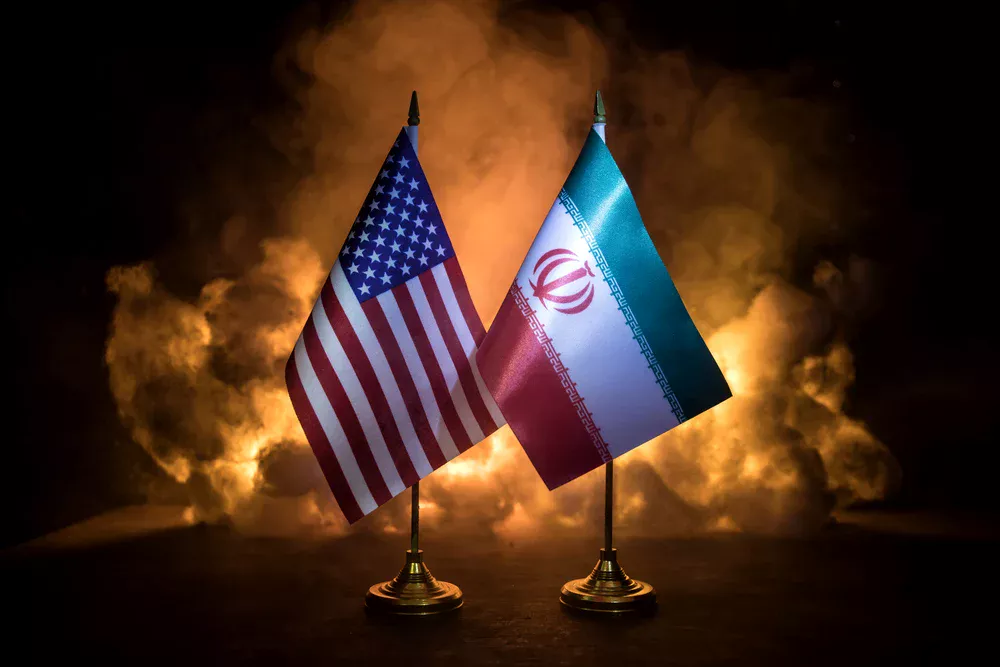
On Monday, Iran rejected the United States’ proposals regarding the cessation of the Middle East war, labeling them as “unrealistic, illogical, and excessive”. Concurrently, Tehran launched new missiles at Israel, amidst the escalation of the conflict and the rise in oil prices, further fueled by the entrance of the Houthi rebels from Yemen into the battle, reports Reuters.
Iran’s response comes to the warnings of American President Donald Trump, who has asked Iran to reopen the Strait of Hormuz, an essential maritime route for the global transport of oil and liquefied natural gas, threatening with attacks on Iranian energy infrastructure if the blockade is not lifted, according to the same press agency, quoted by News.ro
Tehran: “We are under military aggression”
The spokesperson for the Iranian Foreign Ministry, Esmaeil Baghaei, confirmed that Tehran has received, through intermediaries, messages indicating Washington’s willingness to negotiate. These came after a meeting of foreign ministers from Pakistan, Egypt, Saudi Arabia, and Turkey, held on Sunday in Islamabad.
Nevertheless, Baghaei rejected the American proposals:
“Our position is clear. We are subject to a military aggression. Therefore, all our efforts and forces are focused on our defense.”
A Pakistani security official has stated that, at this moment, the chances of direct US-Iran talks this week are slim, although Islamabad is trying to facilitate the dialogue “as soon as possible”.
Iran is considering withdrawing from the Nuclear Non-Proliferation Treaty
Esmaeil Baghaei has announced that the Iranian Parliament is considering the possibility of withdrawing from the Treaty on the Non-Proliferation of Nuclear Weapons (NPT), a document that allows the development of nuclear energy for civilian purposes, but prohibits the acquisition of atomic weapons.
Trump justified the February 28 attacks on Iran by the need to prevent Tehran from developing nuclear weapons – an accusation consistently rejected by Iranian authorities.
Threats and military mobilization
On Sunday, Trump stated that the US and Iran had “direct and indirect meetings“, but at the same time he sent new American troops to the Middle East. Tehran remains defiant and maintains the blockade of the Strait of Hormuz.
We remind you that, in a post published on Monday, Trump warned:
“If the Strait of Hormuz is not immediately “open for business”, we will end our wonderful “stay” in Iran by blowing up and completely destroying all power plants, oil rigs, and Kharg Island.”
According to the Financial Times, Trump suggested in an interview that the USA could even occupy Kharg Island, Iran’s main oil terminal, although such an operation would require the deployment of ground troops.
Details, HERE