


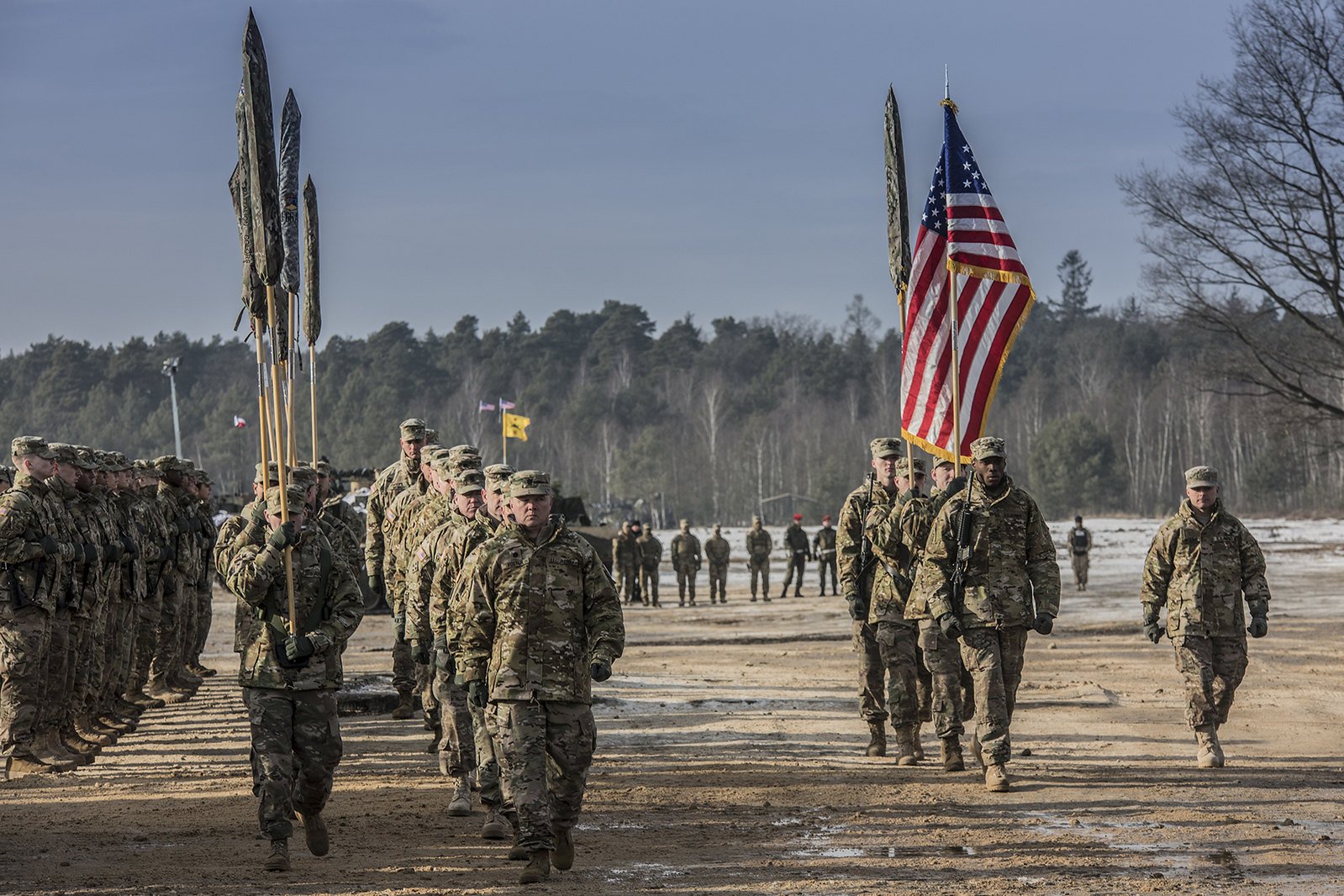
Several hundred American soldiers deployed in Estonia during the past winter were discreetly withdrawn, without any clear sign of when they might return. The revelation was made by the Defense Minister of Tallinn, Hanno Pevkur, ahead of the NATO summit in Ankara.
Since May, Pevkur had assured the local press that “American troops are in Estonia and will remain there,” although he admitted that “nothing can be ruled out”, given the recent uncertainty regarding US policy.
The number of American troops has dropped to less than 100, according to Antena 3. According to Pevkur, high-ranking commanders of the American forces in Europe informed him that another detachment is expected to arrive by the end of the summer, but this deployment could be subject to a reassessment that is still underway.
Similar situations are recorded in Poland and Lithuania. According to defense officials from the Baltic states, Poland, and the USA, the withdrawals from the Baltic countries were a direct consequence of the unexpected decision of the Trump administration last month to cancel the long-planned rotation of about 5000 soldiers in Poland.
The cancellation of the rotation then had a domino effect on the movement of some of these soldiers through the Baltic states, so that approximately 1000 soldiers left Lithuania in June without being replaced, according to available information.
Despite the fact that Donald Trump has had some of the most cutting interventions to date at a major international meeting, NATO officials, including Secretary General Mark Rutte, have presented the summit as a success, citing a series of new defense agreements, increased European spending, and an unwavering commitment to “mutual defense.”
In the meantime, what is actually happening on the ground this summer is that the US has reduced its military presence in some of the most vulnerable areas of Eastern Europe, just as fears are growing that the Kremlin regime – increasingly publicly humiliated by Ukraine’s drone and long-range missile attacks on Russian territory – might be tempted to react aggressively.
An analysis of headlines from the European press conducted by Omniforecaster, a predictive monitoring and analysis company based on artificial intelligence, estimates an 18% probability that by the end of 2026 there will be an armed confrontation with casualties between Russia and NATO member states. It indicates a security context risky enough for governments to pay increased attention to the situation, especially as the US discreetly reduces its military personnel.
The former British minister responsible for the armed forces, Al Carns, stated that the current strategic situation is the riskiest since the Cuban missile crisis of 1962.
However, for now, most analysts and officials believe that Russia is more inclined to continue its “hybrid warfare” campaign, based on disruption and sabotage, rather than resort to direct military action.
The decision-making process in Washington is so concentrated in the hands of Trump and his narrow circle that most foreign officials believe that any similar future decisions could be made practically without any prior warning.
Some Ukrainian commentators have suggested that reducing the American military presence in the Baltic states could be aimed at appeasing Russia. Moreover, some pro-Kremlin voices and, occasionally, even dictator Vladimir Putin have claimed that the withdrawal of American troops or, more broadly, NATO forces from Eastern Europe should be part of any peace agreement regarding Ukraine.
However, there is another possible explanation: the USA might try to ensure that, in case the conflict in Eastern Europe escalates and attacks are launched on NATO territory, they will have fewer troops exposed to danger.