
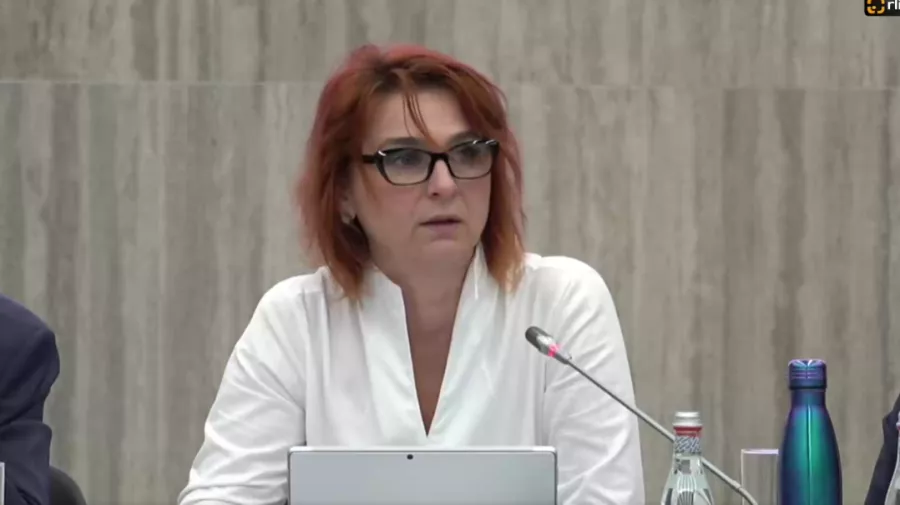
The Republic of Moldova is making a decisive step in strengthening its informational resilience. At the conference “Mapping the FIMI Factors and Stimulants Related to Elections in the Republic of Moldova”, Ana Revenco, the director of the Center for Strategic Communication and Disinformation Combat, presented a detailed plan for creating a proactive national information security architecture, the first of its kind in the region.
“Information manipulation and foreign interference are not only manifested during elections. It is a permanent frontline. We need an architecture that protects democracy every day, not just once every four years”, declared Revenco.
A regional model for responding to informational warfare
In the last two years, the Center led by Revenco has developed and tested a series of tools that now form the core of the national system of informational resilience. These were presented at the conference:
- The Strategic Communication Concept 2024–2030, which establishes five pillars of state action in combating disinformation;
- The National Informational Resilience Index, an innovative tool that “measures the temperature” of society and directs public policies;
- The first public report on the tactics and procedures of manipulation used by Russia in the Moldovan informational space, to know the threats that must be addressed as a priority;
- The map of vulnerabilities and resilience objectives, which identifies the sectors most exposed to informational attacks and the directions where resilience needs to be built as a priority.
To operationalize the national system of informational resilience, the Center has created several tools, including an independent fund to support free and professional journalism, supported by development partners. The initial funding was about 4 million euros.
The Center has also created an inter-institutional communication cell that brings together 11 public institutions, a first in the Republic of Moldova, to ensure rapid and coordinated reactions in situations of informational crisis.
The Center has also developed sectoral policy recommendations aimed at eliminating the influence of vulnerable factors and strengthening resilience.
From reaction to prevention: a four-level architecture
- Strategic direction – setting priorities and public policy documents;
- Monitoring and analysis – identifying the behavior of hostile actors and internal vulnerabilities;
- Strengthening institutional capacities – training, intervention guides and cooperation between institutions;
- Operational and anticipatory response – rapid, coordinated and data-based interventions.
Ana Revenco pointed out that this approach combines defensive and offensive measures.
Priorities for 2025: national mechanism, media education and digital partnership
In the short term, the Center aims to finalize the national response mechanism to information manipulation, to publish a forecast of the threats 2025 for guiding sectoral actions, and to expand educational programs for public officials and the education system as well as the justice system, and a set of policy measures and sectoral actions to strengthen social cohesion and informational resilience.
Also, the channels of cooperation and working mechanisms with digital platforms are to be reviewed, to more effectively counter coordinated online campaigns.
“The role of the Center is not to give instructions, but to ensure the coherence of actions and to direct resources towards those areas where a real difference can be made,” emphasized Revenco.
Moldova, the laboratory of democratic resilience at the border of the European Union
The Republic of Moldova, a candidate state for the EU and located on the eastern border of European democracy, is often described as a “resilience laboratory” in the face of Russian influence. The model of inter-institutional cooperation and the involvement of civil society in defending the informational space could become a regional precedent, at a time when disinformation becomes a global strategic weapon.
“The next informational battle will not be about who spreads a narrative faster, but about who manages to build deeper trust,” concluded Ana Revenco.
The event took place within the conference “Mapping the FIMI Factors and Stimulants Related to Elections in the Republic of Moldova: Launching the Report”, held in Chisinau.
More information about the strategies developed by the Center can be consulted on the website stratcom.md.