







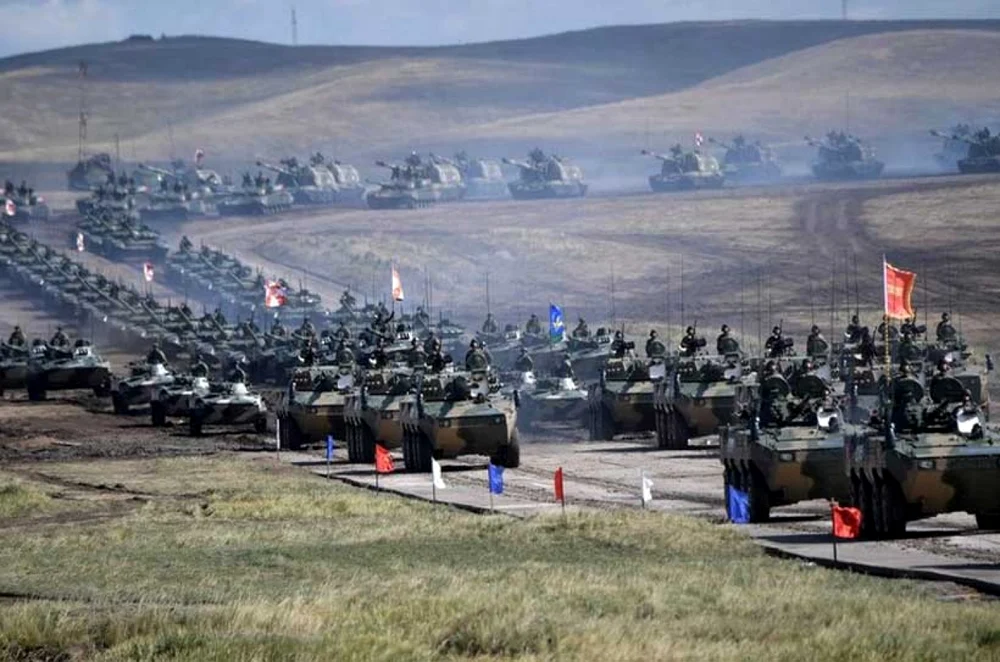
NATO military leaders warn that Russia could pose a direct threat to the Alliance’s territory in the coming years, while Europe’s rearmament plans will not cover critical gaps before 2035.
According to recent assessments, there is a gap of five to seven years between the time a military threat could arise and Europe’s ability to respond effectively. Analysts argue that this interval is not coincidental, but could represent a period of vulnerability.
Increasingly frequent warnings
European intelligence services, especially from the north and east of the continent, believe that the risk of confrontation is higher and closer in time than American assessments indicate. While Washington speaks of a strategic competition, some European states perceive the threat as existential, writes euromaidanpress.com.
A report from the US intelligence community in 2026 shows that Russia is seeking to rebuild its sphere of influence and limit NATO expansion, particularly in the former Soviet space, including Ukraine. Similar assessments have been made previously, including before the large-scale Russian invasion.
According to information quoted by Reuters, Russian leader Vladimir Putin has not abandoned his objectives regarding control over Ukraine and influence over certain regions in Europe.
Conflict Scenarios
In November 2024, Bruno Kahl, the former head of Germany’s foreign intelligence service, warned that Russia might test NATO by the end of the decade through a limited operation, for example in the Baltic states or in the Arctic region.
Subsequently, similar warnings were issued by several European officials. The Danish Defense Intelligence Service presented scenarios that include both local conflicts and the possibility of a large-scale war in Europe in the coming years.
In June 2025, General Carsten Breuer stated that NATO should be prepared for a possible Russian attack by 2029, emphasizing that the threat is the most serious since the end of the Cold War.
Details, HERE


