

Russia continues to test NATO’s response. On the morning of November 20, reports emerged that two Russian missiles and a drone had entered Polish airspace and come down in the southeast of the country, near the border with Ukraine.
The Polish authorities later clarified that all the airborne objects were Kh-101 missiles. One was identified in the village of Nowy Lipowiec, while others were detected near Rudnik nad Sanem and Mołodycz.
One of the shells exploded. Fortunately, there were no casualties or significant damage.
The incident occurred during a massive Russian attack on Ukraine. This time, Moscow managed to cause alarm not only in Kyiv, but also in Warsaw and Brussels.
Polish Prime Minister Donald Tusk urgently convened the heads of the military and security services. NATO aircraft were scrambled, and surveillance and air defence systems were activated. Polish authorities said the objects had come from Russia and described the incident as a possible deliberate provocation.
Russia sends missiles into Poland during NATO exercises
One detail lends particular weight to this hypothesis. The missiles and the drone came down as thousands of European troops were taking part in military exercises organized by the Coalition of the Willing—a group of countries that support Ukraine and are considering deploying an international mission after the war ends. The exercises were taking place in Nowa Dęba.
Donald Tusk suggested that the timing and location of the incident were no coincidence. This suspicion is also supported by an analysis from the Institute for the Study of War. Analysts say Moscow aims to undermine European support for Ukraine and test NATO’s response.
NATO’s response was swift. The Alliance’s Secretary General, Mark Rutte, immediately spoke with Donald Tusk and traveled to Warsaw the following day. His message was unequivocal: NATO will defend every inch of Polish territory.
Rutte described the incident as dangerous and reaffirmed the allies’ solidarity. He also announced that NATO’s military authorities would assess the threats and adjust defensive measures if necessary. Poland called for the eastern flank to be reinforced, including through additional surveillance and air defence capabilities.
US President Donald Trump also suggested that the incident was no accident. Yet he said Vladimir Putin may have sent drones and missiles toward Poland “by mistake.”
NATO convenes an emergency meeting
A meeting of the North Atlantic Council is also scheduled for Monday, November 23, to discuss the violation of Polish airspace.
Rutte’s brief visit to Warsaw carries political significance beyond its diplomatic dimension. NATO is seeking to show that it does not overlook such incidents and that Poland’s security is a collective responsibility.
But this is precisely where the uncomfortable question arises: where does provocation end and an attack that compels the Alliance to respond militarily begin?
Article 5 of the North Atlantic Treaty enshrines the principle of collective defence, but it is not automatically invoked whenever airspace is violated. On this occasion, Poland did not even request formal consultations under Article 4.
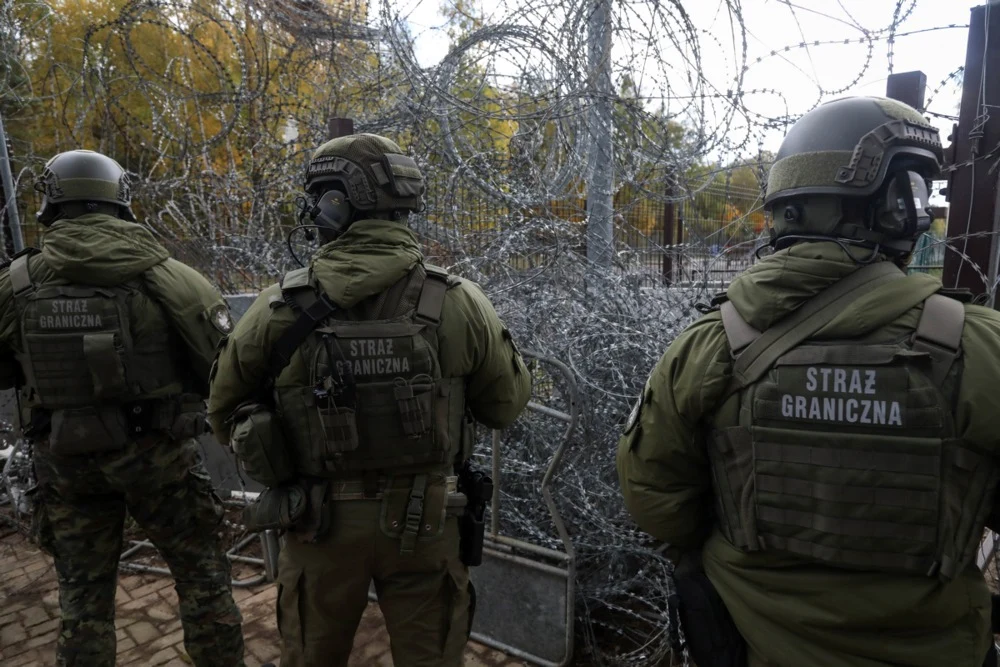
Polish Defence Minister Władysław Kosiniak-Kamysz announced that the extraordinary NATO meeting would focus on identifying concrete measures to strengthen security along the country’s eastern border,
Similar incidents in Poland
This is not the first time Russian drones and missiles have entered Polish territory. NATO is handling these incidents cautiously, but this approach also carries risks: if each incident is treated as an isolated case, Moscow could conclude that it can get away with increasingly brazen actions.
According to TVP, more than a dozen incidents involving drones or missiles entering Polish airspace have occurred since 2022, with over 30 aerial objects involved in total. The largest incursion took place on the night of September 9–10, 2025, when more than 20 Russian drones entered Poland’s airspace. Other incidents involving missiles have also prompted the authorities to strengthen their air defense systems.
In November 2022, two people were killed when a missile exploded in the Polish village of Przewodow, near the Ukrainian border.
Viewed in isolation, these incidents may seem like accidents, navigational errors, or unintended consequences of the war in Ukraine. Taken together, they reveal Russia’s strategy of creating situations in which NATO must decide how far it can go without triggering an escalation.
And Moscow can monitor every response. How quickly are aircraft scrambled? Which air defense systems are activated? What does Poland ask of its allies? How long does it take for NATO to convene? What has to happen before declarations of solidarity are followed by firmer action?
The Threat of Sabotage
European intelligence and counterintelligence services warned long before the incident in Poland that Russia was stepping up its sabotage operations on NATO territory. Such intelligence has been available since 2024.
In May 2026, the head of Poland’s Internal Security Agency, Rafał Syrysko, said that Russian intelligence services were taking increasingly bold risks and were prepared to carry out operations that could cause destruction and casualties. According to the official, Moscow’s tactics include rapidly recruiting people to carry out arson and other attacks, with the aim of overwhelming Polish counterintelligence services and diverting their attention from more significant operations.
In July 2026, Tomasz Siemoniak, the Polish minister responsible for coordinating the intelligence services, warned that Russia might stage provocations aimed at heightening tensions between Poles and Ukrainians.
Intelligence services in other countries also issued warnings that Moscow wanted to test NATO’s response and might enter Poland or the Baltic states, deploy a limited number of troops to border areas, or strike targets on these countries’ territory.
Why should incidents involving Russian missiles be considered sabotage?
Russia’s target is not just Poland. Its aim is to undermine the credibility of NATO’s entire collective defence system. At the same time, after every such incident, the Kremlin gathers intelligence on how the response unfolded, who reacted and what action was taken.
In modern warfare, sabotage is not just about blowing up a bridge, destroying a railway, or setting fire to a military depot. It can be part of a more complex hybrid operation through which an adversary seeks to disrupt strategic systems, drain defence resources, and create vulnerabilities—all without formally declaring war.
In Poland’s case, several factors lend support to this hypothesis.
The missiles and the drone came close to the area where thousands of European troops were taking part in exercises to prepare for a possible international mission in Ukraine. If this was more than a coincidence, Moscow’s message could be read as a warning: European military involvement in Ukraine will not go without consequences.
Another important consideration is that a missile entering the airspace of a NATO member state forces the authorities to activate radars, scramble fighter jets, put air defense systems on alert, and coordinate the military response with allies. Each such incident can yield information about response times, detection capabilities, and the limits of the defense system.
Missiles and drones flying overhead do not necessarily have to cause damage. Simply spreading panic is enough to disrupt people’s lives and trigger other problems: panic buying, overloaded communications networks, or roads and border crossings clogged with people fleeing.
Moscow exploits situations in which it can cite a navigation error or the fallout from an attack on Ukraine. Without clear evidence of intent, the allies are left in the difficult position of having to respond to a threat without being able to immediately prove that it was deliberate.
This time, the missiles landed in Poland without causing any casualties. Next time, the consequences could be different. Russia appears to be counting on precisely this dangerous grey area between provocation and war—going far enough to intimidate, but, for now, not so far as to trigger a collective military response. The question is how far Putin will go with his provocations.