


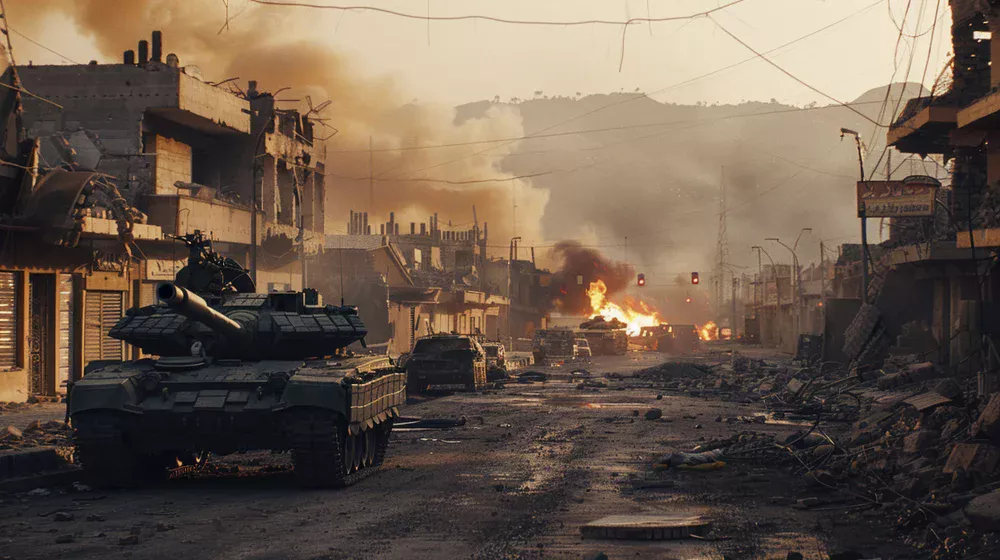
A month since the beginning of the conflict, more and more Iranians are talking about fear, poverty, and uncertainty. The bombings, loss of jobs, and lack of basic resources have turned daily life into a struggle for survival.
For “Setareh”, an interlocutor from Iran named as such by the BBC, the war seemed, at first, a distant reality, limited to other areas of Tehran. Everything changed in an instant. “I think it’s a bomb”, she shouted to her colleagues, after hearing a loud noise and feeling the building vibrate.
They fled to the roof, where they saw the smoke rising to the sky. “We saw the smoke rising to the sky, but we didn’t know what place had been targeted,” she recalls, according to the BBC.
In a short while, panic engulfed the entire building. “People were shouting, screaming, and running. For one or two hours, the situation remained like this, total chaos.” On the same day, the company he was working for closed down, and the employees were laid off.
Without money, without security, without sleep
Left without a job, Setareh says she can no longer sleep due to anxiety. “I can honestly say that I haven’t slept for several days and nights in a row… The anxiety is so intense that it has affected my health.”
The economic situation is dire, especially after food prices have risen sharply. “We can’t even afford basic food. What we have in our pockets does not match the market prices… even the people we thought could lend us money have nothing.“
She warns that the lack of state support could lead to new tensions: “I don’t know how this massive wave of unemployment will be managed. There is no support system, and the government will do nothing for all these unemployed people. I believe the real war will begin if this war ends without any result.”
Details, HERE