




The increasingly frequent and deadly attacks by Ukrainians in Russia are bringing the war that Putin started against the neighboring country closer to ordinary Russians, who until recently were shielded from the deadly consequences of the conflict initiated by the Kremlin regime, writes CNN, on Thursday, in a comprehensive analysis of how the war in Ukraine is becoming increasingly costly for Russians who still seem to tacitly support the war. And a resident of Moscow has called on Russians to gather in the city center and demand explanations from the authorities after the drone attack that affected the city.
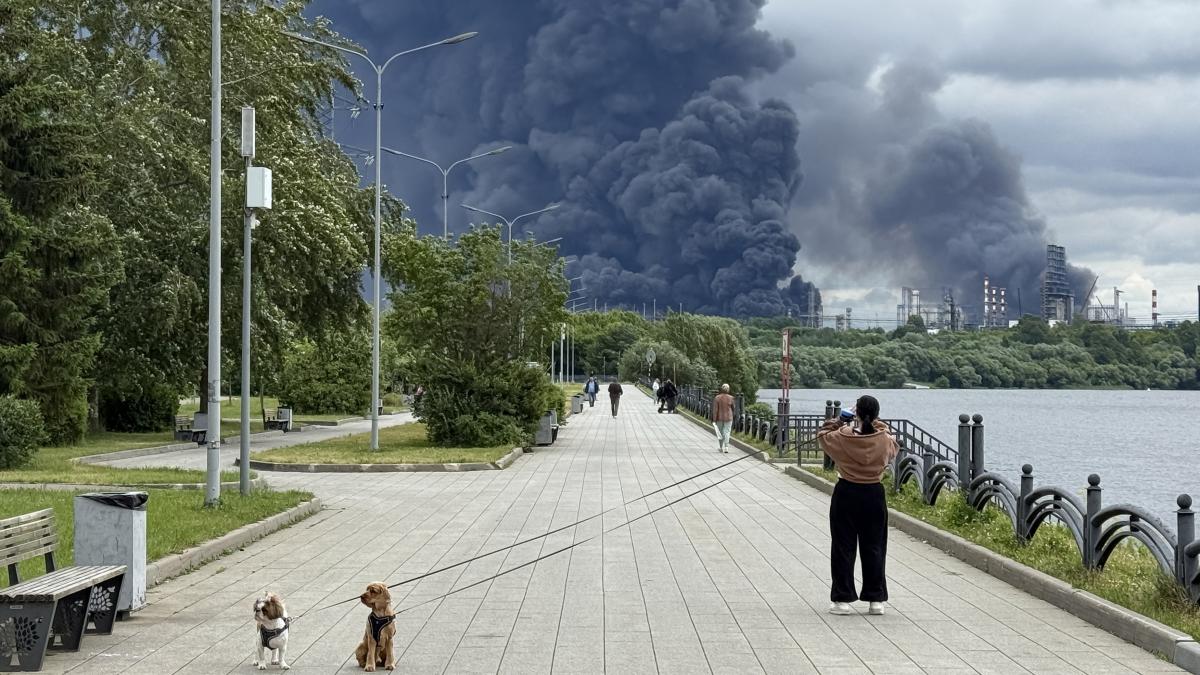
According to the publication Dialog, the video was recorded after the Ukrainian attack on Moscow and the fire that broke out at the Kapotnia refinery. Images of the dense smoke rising above the city have been widely circulated on social networks.
“Friends, good morning to all. In fact, it’s not a good morning at all. In my opinion, the only option is to see what happens in the next few days and then decide how we move forward. One solution would be to gather in groups, go to the center of Moscow, near the Ministry of Defense or near the Kremlin, and ask what’s happening“, the man says in the recording.
He asserts that, in his opinion, the Russians should not remain passive in the face of events.
“If we continue to just silently watch what is happening and do nothing, we will no longer have a country, a home, or a homeland,” he added.
The inhabitants of Russia’s largest cities have largely been shielded from the painful and bloody reality of the war waged by Russia against Ukraine, now in its fifth year. However, the situation is beginning to change as Ukraine launches more and more long-range attacks within Russian territory.
Beyond the direct threat posed by drones, the Russians are facing increasingly severe gasoline shortages, as Ukraine’s attacks on refineries limit supply. Drivers in Crimea, occupied by Russia, faced gasoline rationing this week, after Ukrainian attacks restricted deliveries.
At the same time, the crippled economy, new restrictions on internet access, blocking of popular messaging apps, and fears about state surveillance are fueling a broader sense of unease, which is beginning to be reflected in opinion polls.


