
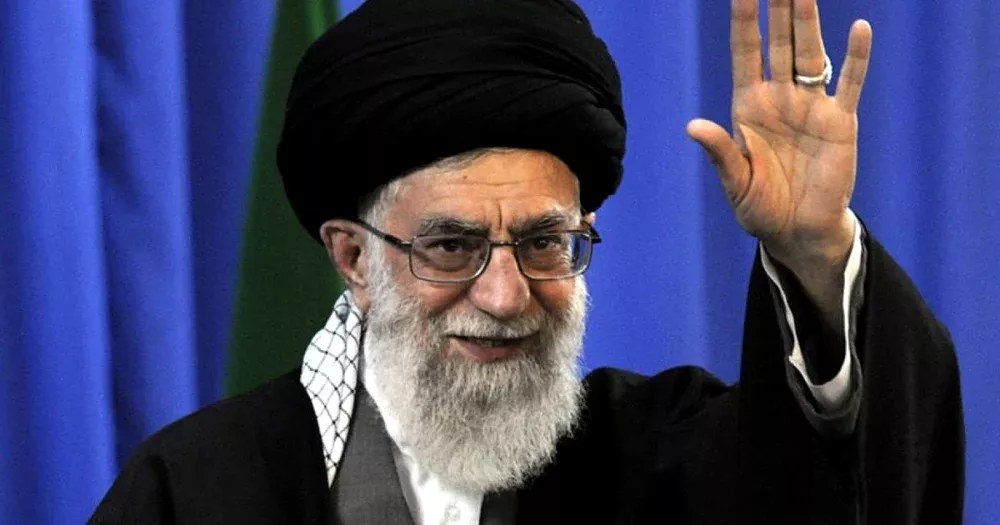
The supreme leader of Iran, Ali Khamenei, left behind a deeply controversial legacy after his assassination on February 28. Having led the country since 1989, following the death of his mentor, Ruhollah Khomeini, Khamenei was the longest-serving leader in the Middle East.
His over 36 years at the helm of the Islamic Republic were marked by internal repression, severe restrictions on women’s and minorities’ rights, as well as support for armed groups in the region, including Hamas and Hezbollah.
However, according to an investigation published by Reuters in 2013, one of the least visible but significant sources of his power was a vast economic empire estimated at about 95 billion dollars.
Setad – the shadow organization
The assets were allegedly managed through an entity known as Setad (full name in Persian: “Setad Ejraiye Farmane Hazrate Emam” – Headquarters for Executing the Order of the Imam). The organization was created by Khomeini shortly before his death and initially had the role of managing properties abandoned after the Islamic Revolution of 1979.
According to Reuters, Setad amassed a vast real estate portfolio by claiming in court thousands of properties, arguing – sometimes controversially – that they had been abandoned. Subsequently, the assets would have been sold at auction or the original owners would have been forced to pay to recover them, writes Daily Mail.
The organization would have had a judicial monopoly over the confiscation of properties in the name of the supreme leader. Over time, it expanded its activity, acquiring stakes in dozens of Iranian companies, both public and private, in fields such as finance, oil, telecommunications, pharmaceutical industry, and agriculture.
The exact value of the assets is difficult to verify, given the opaque nature of the financial structure. Reuters’ estimate indicated approximately 52 billion dollars in real estate assets and 43 billion in corporate stakes.
There is no public evidence that Ali Khamenei personally used these funds for direct enrichment, but control over such a structure would have considerably consolidated his political and economic influence – at a level comparable, according to analysts, with the wealth of the shah ousted in 1979.
Political influence and the nuclear program
As supreme leader, Khamenei had the final say in all major state decisions, including the Iranian nuclear program – a dossier that was at the heart of tensions with the United States and Israel.
On the regional stage, Iran invested significantly in the so-called “Axis of Resistance”, which includes Hamas in Gaza, Hezbollah in Lebanon, the Houthi movement in Yemen, and other allied militias in Syria and Iraq.
Read more HERE