



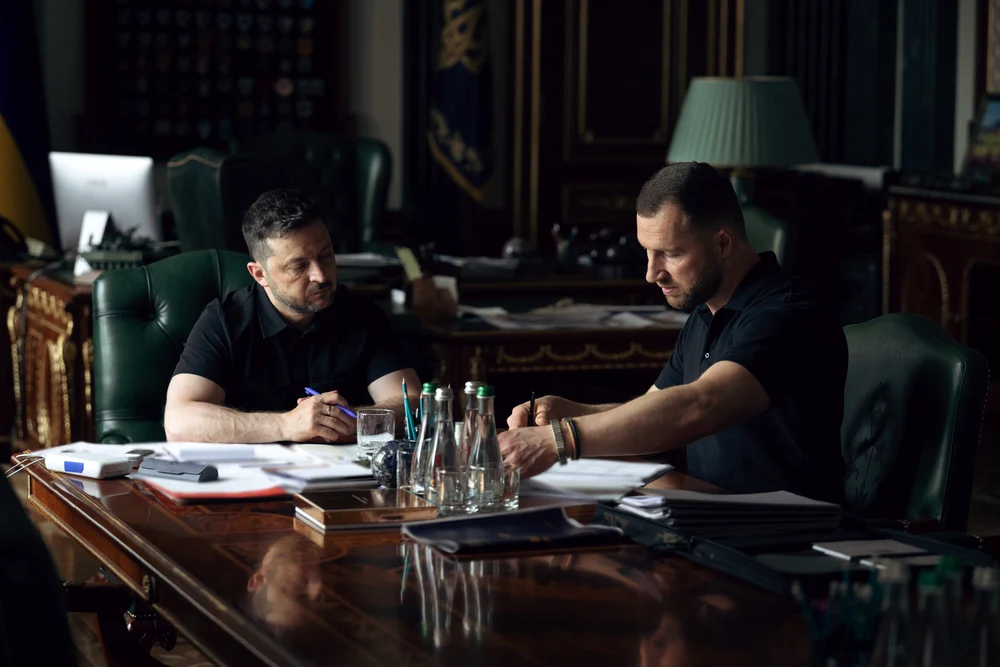
On his wrist, Evghenii Hmara carries a sort of war diary. Each link of his bracelet is engraved with the name of a comrade who never returned from the front, according to a report by the American publication The National Interest.
Hmara took over the leadership of the Ministry of Defense on August 19, replacing Mihailo Fedorov, whose dismissal in July brought people out onto the streets across the country. He comes to this ministry directly from the SBU, the Security Service of Ukraine, which he led for seven months, a period during which Kiev’s campaign against Russian refineries reached its peak.
About the bracelet, Hmara did not speak until a journalist directly asked him, at a dinner in Kiev, this month. Those names now accompany him even in the rooms where decisions about Ukraine’s defense are made.
Alpha, the special operations unit of the SBU, represents only a minuscule fraction of the Ukrainian armed forces. Yet, according to the service’s own assessments, it is attributed a disproportionately large share of the losses inflicted on the Russian infantry: up to 20% of the total.
However, what happened to Russian oil during the seven months that Hmara led the service is even more telling. The General Staff of Ukraine now estimates that almost 43% of Russia’s refining capacity has been taken out of operation, largely as a direct result of the campaign that Hmara coordinated.
He laid the foundations of a doctrine of cost asymmetry, thought out without any reservations: strike operations designed to cost, in economic terms, only about 2% of the damage inflicted on the enemy, targeting not isolated installations, but the critical nodes of the entire system.
From the very beginning of his mandate, Hmara proposed that the core team of the former ministry should remain in place, especially the specialists responsible for the reform of public procurement in the defense sector.
Mstislav Banik, former deputy to Fedorov, confirmed that he remains in office under the new leadership. He coordinates an essential part of the ministry’s modernization process and is responsible for implementing the defense procurement reform.