
Geopolitical tensions in recent years have brought back into discussion the scenario of a global conflict. In this context, more and more analyses are trying to answer a simple question: where would be the safest place on the planet in the event of a world war?
The airspace over the Middle East is currently closed, and neighboring countries of Iran have restricted flights to and from the region. Among the affected countries are the United Arab Emirates, Qatar, Kuwait, Israel, Bahrain, and Iraq, as tensions continue to rise. However, this is not the only global concern. Russia’s invasion of Ukraine continues, as do Israel’s attacks on the population in Gaza, writes Mediafax.
The United Arab Emirates, Qatar, Kuwait, Israel, Bahrain, and Iraq had almost empty airspaces on Monday morning, according to maps published on the Flightradar24 flight monitoring website.
It’s no wonder that the possibility of a Third World War scares many people. In this context, more and more people are wondering what would be the safest places on the planet if a global conflict became a reality, according to an analysis published by the press in the Iberian Peninsula.
Due to their characteristics, especially geographical, these states could become relatively safe options for those seeking stability in a period of uncertainty. Each of them offers a combination of resources, strategic positioning, and self-sufficiency.
Fiji, the Pacific isolation that can become a natural refuge
The Fiji archipelago, located over 2,000 kilometers north of New Zealand, could become a refuge for those seeking distance from conflict zones.
The country’s main advantage is geographical isolation. Consisting of over 300 islands in the Pacific Ocean, Fiji is far from the major military powers and global strategic routes. This positioning reduces the risk of becoming a target in a major conflict.
In addition, many local communities still have a lifestyle close to self-sufficiency, based on fishing, agriculture, and local natural resources. In rural areas, residents can produce a large part of the necessary food, which could become essential if global supply chains were to collapse.
However, experts warn that Fiji also has vulnerabilities, especially dependence on imports and exposure to extreme weather phenomena such as cyclones.
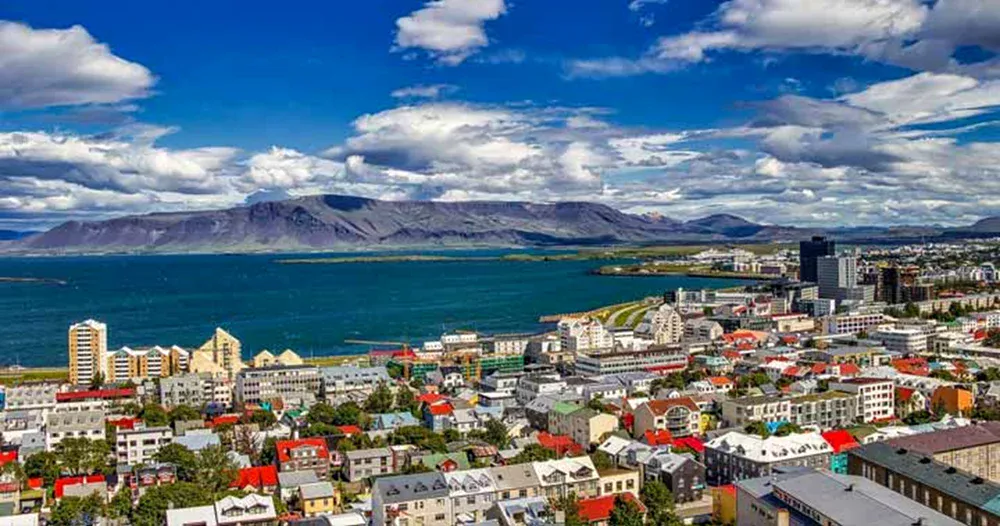
Iceland, the almost completely energy-independent country
Iceland is considered by many analysts one of the safest countries in global crisis scenarios. One of the reasons is almost total energy independence.
Thanks to natural resources, Iceland produces almost all its electricity and thermal energy from renewable sources, especially geothermal and hydroelectric energy.
This means that the country does not depend on fuel imports to function. In the event of a global energy crisis, the Icelandic economy could continue to operate relatively normally.
Another major advantage is the small population, of about 400,000 inhabitants, and the isolated position in the North Atlantic, far from most geopolitical conflicts.
Also, Iceland has access to water resources, fishing, and cheap energy, essential elements for long-term survival in extreme situations.
New Zealand, one of the most self-sufficient countries in the world
New Zealand consistently appears in analyses of global resilience due to its strong agricultural economy and isolated geographical position.
The country is one of the most self-sufficient in the world in food production, managing to produce internally sufficient quantities for fruits, vegetables, meat, dairy, and fishing products.
This production capacity would allow the population to feed itself even if global trade were interrupted.
In addition, New Zealand has a relatively small population, of about 5 million people, and is far from the main military conflict zones. Its position in the South Pacific makes direct involvement in a global war difficult.
The country also has stable institutions, modern infrastructure, and abundant natural resources, including water, fertile agricultural land, and access to renewable energy.