
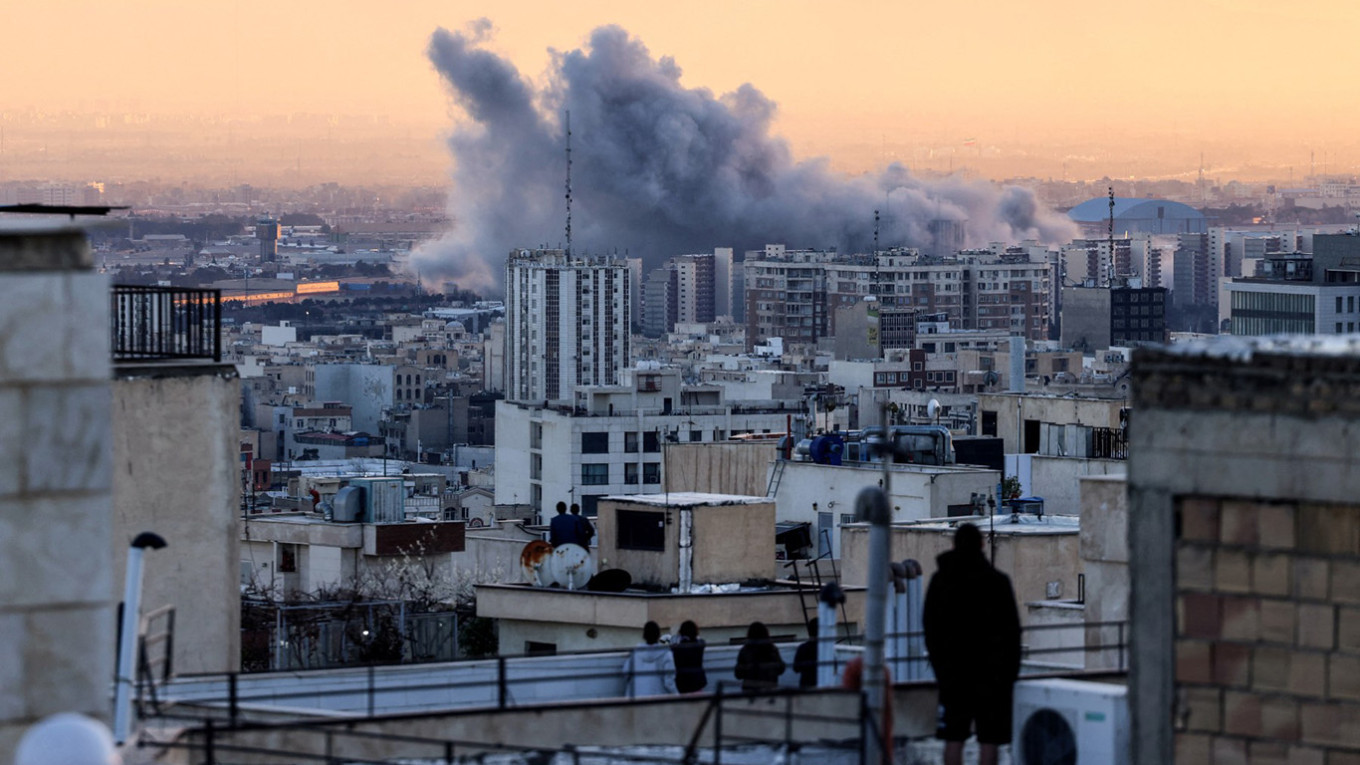
A month ago, the forces of the United States and Israel launched a military campaign against the Iranian regime, with profound global effects — from energy markets and the world economy, to the Gulf region, the extended Middle East, and countries such as Romania, Sri Lanka, Russia, and China.
In the context of scenarios ranging from diplomatic solutions to military escalation, foreign policy experts at the Atlantic Council have analyzed the main conclusions drawn so far.
1. The Iranian regime
A month since the onset of the conflict, the Iranian regime is affected, yet remains resilient and, seemingly paradoxically, optimistic about its future. Its structures have withstood the elimination of high-ranking leaders and over 15,000 strikes on infrastructure and military capabilities.
At the same time, Iran responded in a coordinated manner, imposing significant costs on the US allies in the Gulf and energy infrastructure. The de facto control over the Strait of Hormuz proved to be a major strategic instrument, generating pressure on the global economy and obtaining concessions from Washington.
On the domestic front, the regime appears stable. No major revolts have been recorded, nor defections among the political or security elites. Radical voices have gained influence, which fuels the internal perception that Iran is winning the conflict.
However, the prospects remain uncertain. After the refusal of negotiations with the USA, there is no clear strategy for the next stage. The risk of an American ground intervention is increasing, and the situation could become even more unstable.
In the long term, the regime is facing a structural crisis: the inability to provide economic and political opportunities to the population. Its survival depends either on continuous repression, or on major reforms — unlikely in the near future.
2. The military capabilities of the USA
The United States demonstrates the ability to carry out complex, rapid, and coordinated military operations across multiple domains. The use of advanced technologies – including autonomous drones, precision missiles, and systems based on artificial intelligence – has been efficiently integrated into large-scale joint operations.
The defining element, however, remains the coordination between military structures and allies. No other army has demonstrated a similar level of integration and operational efficiency.
However, there are limits. The demand for ammunition exceeds the supply, and maintaining a high operational pace in the long term represents a major challenge. Investments in internal industrial capacity become essential.
3. The Trump Doctrine
The conflict brings back into discussion the doctrine of “peace through force”. Although the American president has preferred quick and decisive actions, the scale of the current campaign and the prospect of a ground intervention mark a notable evolution.
Despite the escalation, it is likely that the final strategy will aim for a swift resolution of the conflict, avoiding a prolonged military engagement.
4. Iranian opposition
The contradictory messages from Washington regarding the war objectives have prompted the Iranian opposition to urgently redefine its direction.
Recent meetings of various activist groups indicate efforts to build a common democratic vision. However, unity is fragile, and differences persist, including over the opportunity to continue the conflict.
Read more HERE