






Vladimir Putin is facing one of the most delicate periods of the war in Ukraine. While the Russian army continues to exert pressure on the eastern front, Kiev manages to strike increasingly deeper into the territory of the Russian Federation, turning Moscow’s strategic infrastructure into a constant target.
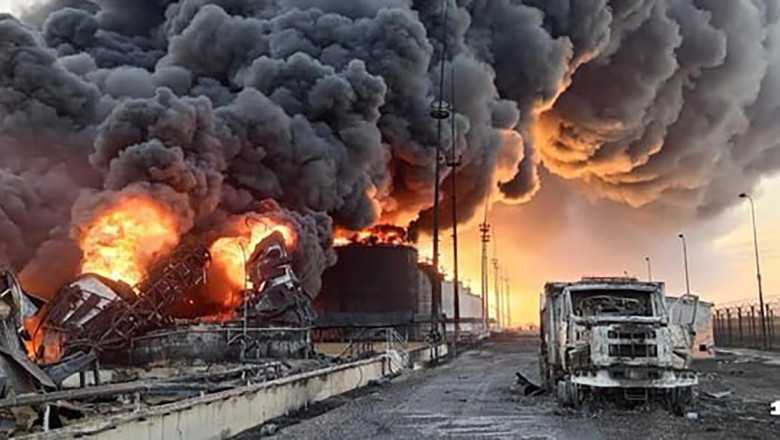
The images of towering columns of smoke rising above the Russian capital quickly became the symbol of a reality that the Kremlin is trying to hide: Ukraine can now hit essential targets located right in the heart of Russia.
The attack has caused concern among the residents of Moscow. Numerous reports have appeared on social networks about a “black rain” that would have fallen in the areas affected by the fire. Although the authorities have denied the information, official channels later recommended that the population stay in their homes, keep the windows closed, and evacuate children, the elderly, and those with respiratory conditions, writes Daily Mail.
The message conveyed by Ukrainian President Volodimir Zelenski was a direct one.
“We never wanted this war and we never wished for it. But if Ukraine burns, then Moscow will burn too”, declared the leader from Kiev.
The thick smoke that rose above Moscow after Ukraine’s drone attack on Russia’s largest refinery sent a message hard to ignore: modern warfare is no longer won solely by numerical superiority or massive weapon stockpiles. In a confrontation increasingly dominated by technology, Ukraine manages to force Vladimir Putin’s army to play defensively and recover gaps that, until recently, they didn’t even consider a problem.
Since the onset of the large-scale invasion in February 2022, Russia has relied on its traditional advantage: more soldiers, more military equipment, and a superior ability to sustain large-scale operations. Simultaneously, Moscow has consistently targeted Ukrainian energy infrastructure and cities far from the front line.
Details, HERE


