
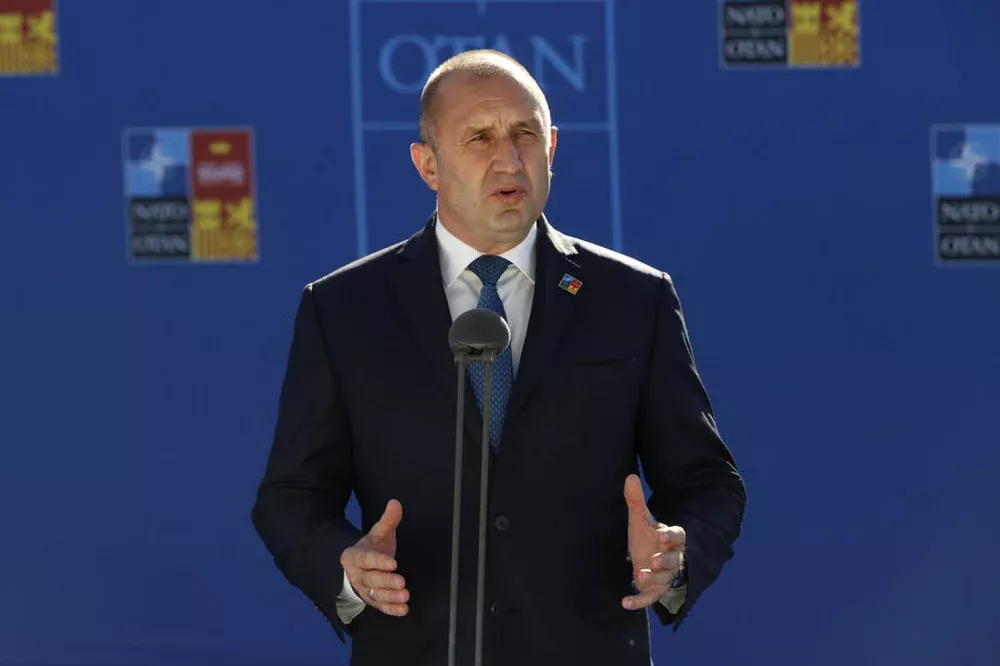
In Bulgaria, the eighth round of elections in the last four years is about to take place, after the parliamentary parties failed to form a new executive. Moreover, the Bulgarian president has announced his resignation, to be replaced by Vice President Iliana Iotova. In this context, a scenario with an “unprecedented variant” is expected to unfold in the neighboring state.
“It’s a mark of instability and fragility”, believes foreign policy analyst Iulian Chifu, regarding the series of early elections in recent years in the neighboring state, emphasizing that “we clearly see a fragmentation of political life in Bulgaria”.
“An unprecedented variant”
However, he notes an “unprecedented variant”: “Look, the president resigns, forms a party and believes that he will be able to solve problems of this kind.”
“In Bulgaria, there is the position of vice president. The president’s resignation automatically leads to the vice president taking over his duties. From this point of view, we have a president who is the current vice president. The constitutional amendment and the existence of a vice president (ed. – 1991) were not accidental. It was premeditated at a certain point. And in the next phase, we have the president who forms a party. His party with which he has to go to the elections and get enough votes so that the new majority variant is much more stable and lasts at least one term”, he explains.
Regarding the reasons of the resigning president, the expert points out: “Let’s say it comes primarily from his ambition, once, and secondly from the fact that he believes he will be able to perform as a politician and achieve much more for Bulgaria in the new position of party leader, possibly prime minister”.
The resigning leader has over time expressed a position favorable to the Kremlin and against EU support for Ukraine. Last year, Radev used his veto right against legislative changes that allowed the government to take control of the Lukoil oil refinery, but the Parliament rejected the objections.
Read more HERE