







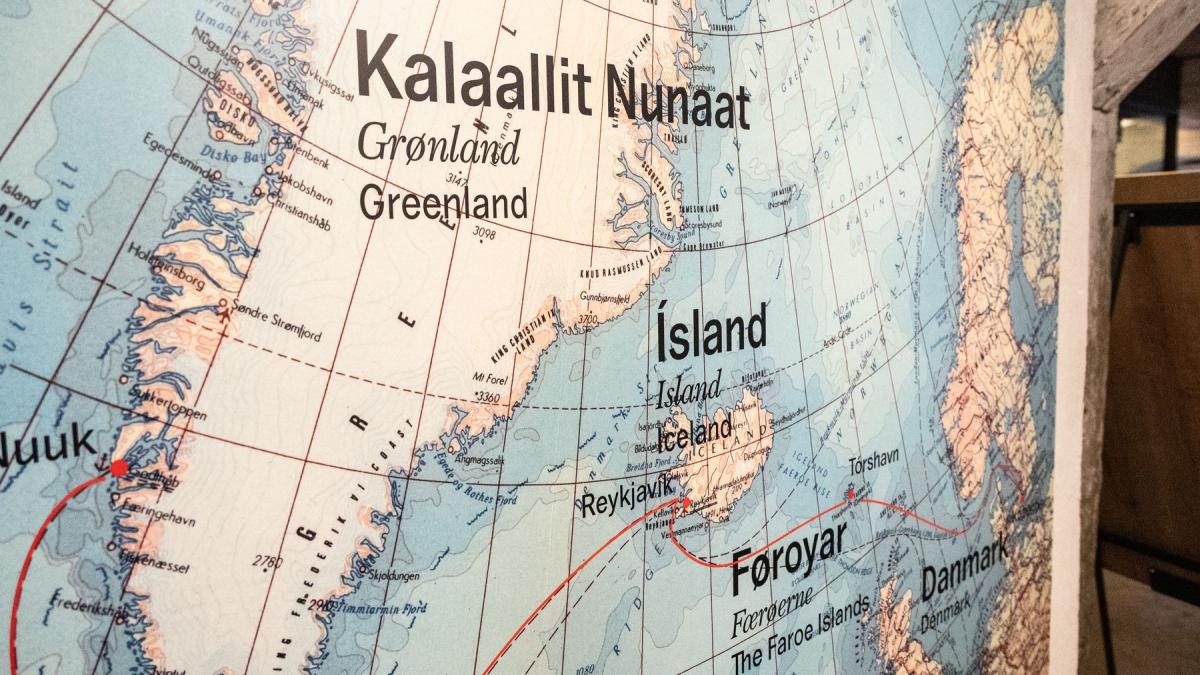
The European Commissioner for Defence, Andrius Kubilius, argues that the treaties of the European Union oblige member states to provide assistance to an EU state in the event of a military aggression, referring to a hypothetical scenario where the United States would attempt to annex Greenland, an autonomous territory of Denmark. The statement was made in an interview given to Reuters agency.
Kubilius agreed with the position previously expressed by Danish Prime Minister Mette Frederiksen, who warned that an attack by one NATO state on another NATO state would represent a fundamental breach of the alliance. However, both officials emphasized that they do not consider such a scenario likely.
Why Greenland is invoked
US President Donald Trump has repeatedly claimed that the United States should take control of Greenland for strategic reasons, citing risks related to Russia and China in the Arctic region. Although Denmark and local authorities in Greenland have stated that the island is “not for sale”, Trump has not publicly ruled out the possibility of using force.
Greenland is an autonomous territory of Denmark, a member state of both the European Union and NATO. The island is not part of the EU, but any aggression against Denmark would have direct implications for the alliances it is part of.
What the EU Treaty actually says
Kubilius invoked Article 42.7 of the Treaty of the European Union, which stipulates that member states are obliged to provide “aid and assistance by all means at their disposal” to an EU state that is the victim of an armed aggression.
However, the Commissioner emphasized that:
-
the application of this article depends on the explicit request of the affected state, in this case Denmark;
-
the treaty does not automatically establish the nature or extent of the military response;
-
Article 42.7 is not equivalent to NATO’s Article 5 and does not provide automatic mechanisms for collective defense.
“It will very much depend on how Denmark will react and what it will request,” Kubilius explained, adding that the EU could provide security support, including troops or equipment, only at the request of the Danish authorities.
“The end of NATO” – political warning, not legal mechanism
Both Kubilius and Frederiksen used the phrase “the end of NATO” to describe the political impact that an armed conflict between member states of the alliance would have. The statements do not refer to a formal dissolution of NATO, which is not provided for by treaties, but to a possible collapse of trust and the political foundation of the alliance.
Kubilius insisted that he does not believe in an American invasion of Greenland and that his statements are meant to underline the gravity of the consequences of such an act on transatlantic relations.
Military planning and its limits
According to the British publication The Telegraph, European military officials would be analyzing theoretical scenarios regarding the security of Greenland and the Arctic region, including the possibility of an allied mission. These discussions are described as preliminary planning, not political or military decisions taken.
Conclusion
The statements of European leaders reflect a preventive debate, not an ongoing crisis. They aim to clarify existing legal obligations and the extreme political risks that a conflict between allies would entail.
At this moment, the scenario of a EU-US confrontation remains hypothetical, and the positions expressed by European officials are intended to underline the importance of maintaining the transatlantic security framework, not to announce an imminent rupture.


