
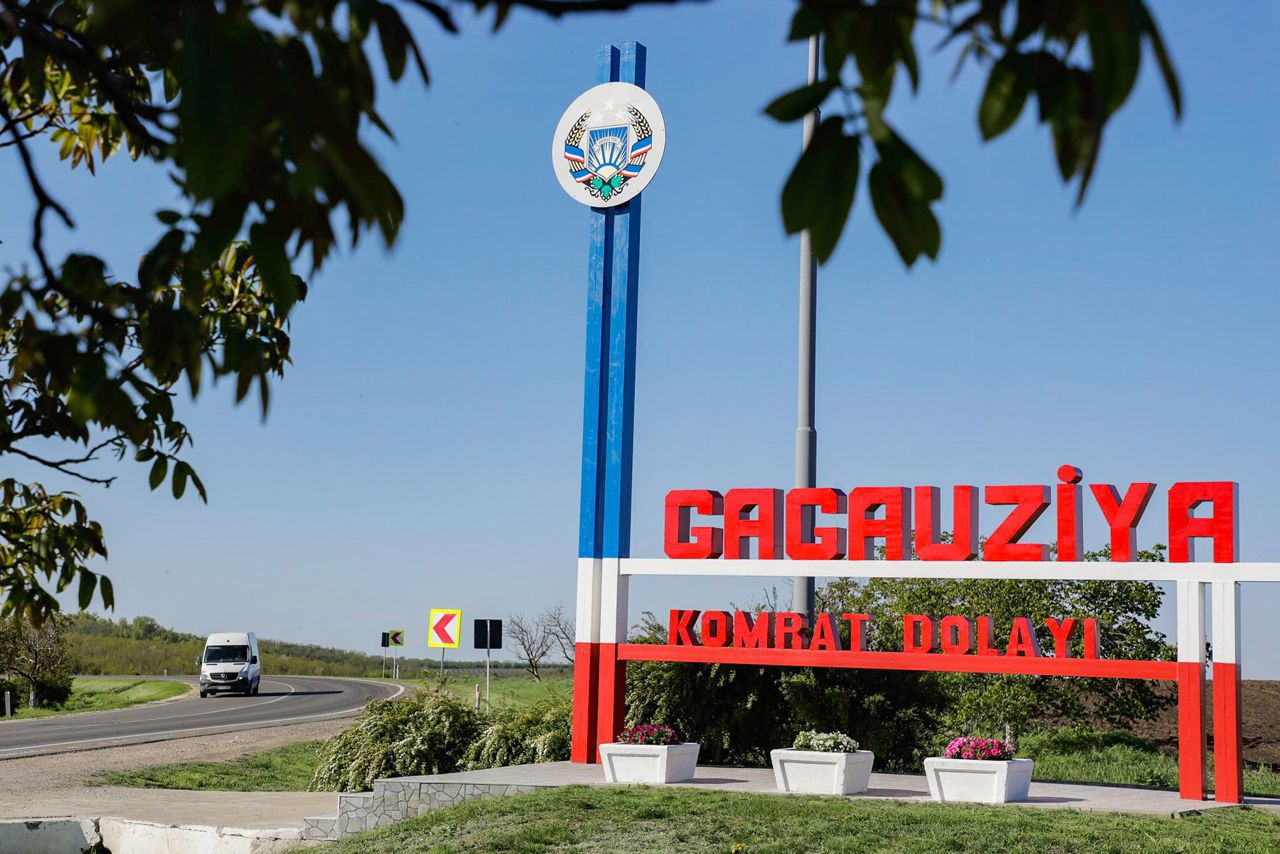
For nearly a year, Gagauzia has been in a crisis whose essence remains unclear to many. It is precisely this space of uncertainty that is exploited by actors promoting narratives such as the “liquidation of autonomy” or the transformation of Gagauzia into a “second Transnistria”.
In an explainer published by IPN, journalists explain why Chisinau and Comrat have failed to reach a compromise for almost a year: how should the electoral body of autonomy be named – the Central Electoral Commission or the Central Electoral Council, which electoral system is more suitable – by constituencies or party lists – and what are the deadlines for making changes.
But there is also another dispute, less visible – the one regarding how this crisis is interpreted. Some call the decision of the Constitutional Court a legislative adjustment, others see it as a “dismantling” of autonomy. The Russian ambassador’s visit to Comrat is seen by some as a usual diplomatic meeting, while others see it as a political signal at a time of tension between the center and the region.
How it all began
The current situation did not appear overnight. Its roots can be traced back several years before the Constitutional Court’s decision, along with the expansion of Ilan Șor’s team’s influence in Gagauzia. In 2023, Evghenia Guțul won the elections for the position of governor of the region, a vote marked by accusations of vote buying.
As a result, the region found itself isolated: relations between Comrat and Chișinău deteriorated, support from Turkey decreased, international partners withdrew. For two years, the investments promised by Șor and Guțul did not materialize, and the number of enterprises in the region decreased. Gagauzia even withdrew from the joint working group with the Parliament of the Republic of Moldova, created in 2015 to solve problems between the center and Comrat through dialogue – not through courts and confrontation.
One of the outcomes of this period was the dissolution, in 2025, of the Central Electoral Commission of Gagauzia. The deputies of the People’s Assembly dissolved the institution, citing budgetary savings. Subsequently, it was found that there was no one left to organize new elections: the electoral body had simply disappeared. On November 12, 2025, the mandates of the deputies of the current legislature expired. This was followed by a series of failed attempts to reconstitute the electoral commission – each time, the State Chancellery contested the decisions of the People’s Assembly, and the courts annulled them.
The formal reason why the case reached the Constitutional Court was a seemingly minor detail – the name of the electoral body: in local legislation it was called CEC, while in the national Electoral Code – Central Electoral Council. The Gagauz could have corrected this and other discrepancies as early as 2022, but this did not happen.
On March 9, 2026, the Ministry of Justice of the Republic of Moldova appealed to the Constitutional Court. The discussion was no longer just about the name of the institution, but about the very essence of the 1994 Law on the special legal status of Gagauzia – whether the region has the right to form its own electoral commission and participate in the appointment of police chiefs, intelligence service, and justice on its territory.
Before the court’s decision, the parties had almost reached an agreement. A joint Chișinău-Comrat working group had drafted a document stipulating that the Popular Assembly should approve the composition of the electoral commission, but only after the candidates had been verified by the competent institutions. At that time in Chișinău, it was said that the problem was “95% solved”. However, the deputies of the Popular Assembly did not come to vote on the document.
What has the Constitutional Court decided
On July 9, 2026, the Constitutional Court declared some provisions of the law unconstitutional. The People’s Assembly can no longer independently form the electoral commission, establish election rules, and participate in the appointment of leaders of institutions such as the police, the intelligence service, and the judiciary. The President of the Court, Domnica Manole, explained simply: in a unitary state, there cannot be two centers of power. The organization of elections and control over the power structures are the exclusive competence of the Parliament, not of the local authorities.
However, there is an important detail, often overlooked. Critics of the decision almost always refer to the 1994 Law on the Special Status of Gagauzia, but rarely invoke the provisions of the Constitution: articles 1, 107 and 109 enshrine the principle of the unitary state, while article 111 establishes the right of autonomy to manage issues of local interest.
The court did not “take” competences, but rather eliminated an old legal construction, maintained for three decades more as a political compromise concluded in 1994 to prevent conflict, than as a thorough system.
The Dispute about Formulations
Following the Court’s decision, the dispute moved to a practical level: according to what rules will the elections of November 15 take place. On July 30, the Parliament adopted the amendments in the first reading. According to these, the composition of the Central Electoral Council of Gagauzia – between 7 and 11 members – will be formed according to rules similar to those applied throughout the country.
At the same time, the deputies of the Popular Assembly will be elected, starting with the next electoral cycle, not by constituencies, as it was until now, but by party lists. But not this time: the elections of November 15 (if) they will take place, they will be held under the old system, by constituencies.
Even the process of adopting amendments has become a cause for dispute. The President of the Popular Assembly, Valentin Gaidarji, stated that 52 deputies of the governing party signed the bill “in 2 minutes and 2 seconds”, suggesting that there was no real debate. In Parliament, this statement was labeled as untrue. The legislative president, Igor Grosu, responded to the Popular Assembly’s request to withdraw the project by saying that the region had two years at its disposal to adjust its local legislation.
In parallel, another crisis unfolds – the one related to the position of governor. Evghenia Gutul’s sentence has become final, and the law stipulates that in such a situation, the position becomes vacant and new elections must be organized within a maximum of three months.
This matter is set to be examined by the People’s Assembly. For now, the duties of the governor are being carried out by the first deputy governor, Ilia Uzun.
Does all this mean that the region is gradually “cleansing” itself of Șor’s influence? To a large extent, yes. The actions taken so far by Chișinău have pursued two main objectives: reducing the influence of Kremlin’s associates in the region and aligning the legislative framework. If, legally, Șor can no longer intervene directly in this battle on the territory of the Republic of Moldova, in the information space his influence and that of the media channels affiliated with the Kremlin are waging a real information war.
How is this crisis narrated – and why
“The \”crisis\” in Gagauzia is a good example of how the same facts can turn into completely different stories, depending on who narrates them.
The legal changes made are presented as an attack on the Gagauz people. However, the decision of the Constitutional Court is, essentially, a technical unification of legislation. Such things happen in any unitary state when contradictions between local and general norms need to be eliminated. But the pro-Kremlin press presents the decision as “dismantling autonomy” or “attack on the Gagauz people”. In reality, the court’s decision does not target the language, education, culture, or local budget at all – all these remain within the region’s competence. These accusations work because they strike not at facts, but at the memory of the conflict of the ’90s – both the Gagauz and the Transnistrian – that is, in emotions, not in legal norms and procedures.
The message from Moscow to Chișinău is increasingly often a threat disguised as a warning. The phrase “if Moldova moves towards Europe, it will lose Găgăuzia and Transnistria” has been uttered several times, in different variations, by Russian politicians. It is not a prediction from the Kremlin, but merely a pressure tool: a signal that the region’s loyalty to Moscow is a lever that can be activated or deactivated depending on the direction Chișinău takes. It is significant that President Sandu had to separately deny, at an international summit, the “second Transnistria” scenario for Găgăuzia. The very fact that the question was asked says more about the effectiveness of this narrative than any denial.
Now, any state institution or decision regarding Gagauzia is presented as a weapon aimed against autonomy. The referral of the Ministry of Justice to the Constitutional Court, the decisions of the Popular Assembly contested by the State Chancellery – all these are described only as an “attack on Gagauzia”.
A few months ago, an unannounced visit by the Russian ambassador to Comrat also took place. This happened during the height of the negotiation process, shortly after a compromise between Comrat and the center had been discussed. Formally, it is a common diplomatic practice – ambassadors visit regions. But the timing here was not coincidental. Such visits serve not so much as substantive discussions, but as a demonstration that one of the parties to the conflict has an external protector, who shows interest exactly at the moment of maximum tension.
How do things work in other autonomies in Europe
The current president of the Popular Assembly, Valentin Gaidarji, invoked in one of his interventions examples of European autonomies – however, the comparison seems to rather contradict the position he supports. South Tyrol in Italy retains up to 90% of the local taxes collected and autonomously manages areas such as education and infrastructure. However, the status of the region is directly enshrined in the Constitution of Italy, and the authorities in Rome can block a regional law if it affects national interests.
The Åland Islands of Finland have their own parliament and the right to veto international treaties that concern them. However, their autonomy operates strictly within the limits of national law, which the islands cannot unilaterally modify, and the Supreme Court of Finland ensures that the acts of local authorities do not contravene the Constitution.
The general principle is simple: the broader the autonomy, the clearer its limits must be established in the general legislation of the state – not through vague formulations, specific to a transition period. This clarity has been lacking in the Gagauz model for three decades. It was created in 1994 as a solution to stop a conflict, but certainly not as a thoroughly thought-out system of separation of powers.