
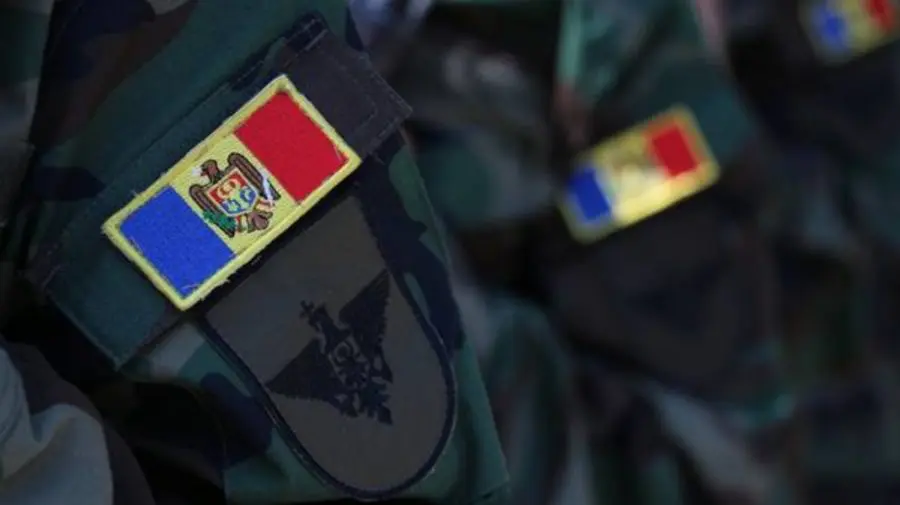
The defense budget of the Republic of Moldova is expected to gradually increase, so that by 2030 the allocations will reach 1% of GDP. The statement was made by the Minister of Defense, Anatolie Nosatîi, when the Government voted in October for the military strategy for the next 10 years. Experts consider this to be extremely low funding. If Romania, as a NATO member state, commits to a massive increase in defense spending up to 5% of GDP by 2035, which would mean 3.5% for basic expenses and 1.5% for related investments, such as strengthening the presence of NATO allied troops and developing national capabilities in the space field – a premiere for Romanian military capabilities; then let’s see what lessons can be given to us by states with declared neutrality like the Republic of Moldova.
“The document reflects a significant paradigm shift from the previous strategy, adopted in 2018 and expired 3 years ago, in 2022. It explicitly acknowledges that the security environment has fundamentally deteriorated following the aggression of the Russian Federation against Ukraine and that hybrid threats in the region have increased. For the first time, the strategy openly talks about the need to strengthen national resilience and efficient defense capabilities, including through the involvement of ordinary citizens. It reaffirms constitutional neutrality, but interprets it in a pragmatic way, showing that neutrality does not exclude the strengthening of defense and cooperation with democratic states for ensuring national security. The strategy introduces the concept of total defense, based on the involvement of society and coordination between civil and military institutions in crisis situations. This provision shows a mature understanding that the defense of the country is no longer just the task of the army, but a collective responsibility, involving the entire public administration, the economic environment and citizens,” noted Watchdog.md expert Artur Leșcu.
However, despite these important conceptual developments, a major problem remains unchanged – the extremely low level of defense funding.
“1% of GDP does not cover by far the costs of equipping with modern systems, training and maintenance necessary to cope with contemporary threats. NATO member countries that have a much larger GDP than the Republic of Moldova, already allocate at least 2% of GDP for defense with the goal of increasing up to 5%. The level from which we start is much lower, so simply reaching the 1% threshold is not enough. To recover the technological and operational differences compared to better-equipped states, expenditures above the current levels of some allies would be necessary. It’s elementary mathematical law. Without this financial ambition, the strategy risks remaining more of a theoretical roadmap than a viable program for strengthening national defense,” emphasized Artur Leșcu.
According to the Law of the state budget for 2025, the Ministry of Defense has allocated approximately 1.9 billion lei, which constitutes 0.65% of GDP. These resources are mainly used for the maintenance of military personnel, modernization of equipment and participation in international security programs, such as cooperation with NATO through the Partnership for Peace. Until 2023, the defense budget of the Republic of Moldova was even more modest, ranging between 0.5 and 0.9 billion lei. In 2023, the defense budget was 1.7 billion lei and reached 1.96 billion lei in 2024.
Read more HERE