
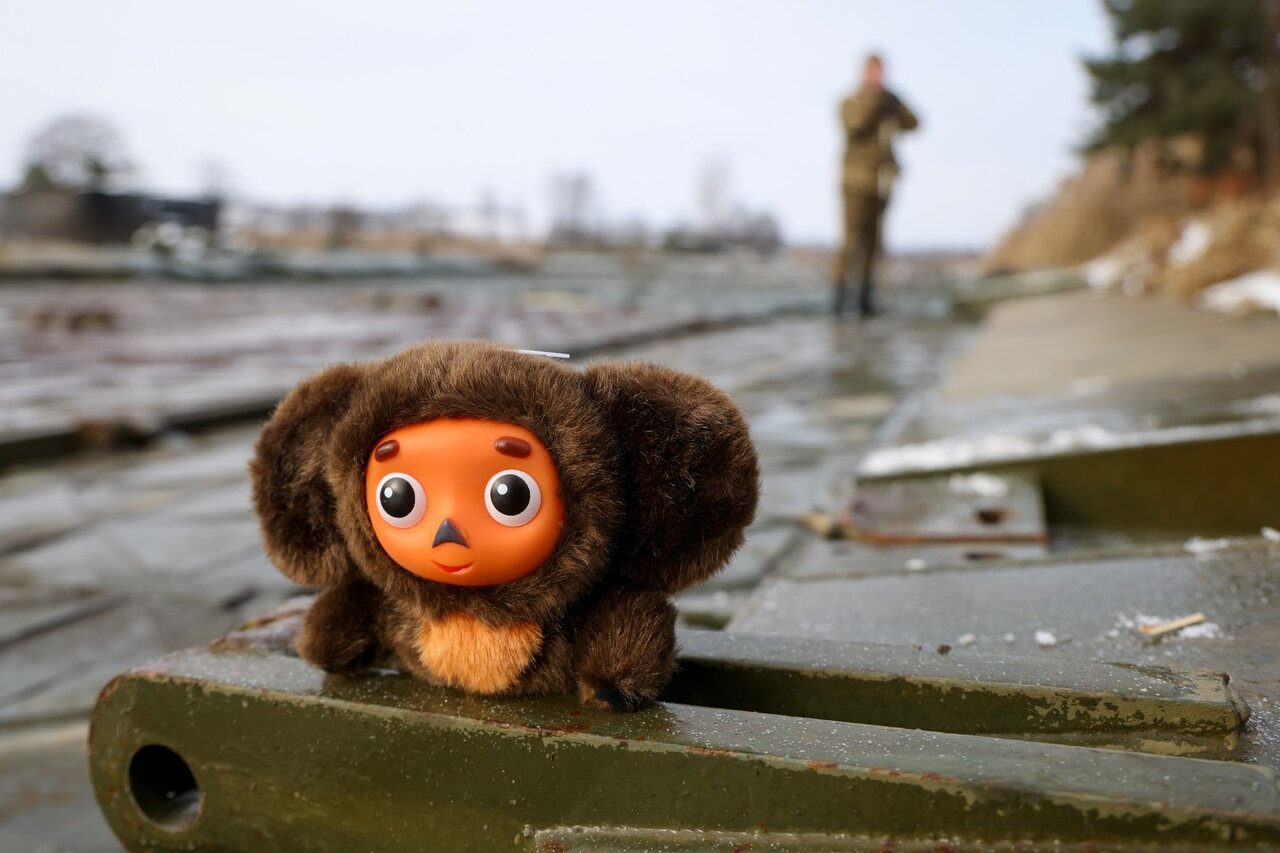
Since the beginning of 2026, Russian propaganda has been criticizing Cheburashka – one of the emblematic characters of Russian children’s literature. It all started with a recent screen adaptation of Eduard Uspensky’s work.
The film became super popular in the first weeks of screening and accumulated about 7.1 billion rubles from broadcasts. Despite its enormous success, the production was not to the liking of the deputies of the State Duma of Russia.
Putin’s ideologue, Alexandr Dughin, was the first to jump with criticism, according to Meduza. Then, the philosopher stated that the staff is connected with demons and that God will curse the Russians who will watch the movie.
A few days later, several deputies from the State Duma engaged in discussions about the state of Russian cinema and the way films receive state funding. The discussions reached absurdity after they targeted Cheburashka.
Some of them referred to the director’s anti-war visions, others said the illustrations were poorly painted or that there were no positive characters in the film, and ultimately it was proposed to amend the law so that the Ministry of Culture could get involved in the creative process.
The production team retorted that everyone sees in the film what they wish to see.
The subject has returned to the public space recently, after Alexandr Dugin gave an interview to Xenia Sobchak, who is said to have been christened by Vladimir Putin. Dugin reiterated that, in his opinion, the Soviet Union collapsed because of the emblematic character.
“What kind of animal is this? Where did it come from? Why does it play such an important role in the daily life of the Soviet people? It has delved into dreams, into the unconscious, expressing certain complexes, and as a result, the Soviet Union collapsed,” Dughin said.
It is important to note that not only in Russia has Cheburashka become an enemy. Previously, the character was also criticized by the authorities in Ukraine, after some Russian soldiers turned figures of him into talismans. In addition to this, one of the controversial slogans of the military was “зачебурашим”, being used as a battle cry.
The power seemed not to be against using the character for war propaganda at that time. Initiatives like “volunteers” knitting toys with Cheburashka’s face to send to the front, along with humanitarian aid, emerged. Concurrently, the idea was promoted that the character is a symbol of childhood and would associate soldiers with the warmth of home and family.
Thus, a character from books, who was supposed to educate the new generations, ended up in the epicenter of the information war. He became a symbol of aggression, then was blamed by propaganda.
When the new adaptation, however, became too popular, and some voices argued that it promotes Western values, it seems that Russian propagandists felt more vulnerable to the character, and the Kremlin seems to have considered that the new version of the film might instill too many liberal and democratic ideas.