



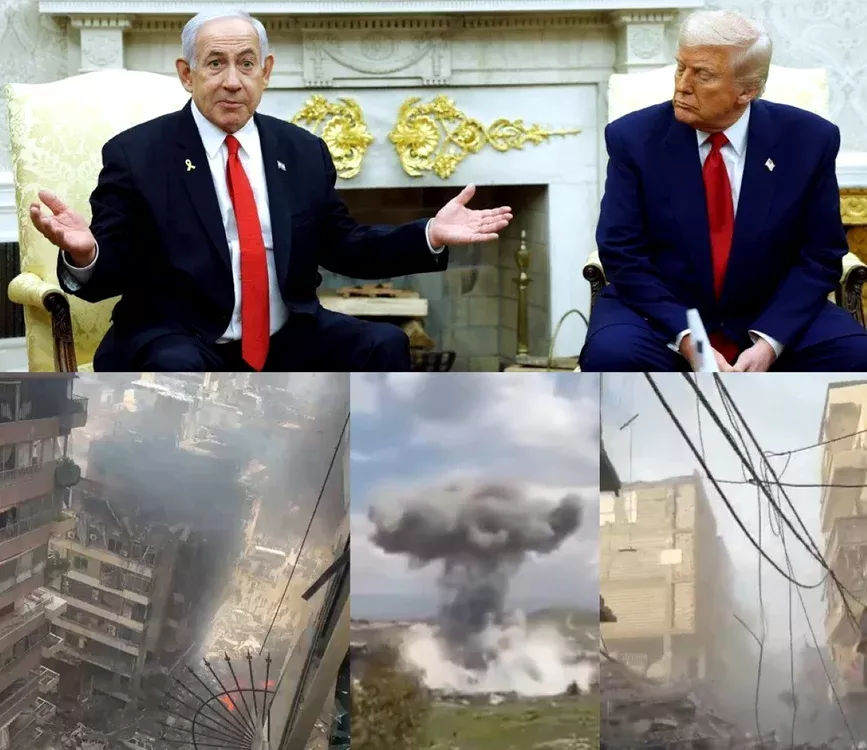
A recent phone conversation between Israeli Prime Minister Benjamin Netanyahu and American President Donald Trump highlights the deep strategic rifts between Washington and Jerusalem, as the US attempts to conclude a diplomatic agreement with Tehran.
The Israeli leader emphatically underscored that his country will not give up its freedom of action to neutralize threats to its security, especially in Lebanon, even if Washington and Tehran sign a new peace treaty.
According to the Reuters news agency, which cites an anonymous Israeli political source, Donald Trump described the discussions as “very good”, although the positions of the two traditional allies remain partially divergent.
A secret memorandum for the reopening of the Strait of Hormuz
Donald Trump announced that the United States and Iran have “largely agreed” on a memorandum of understanding within a future peace treaty. The central objective of this document is to unblock the Strait of Hormuz, a vital maritime artery through which, in times of stability, approximately one fifth of the global volume of oil is transported.
Transit through this strait was paralyzed in February 2026, with the outbreak of a large-scale military conflict involving the USA, Israel, and Iran. Currently, Pakistan is acting as a mediator in the negotiation process, and the international community expresses hope that this armed conflict, ongoing for three months, is close to a diplomatic resolution.
The terms of the framework agreement and Jerusalem’s strategic reserves
According to Tehran’s official press agency, Fars, the peace agreement project contains two fundamental clauses:
-The United States and its allies commit to refrain from attacks on Iranian territory and its proxy forces in the region.
Details, HERE