




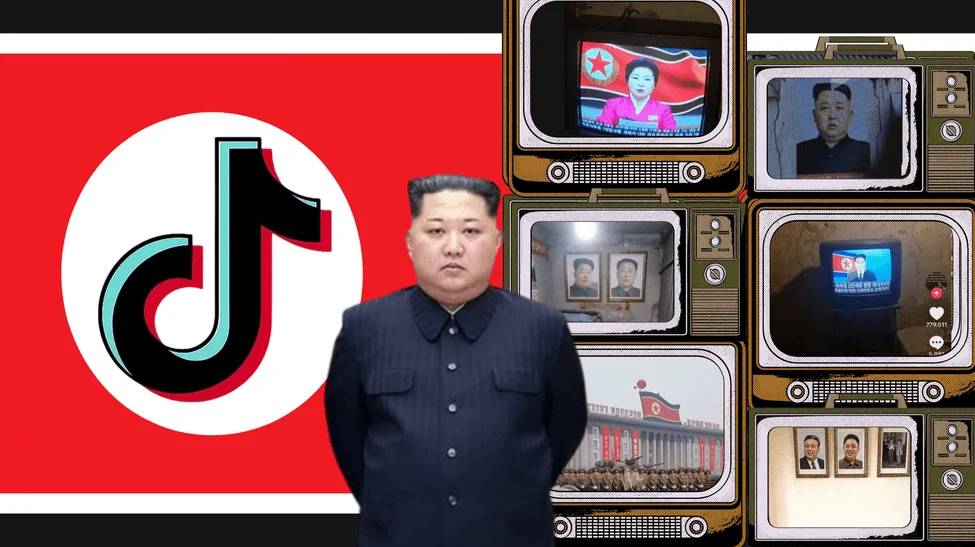
At least 16 TikTok accounts, most of them operated without assumed identity, have distributed, in just a few weeks from October to November, approximately 230 clips generated with artificial intelligence.
The materials presented scenes with locals in front of the television applauding North Korean leader Kim Jong-un, images of marching soldiers or snippets of everyday life in North Korea, all packaged in a propagandistic aesthetic.
Many of these accounts had no previous activity history: they appeared suddenly, posted compact series of similar clips, and followed the same debut pattern as other profiles in the same network. The rhythm, synchronization, and homogeneity of the content suggest a coordinated effort, not simple isolated initiatives of anonymous users. The accounts begin to distribute the videos on the same days. Many of these videos ended up directly in the feed of users in Romania, a fact confirmed by several comments in Romanian found. Their presence there indicates that the TikTok algorithm actively pushed them towards this audience, most likely due to the coordinated volume of distribution and audience.
Although the videos do not explicitly contain ideological messages or theses, the present propagandistic mechanism works much more subtly: by selecting and presenting details that suggest, without directly affirming it, that life in North Korea would be normal or even decent, comparable to countries in Europe. Images of a mother and child in a modern room, applauding Kim Jong-un in front of a plasma screen, frames with the impeccably clean streets of Pyongyang or sequences with disciplined soldiers build an apparently coherent reality, meant to convey a positive impression.
Here, the user’s perception is intervened, not through discourse, but through appearances. The viewer is led to a false conclusion, that the regime promotes an acceptable standard of living, because the materials, generated with the help of AI, are extremely visually convincing. In this type of content, manipulation is not strident, but almost invisible, being about a fabricated reality, presented so well, that it becomes hard to dismantle at first glance.