




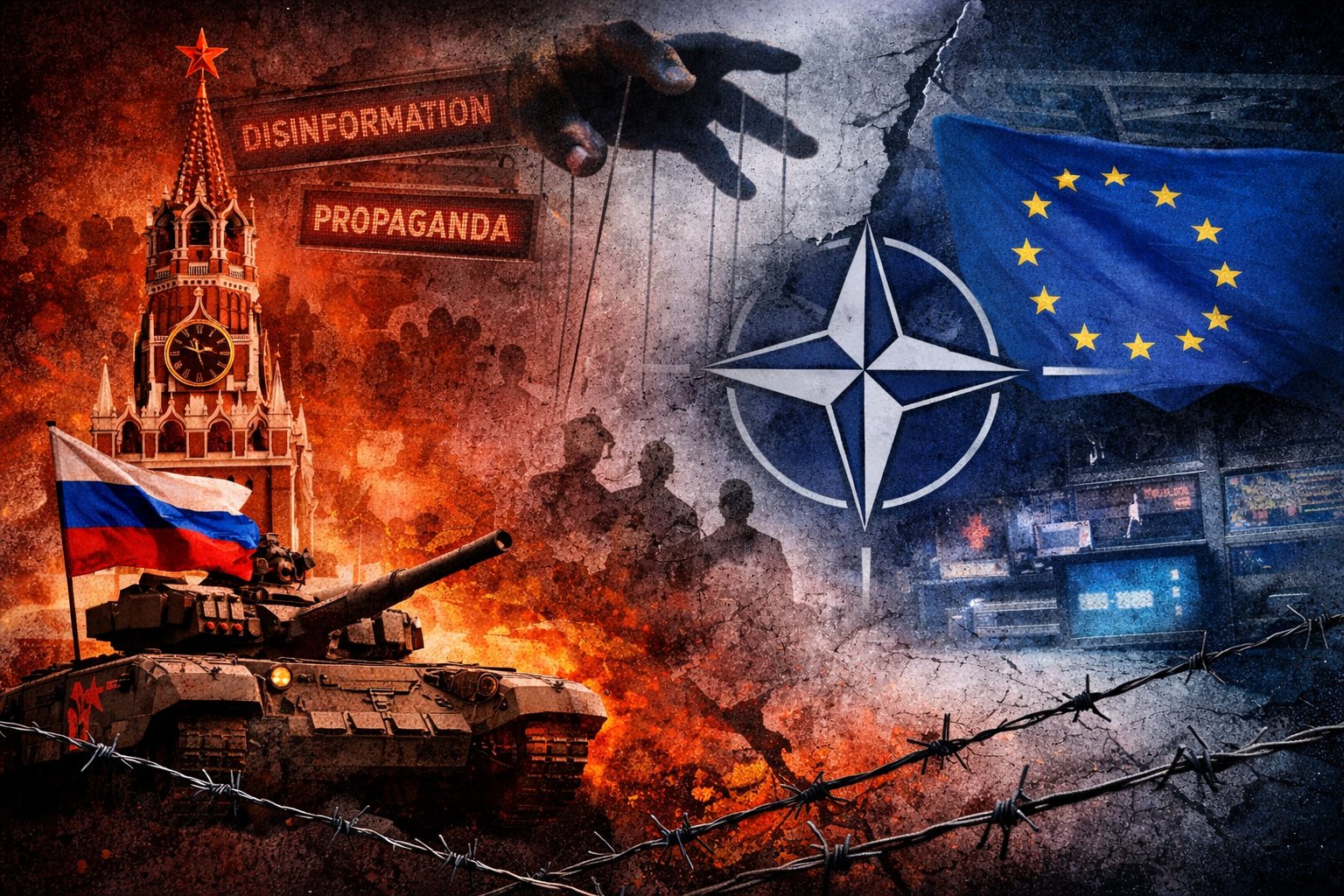
Throughout the course of 2025, the Kremlin resorted to several manipulations promoted in the public space, in order to distance Moldovans from the idea of approaching NATO and joining the EU. According to a report by the Center for Strategic Communication and Counter-Disinformation, one of Moscow’s objectives was to undermine foreign policy and efforts to strengthen national defense.
According to the document, the approach to the European Union, cooperation with NATO, modernization of the army, and security partnerships were presented as steps that would mean the militarization of Moldova, renunciation of neutrality, and involvement in war. One of the narratives is that the “Ukraine scenario” will be implemented in the country, promoting the idea that war is inevitable if the authorities in Chisinau continue to chart a pro-Western course for the state.
In the spring and so on, among the ideas inoculated into the population were “state captured by Brussels”, economic colonization, external control over institutions, and marginalization of regions. Thus, an attempt was made to create the perception that there is no longer autonomy, decision-making power, and that, in context, the relationship with the West should be rejected in favor of rapprochement with the Russian Federation.
Although they had no relevant arguments, ideas such as the decisions from Chisinau were actually made in Washington, Paris, Bucharest or Brussels. The approach to the EU was presented as a loss of control over the economy, energy, justice, mass media, and foreign policy direction.
In August 2025, the project “Defend the Faith” of the organization “Adore My City” was launched, presented as a legal assistance initiative for the clergy of the Metropolis of Moldova. At the same time, foreign lawyers such as Gonzalo Boye and William Julie were brought in, who defended Evghenia Guțul and created the impression that there were serious rights violations, transmitting reports to international organizations.
Pro-Russian actors have exploited topics such as rising bill prices and the inefficiency of public services. Campaigns aimed at localities with a low standard of living, especially villages, but also towards the religious public, emerged in the fall and winter. To promote the narratives, Facebook and Instagram were used, and the messages were adapted according to the age, identity, and social vulnerability of the potential audience, the Center’s specialists specify.


