





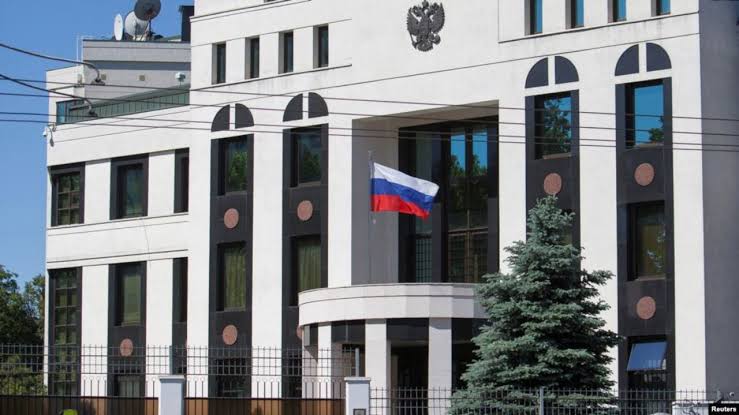
The Russian Embassy in Chișinău said on Wednesday evening that it had information about an alleged “anti-Russian provocation.” The diplomatic mission’s press office did not specify exactly what kind of potential incidents it was referring to.
Against this backdrop, Russian diplomats urged Moldova’s government “not to follow the example of those seeking to draw Moldova into a confrontation with Russia, and to refrain from steps that could escalate tensions.”
“The embassy has received information about an anti-Russian provocation planned for the coming days, aimed at drastically worsening Russian-Moldovan relations. We have repeatedly warned of the risks of such a staged incident, and now our warnings are beginning to be borne out. (…) Experience shows that actions aimed at severing our bilateral ties harm, first and foremost, the people of the Republic (editor’s note: Moldova). We urge Moldovan citizens to remain vigilant and not to trust false information or hasty, manipulative conclusions,” the embassy said.
In response, Dumitru Ciorici, spokesperson for the government in Chișinău, said Russia was using this to divert attention from its increasingly frequent violations of Moldova’s airspace.
“Russia is resorting to new disinformation tactics to divert attention from the increasingly frequent drone incursions into our airspace, which endanger our citizens,” the official said.
Maia Sandu recently cut short her visit to Germany following drone incidents. Russia vehemently denies that the drones were launched by its troops.
Ambassador-designate Oleg Ozerov called for proof of these claims, saying that, in his view, fragments of equipment could not be considered evidence. According to the Russian official, such fragments could be collected in Ukraine, while similar drones are manufactured in the United States.


