




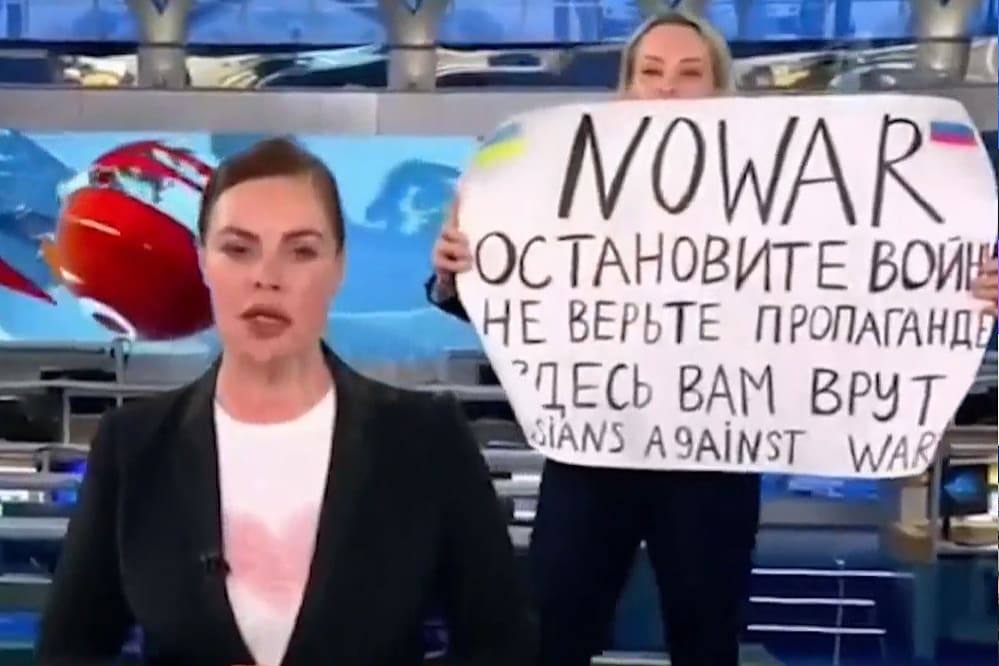
The interest of Russians in federal television posts with a propagandistic message continues to decline, according to Mediascope data analyzed by the publication “Mojem Obiasnit”. Thus, in the last four months, the three main TV channels in Russia – Rossia 1, NTV and Pervîi Kanal – have lost, on average, about 14% of their audience. The biggest drop was recorded by NTV, which reduced its audience by 33%. Pervîi Kanal lost 18.2% of its audience, and Rossia 1 – 10%, reports The Moscow Times.
The preferences of the viewers have also changed. If in April 2024, the most watched shows were informative programs, in April 2026 the top spots were occupied by entertainment shows, such as “Songs from the Heart” and “Hello, Andrei”.
The decline of the propaganda show presented by Vladimir Soloviov is particularly noticeable. If in April 2024 two editions of his program “Vecher” occupied the 18th and 19th places in the audience ratings, by April 2026 they had dropped to positions 68 and 96.
In February, the most popular TV projects, such as the series “Pervîi Otdel-5” from NTV, exceeded a rating of 6%, but in May no program managed to cross the threshold of 5%, according to realitatea.md. Even the broadcast of the Victory Parade, one of the events that traditionally attracts the largest audiences, recorded weaker results this year.
Political scientist Abbas Galiamov believes that the decreasing interest of citizens in televised propaganda is one of the most visible manifestations of the growing protest potential in society. According to him, the public is fed up with “lies, lack of adequacy, arrogant tone, and the same figures that have not changed for decades”.
The decline in Russian interest for TV propaganda is not a new phenomenon. Data previously published by the Pointmedia project, based on Mediascope statistics, show that between 2017 and 2024, the state television in Russia lost between 25 and 26 million viewers, equivalent to about 40% of the audience. At the same time, the monthly audience of YouTube in Russia increased by approximately 7 million users in the first two years of the war in Ukraine, and that of Google by about 8 million users.


