
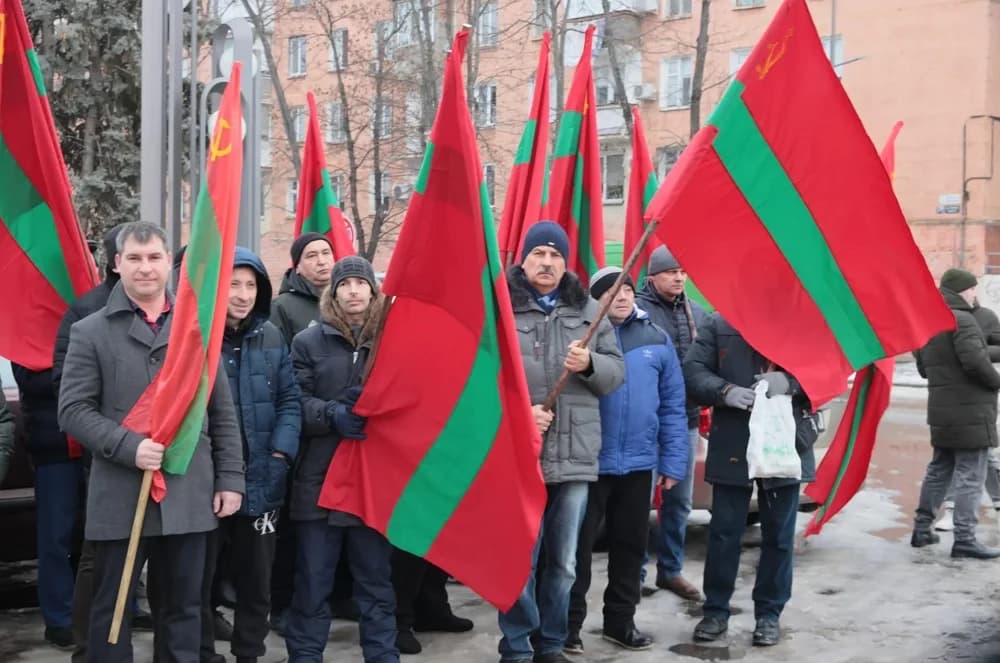
The separatist regime in Tiraspol is organizing a protest on Friday, October 23, against the policies of Chisinau, accusing the constitutional authorities of economic pressure on the region and violation of human rights, writes deschide.md. However, the tools used by the organizers to prepare the demonstration highlight the development of informational influence mechanisms that could connect Russian structures, local services, and propaganda networks.
According to sources from Deschide.MD within the so-called Supreme Soviet of Tiraspol, the stake of such an operation would be to transform social discontent into a political pressure tool against the authorities of the Republic of Moldova.
Protest of October 23: Local Mobilization and Regional Political Stake
On October 23, in Tiraspol, a demonstration of the so-called “Transnistrian Popular Forum”, led by the separatist leader Vadim Krasnoselski, is announced. The organizers invoke the effects of Chisinau’s fiscal measures and accuse the constitutional authorities of economic pressures on the region.
The preparations include mobilizing participants from localities and organizing transportation to Tiraspol. The regional publication “Novosti PMR” announced the transportation of interested persons from Slobozia, while the press reported on the traffic restrictions planned in the city. These elements demonstrate the existence of an organized mobilization, but also raise an important question – why is economic dissatisfaction being used to construct a political message against Chisinau?
In a region controlled by a separatist administration and heavily dependent on Russia, such a demonstration can simultaneously have a local and a geopolitical dimension.
To determine whether mobilization is part of a coordinated operation, the relationships between organizers, administrative structures, and networks promoting protest messages must be examined.
The Information-Psychological Operations Center in Tiraspol
In February, the GRU established an “Information-Psychological Operations Center” (COIP) in the Transnistrian region. The purpose of this structure would go beyond the Transnistrian space, targeting the informational environment in the Republic of Moldova and neighboring states, including the European Union.
The interlocutor of Deschide.MD, close to the so-called “commission for legislation, law enforcement, defense, security and peacekeeping activities” within the Supreme Soviet, pointed out that the need for the creation of COIP was argued as a result of noting the “inactivity of local authorities” and “informational attacks on the Operational Group of Russian Troops (OGRT)”.
The placement of COIP in the Transnistrian region was not accidental, but presented to the decision-makers within the GRU as an “ideal location” – in the vicinity of Ukraine, near the EU, lack of physical control over the region, presence of GOTR and necessary web infrastructure.
In this regard, the said center was tasked with managing several Telegram channels, using troll networks, producing content for TikTok, promoting bloggers and experts, as well as using local media institutions for the repeated distribution of certain messages.
Thus, the following Telegram channels are connected to the COIP network: “Триколор над Днестром” (Tricolor above the Dniester), “Приднестровец” (Transnistrian), Приднестровская Правда (Transnistrian Truth), НП inform, MEDIAKILLER ПМР, and others. Information operations are not limited to publishing news favorable to the separatist regime. They also involve the selection of topics, repetition of accusations, discrediting of opponents, and building a public image convenient for the actors controlling the communication.
MGB – executor of messages at the local level
An important role in the mechanism described above would be attributed to the so-called “ministry of state security” (MGB) from Tiraspol, especially to Directorate no. 15 (Information Directorate). The employees of the respective directorate, some of whom are also the administrators of the aforementioned Telegram channels, report directly to the so-called deputy minister of the MGB, Vitali Suhodolski. His name also appears in a 2022 investigation by RISE Moldova journalists regarding connections with Russian curators sent by FSB to the Republic of Moldova.
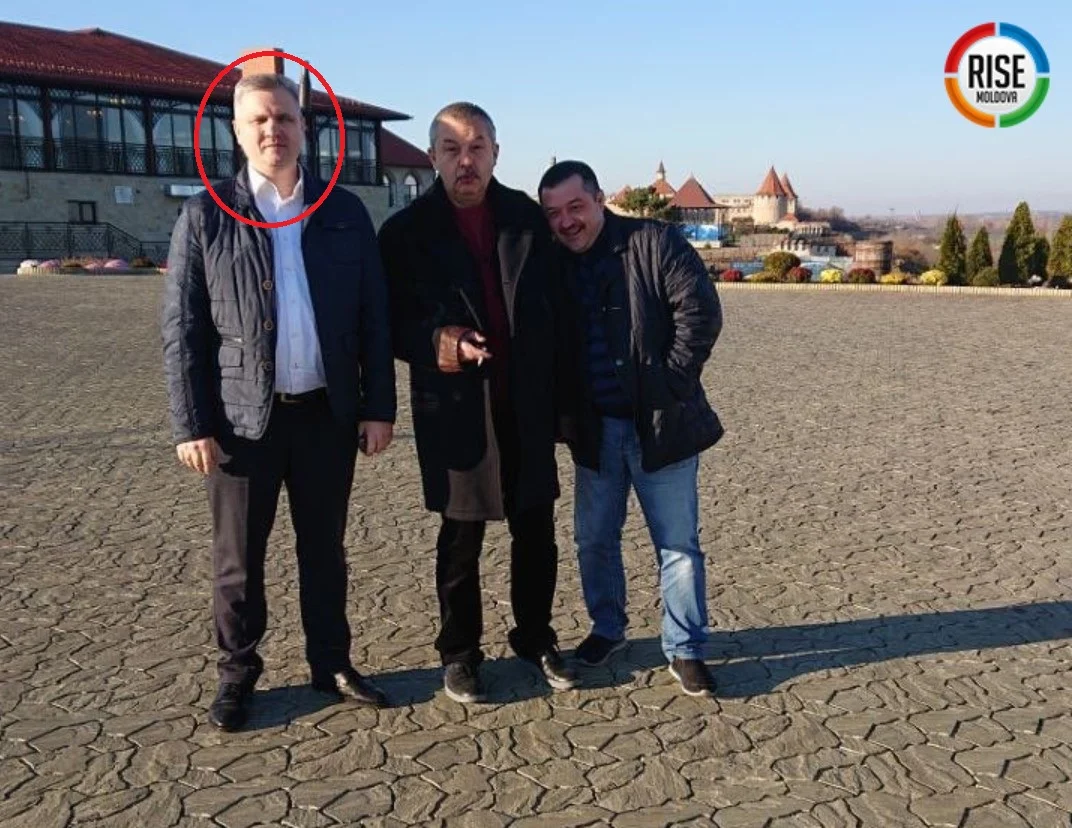
Another person involved in the coordination has been identified as Stanislav Larin, the deputy head of the “defense of constitutional order” department of the MGB. According to the obtained data, he is the liaison with the representatives of the Russian military intelligence service (GRU) and local media.
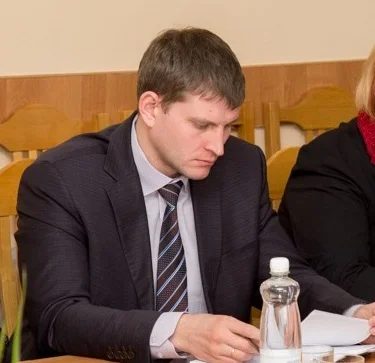
Guided by Suhodolski and Larin, the employees of Directorate no. 15 of the MGB have the following tasks:
- supporting, promoting and financing political parties, NGOs, entrepreneurs, mass-media and individuals whose activity coincides with the “state interests” of Transnistria;
- the execution of operational games regarding propaganda campaigns, misinformation, compromise, and the delivery of erroneous data to the “enemy” with the aim of undermining the latter’s activities;
- implementing complex informational measures using technical means for carrying out cyber attacks on target objectives;
- the active use of mass media controlled by the MGB, information platforms, journalists, video material producers in creating materials that “correspond to the interests” of Transnistria.
How economic dissatisfaction is transformed into an informational weapon
Fiscal measures and economic difficulties can generate real dissatisfaction. However, these can also be used to promote political messages that attribute the entire responsibility to Chisinau and present the administration from Tiraspol as the victim of an alleged economic aggression.
The mechanism used has several components:
- local mobilization: organizing the demonstration and promoting participation;
- message orientation: focusing public discourse on accusations against constitutional authorities;
- media amplification: distribution of images, statements, and messages through local channels and online platforms;
- audience expansion: the uptake of messages by channels from the Russian Federation and presenting the protest as the expression of a general dissatisfaction;
- external pressure: using the demonstration to support a certain interpretation of the relations between Chisinau and Tiraspol in front of the international public.
These stages are present in the case of the protest from October 23 and the messages distributed to people.
Russian Propaganda and the Construction of a Suitable Image for Moscow
The amplification of certain messages through media channels in the Russian Federation could significantly extend the political impact of the demonstration.
A relevant precedent is the documentation in October 2024 by Meta of a network of coordinated inauthentic behavior, associated with an operation that primarily originated in the Transnistrian region and targeted the Russian-speaking audience in the Republic of Moldova.
The Objective – Pressure on Chisinau
A local demonstration can be used to convey a broader political message when its demands are transformed into a general accusation against the central authorities. In the case of the protest on October 23, the stake would be to present Chisinau as responsible for the economic difficulties of the region and to consolidate the image of the separatist administration as a representative of the population’s interests.
Such a strategy aims at discrediting reintegration policies, fueling mistrust in constitutional authorities, and creating additional pressure on the government in Chisinau.
In this context, the demonstration of October 23 must be analyzed both through its economic claims, as well as through the way of mobilizing participants, the construction of political messages and their circulation in the informational space.