
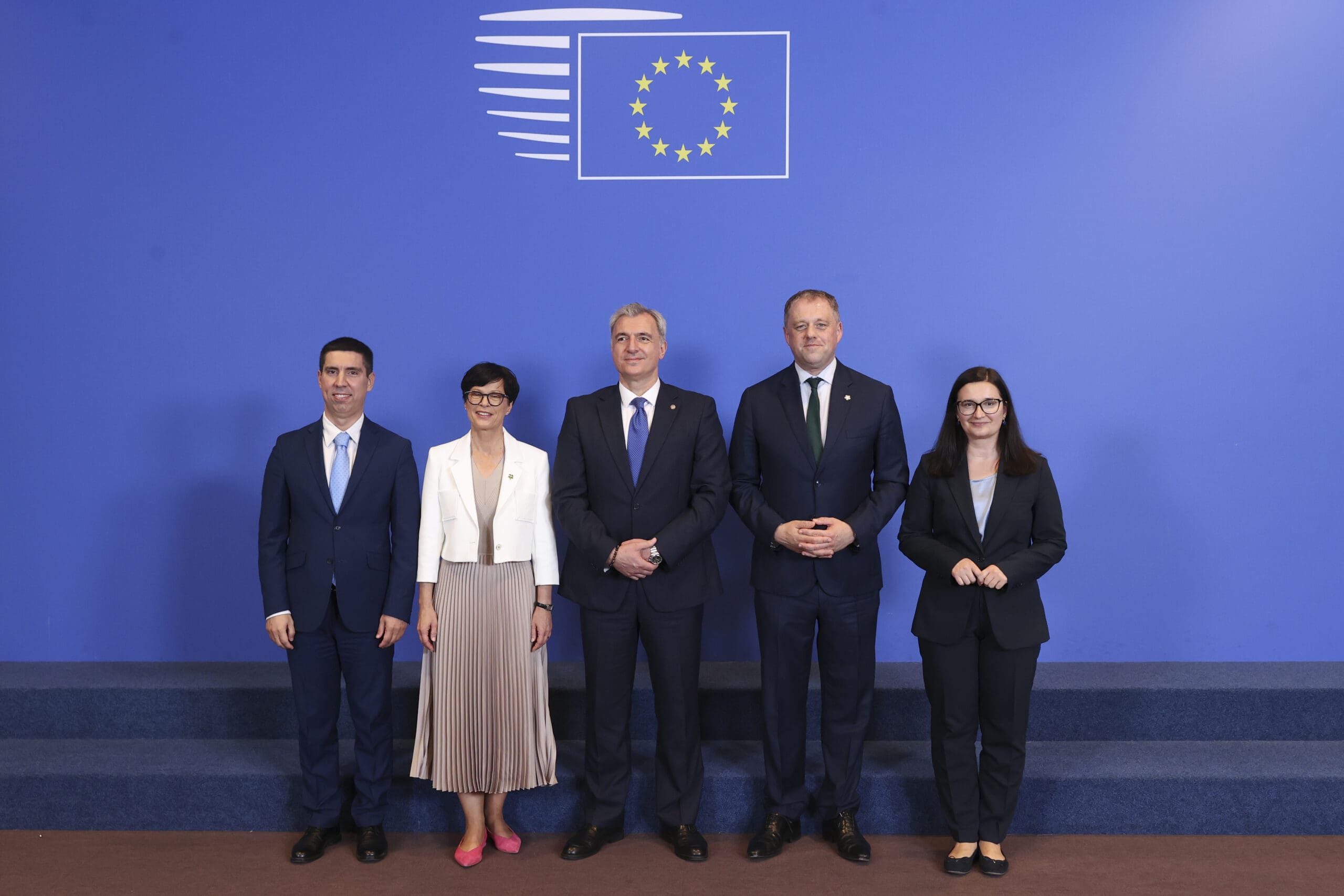
The Republic of Moldova has opened Cluster 6 – in the process of negotiating accession to the European Union. This includes only two chapters – foreign relations and foreign, security and defense policy. Although technically Chisinau has achieved a high level of alignment with the EU’s foreign policy, including by joining the sanctions against Russia, the main obstacle remains a political one — the need for unanimity among the 27 member states.
A frequently misinterpreted element pertains to Chapter 31, which does not oblige candidate states to join NATO or to renounce neutrality, reports moldova1.md. In reality, the main requirement is the alignment of foreign policy with that of the European Union. Examples of neutral member states, such as Austria, Cyprus, Ireland, or Malta, show that neutrality status is not incompatible with participation in European security policy.
Chapter 31 is called “Foreign, Security and Defense Policy” and covers two close, but distinct areas:
- PESC/CFSP: Foreign and Common Security Policy;
- PSAC/CSDP: Common Security and Defense Policy.
The first refers to diplomatic positions, sanctions, and external action. The second pertains to cooperation in the field of security and defense: civil and military missions, crisis management, force preparation, cyber security, hybrid threats, and cooperation in the defense industry.
The real challenges, however, remain of a geopolitical and institutional nature. The presence of Russian troops in Transnistria, the risks of circumventing sanctions, and external influence on institutions can complicate the accession process. Nevertheless, experts believe that constitutional neutrality does not represent a major obstacle, and Moldova has a real chance to advance quickly, if it continues to demonstrate loyalty and coherence in relation to the foreign policy of the European Union.
In the case of Moldova, the Government should not only declare its support for EU policy, but also demonstrate that it can effectively implement European decisions and have institutions capable of participating in the community policy mechanism.