


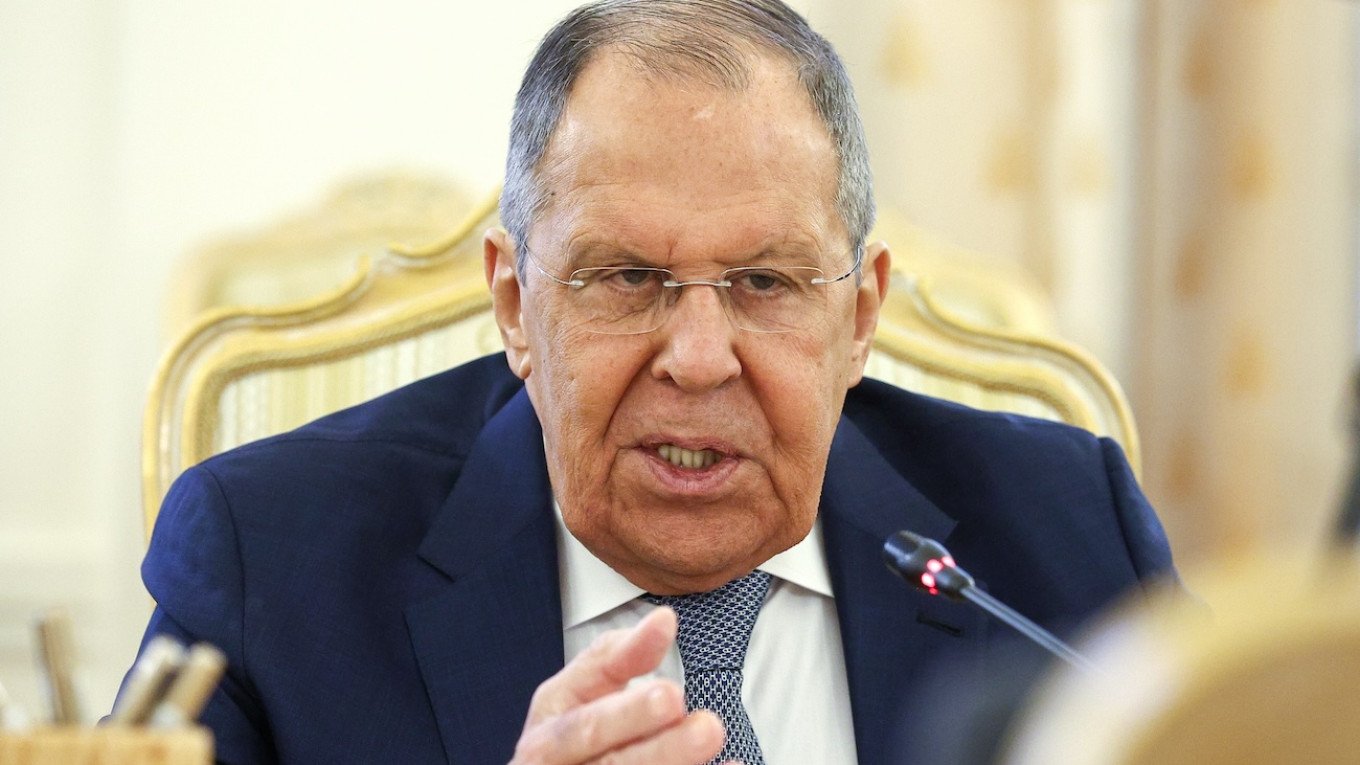
The Ministry of Foreign Affairs of Russia has distorted an interview given by Minister Sergey Lavrov to the French public television. Journalists from Paris have drawn attention to this matter.
A ten-minute fragment of the interview, conducted by French journalist Léa Salamé, was broadcast for the first time on March 26 on the evening news from France 2, where it was viewed by 3.4 million people.
The next day, the entire conversation, which lasted about an hour, was published online. The 10-minute sequence broadcast on television focused on the war in the Middle East. Lavrov stated that Russia primarily defends not Iran, but international law, which the United States violates, reports Meduza. The official rejected claims that Moscow provides Tehran with information for attacks against American targets, saying that “everyone knows” the coordinates of American military bases in the region.
The Minister also rejected claims that Russia is violating international law in Ukraine, stating that the Kremlin’s forces have never attacked civilian targets. Following the interview, the French television was publicly criticized.
Experts have criticized the interview, invoking the fact that the host failed to provide the context to challenge his assertions. The television station had to publicly justify and explain that the Russian minister did not receive the questions in advance, did not request conditions, and only wanted the entire material to be made available to the public.
The material was subsequently published on the YouTube channel of Russian diplomacy. According to France 2, however, some translations may have been inaccurate, to support propagandist narratives.
For instance, at the beginning of the interview, Salameh said he had heard a little about Russia defending Iran, a state considered by Putin as an ally. The Russian press interpreted the phrase as “you have defended your ally, Iran, a lot”.
During a discussion about the Russo-Ukrainian war, Salameh mentioned that there are “tens of thousands of dead Ukrainian civilians”. The translated version of the Russian Ministry of Foreign Affairs used “hundreds” instead of “tens of thousands”, and in the question there was a reformulation “to minimize references to possible war crimes”.
Following a question about the Russian threat to France and Lavrov’s response, the translation of Russian diplomacy quoted the journalist saying “I understand you,” suggesting that she agrees with the speaker’s point of view.