







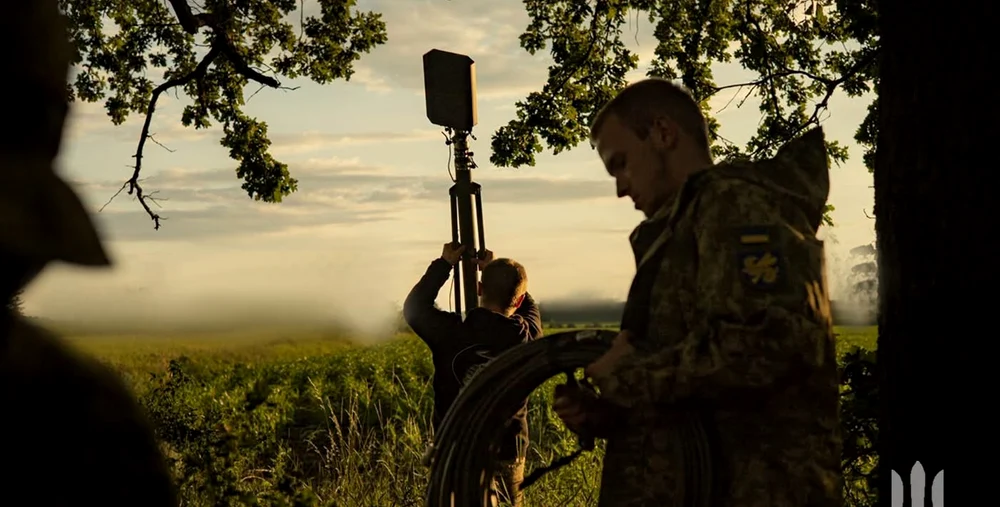
While battles are fought with artillery and FPV drones, another war unfolds in the electromagnetic spectrum, invisible, silent, and often decisive. The publication “Oboronka” offers a rare insight into the backstage of this technological confrontation, where Ukrainian operators, armed with antennas, jammers, and constant adaptation, try to blind and disarm Russian drones before they reach their target. The story of the commander known by the codename “Did” reveals how fast, unpredictable, and vital this wave-by-wave battle has become.
The commander of the electronic warfare company within the “Hartia” corps, Oleksi, known by the code name “Did” (Grandfather), joined the army in May 2023. Before joining “Hartia”, he had worked for over 20 years in telecommunications and IT. Initially, he chose to become an FPV drone operator, but ultimately decided to fight against them, developing the direction of electronic warfare within the unit.
The “frontline” electronic warfare against drones is one of the innovations born and developed during the Russo-Ukrainian war, which is why the new systems and working methods within the unit had to be built from scratch. Electronic warfare requires extraordinary flexibility, probably being the most dynamic technology of modern warfare.
The publication “Oboronka” had a conversation with “Did” about the first means of electronic warfare, the evolution of technology over the three years of service, counteracting guided aerial bombs (KAB), frequency changes of FPV drones, and the constant “cat and mouse game” with the Russians.
Details, HERE


