




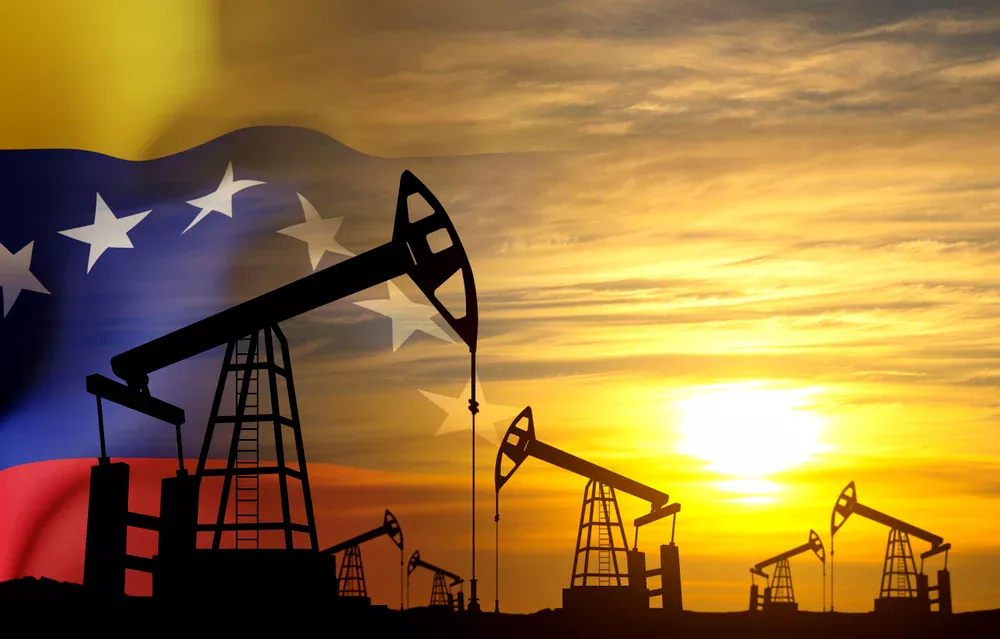
The US plans to exploit Venezuela’s oil reserves could consume more than a tenth of the remaining global carbon budget to limit global warming to 1.5°C by 2050, according to an exclusive analysis by ClimatePartner.
The calculation highlights how any attempt to further exploit Venezuela’s oil reserves would put increasing pressure on climate goals and risk deepening the global climate catastrophe.
Venezuela’s vast oil reserves could, if fully exploited, alone consume the maximum amount of carbon dioxide emissions allowed to keep global temperature rise below 1.5°C.
Although the oil infrastructure is degraded after years of sanctions, President Donald Trump has urged companies to invest 100 billion dollars to resume extraction.
“We will extract oil in a way that few have ever seen,” the US president told industry executives on Friday.
An analysis conducted for The Guardian by ClimatePartner, a carbon emissions accounting firm, modeled the impact on carbon of increasing Venezuela’s oil production by +0.5 million barrels per day until 2028, rising to +1.58 million barrels per day in the period 2035-2050.
The oil extracted from these vast reserves is, according to industry estimates, the most polluting in the world.
Classified as heavy oil and high in sulfur content, Venezuela’s crude oil has a dense consistency, similar to tar. These fluids do not flow like conventional oil; compared to light and sweet crude from countries like Saudi Arabia, they require intensive energy processes to be extracted.
Details, HERE