




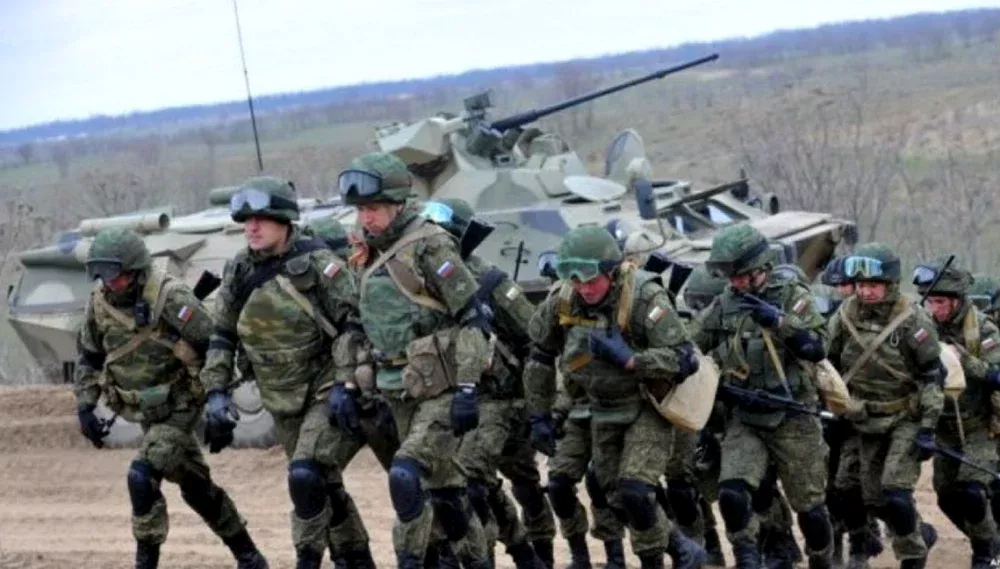
Civil resilience initiatives and young military recruits are prepared in advance for the situation in which President Vladimir Putin would decide to test NATO’s determination on the northern flank.
Just four months ago, Ella Adman had barely finished her high school studies and had never held a weapon in her hand. Today, the 19-year-old, who is in compulsory military service, carries an assault rifle during exercises at a military base in Gotland – a Swedish island of crucial strategic importance in the Baltic Sea. In just a few days, she is set to leave for her first official mission in Stockholm, to ensure the security of the royal family.
Adman is one of the hundreds of recruits sent to the base near the fortified medieval city of Visby, as part of a rapid remilitarization process of the Gotland island. During the peak of the Cold War, the island hosted four regiments and could mobilize up to 25,000 soldiers. However, in 2005, Sweden disbanded the last regiment here, leaving the defense in the hands of a reduced battalion of the National Guard.
Situated just 275 kilometers from Kaliningrad – the heavily militarized Russian exclave between Lithuania and Poland – Gotland is seen by analysts as the ideal point through which Moscow could attempt to gain control over the maritime area, symbolically called the “NATO sea” at present.
Details, HERE