



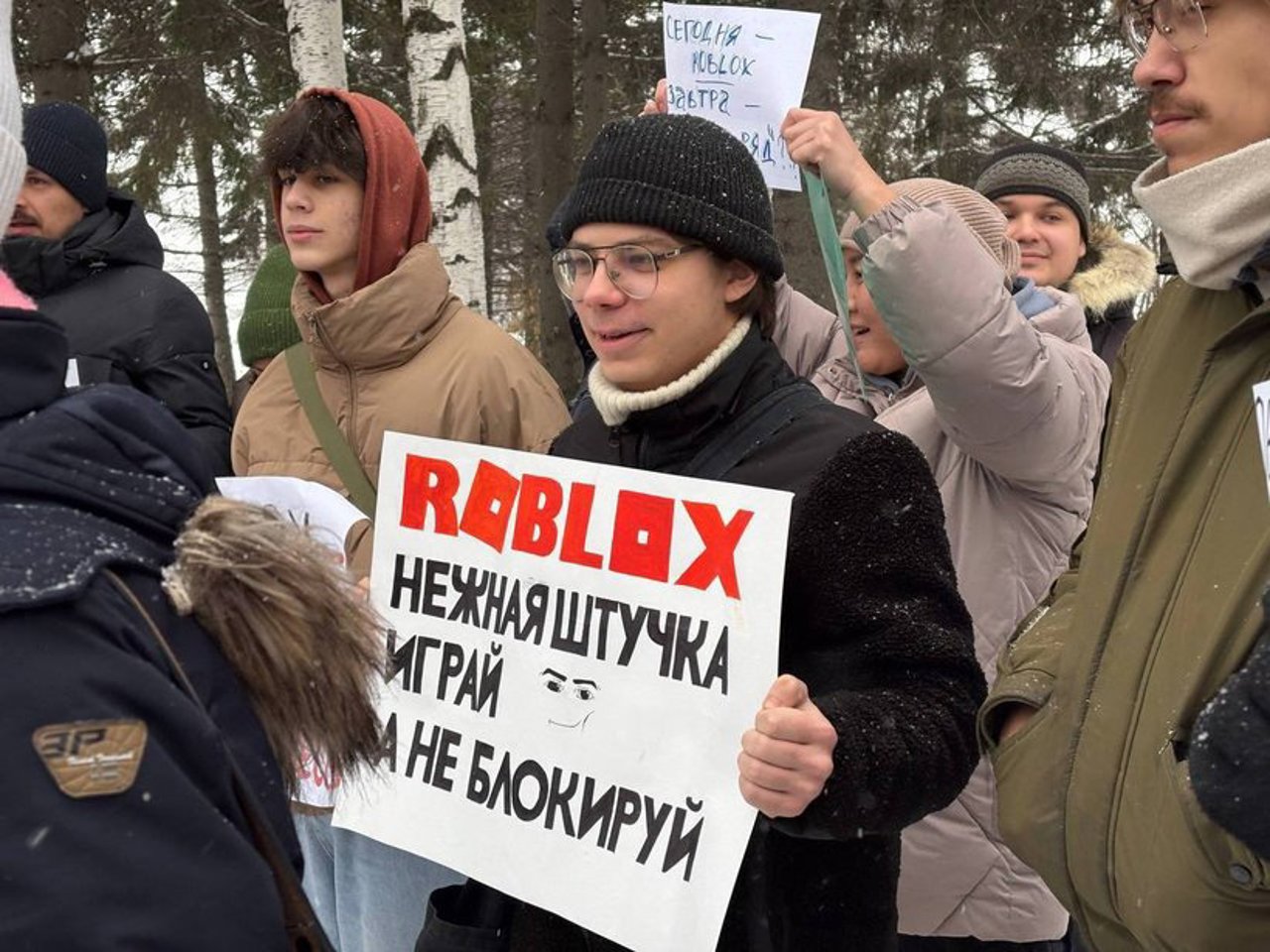
On December 14, dozens of people protested in the Siberian city of Tomsk against Russia’s decision to ban the American children’s gaming platform Roblox, a rare demonstration of public discontent amid growing irritation among the population over this ban, Reuters reports.
In wartime Russia, censorship is widespread: Moscow blocks or restricts social media platforms such as Snapchat, Facebook, Instagram, WhatsApp, and YouTube, while simultaneously distributing its own version through the Russian social media and mass media network.
The Russian communications oversight authority, Roskomnadzor, announced on December 3 that it had blocked Roblox because it was “full of inappropriate content that could have a negative impact on the spiritual and moral development of children“, news.ro quotes.
In Tomsk, 2,900 km east of Moscow, several dozen people braved the snow to raise handmade signs with the messages: “Don’t touch Roblox” and “Roblox is the victim of the digital iron curtain” in Vladimir Vysotsky Park, according to photos provided by a protest organizer.
“Bans and blockages are all you can do“, read one of the signs. The photos showed about 25 people standing in a circle in the snow, holding signs.
In Russia, the banning of Roblox has sparked a debate about censorship, children’s safety in relation to technology, and even the effectiveness of censorship in a digitized world where children can bypass many bans with just a few clicks.
Many Russians simply bypass the bans using VPNs (virtual private networks), although some young Russians have questioned the logic of a ban if it can be so easily circumvented, while others have wondered why there are so few Russian alternatives to the state-banned apps.
Some Russian parents and teachers have expressed concern that Roblox allows children to access sexual content and communicate with adults.
Roblox, based in San Mateo, California, has been banned by several countries, including Iraq and Turkey, due to concerns about the platform being exploited by predators to abuse children.
Russian officials say they need censorship to defend against a sophisticated “information war” launched by Western powers and against what they consider to be decadent Western culture, which undermines “traditional” Russian values.