







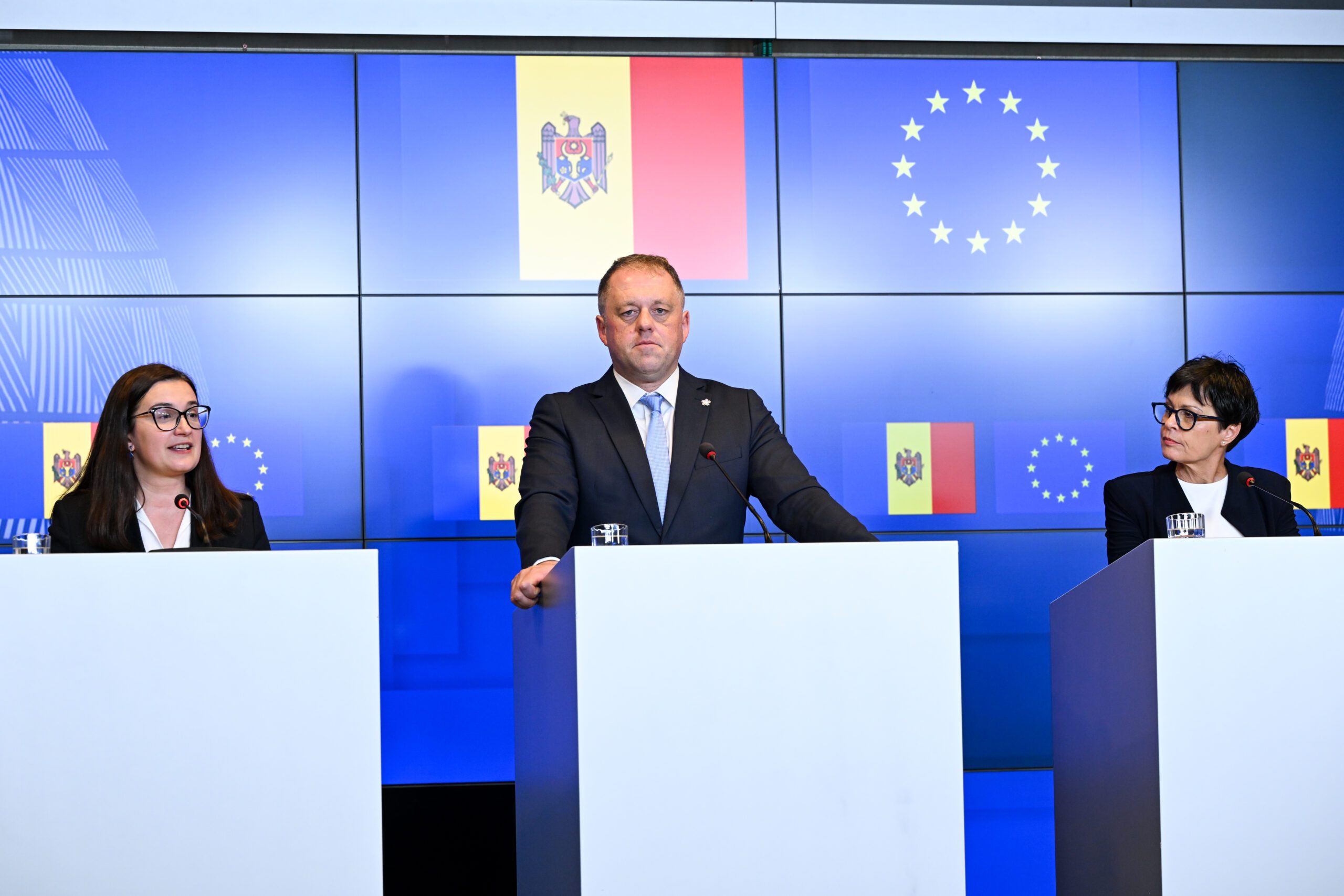
The Republic of Moldova has opened accession negotiations with the European Union for two more clusters: “Internal Market” and “Competitiveness and Inclusive Growth”. The decision was announced at the Intergovernmental Conference Moldova – EU, which took place on October 13, in Luxembourg.
Marta Kos has appreciated the progress of the Republic of Moldova. According to her, the progress of our country has the strongest pace, following the expansion of the European Union in 2022.
“The opening of two more clusters is very good news, but, of course, we will not stop here. The remaining two negotiation clusters are technically prepared and we should now move on to their opening,” said the European Commissioner for Enlargement, quoted by realitatea.md.
The Deputy Prime Minister for European Integration, Cristina Gherasimov, revealed that the Republic of Moldova has advanced in negotiations by opening four clusters in four months.
“For the citizens of the Republic of Moldova, these reforms mean better consumer protection, safer jobs, and more opportunities to develop their skills. For entrepreneurs, it means simpler procedures and predictable rules,” said the official.
The opening of negotiations does not mean the end of reforms, specifies the Reintegration Bureau. The Republic of Moldova will have to fulfill the commitments undertaken, reflected in the National Accession Program, and the EU will assess the progress made and the compliance with the conditions for closing the negotiations.
In parallel, the transition periods requested by the Government will be negotiated. These would allow for the gradual implementation of European rules after accession, in justified areas and for limited intervals. writes newsmaker.md.
Moldova is pursuing access to certain opportunities prior to accession. Among the objectives are the recognition of Moldovan electronic signatures within the relevant European mechanism, obtaining the status of an associated country in Erasmus+ and closer participation in European consumer protection, social security and financial surveillance systems.


