




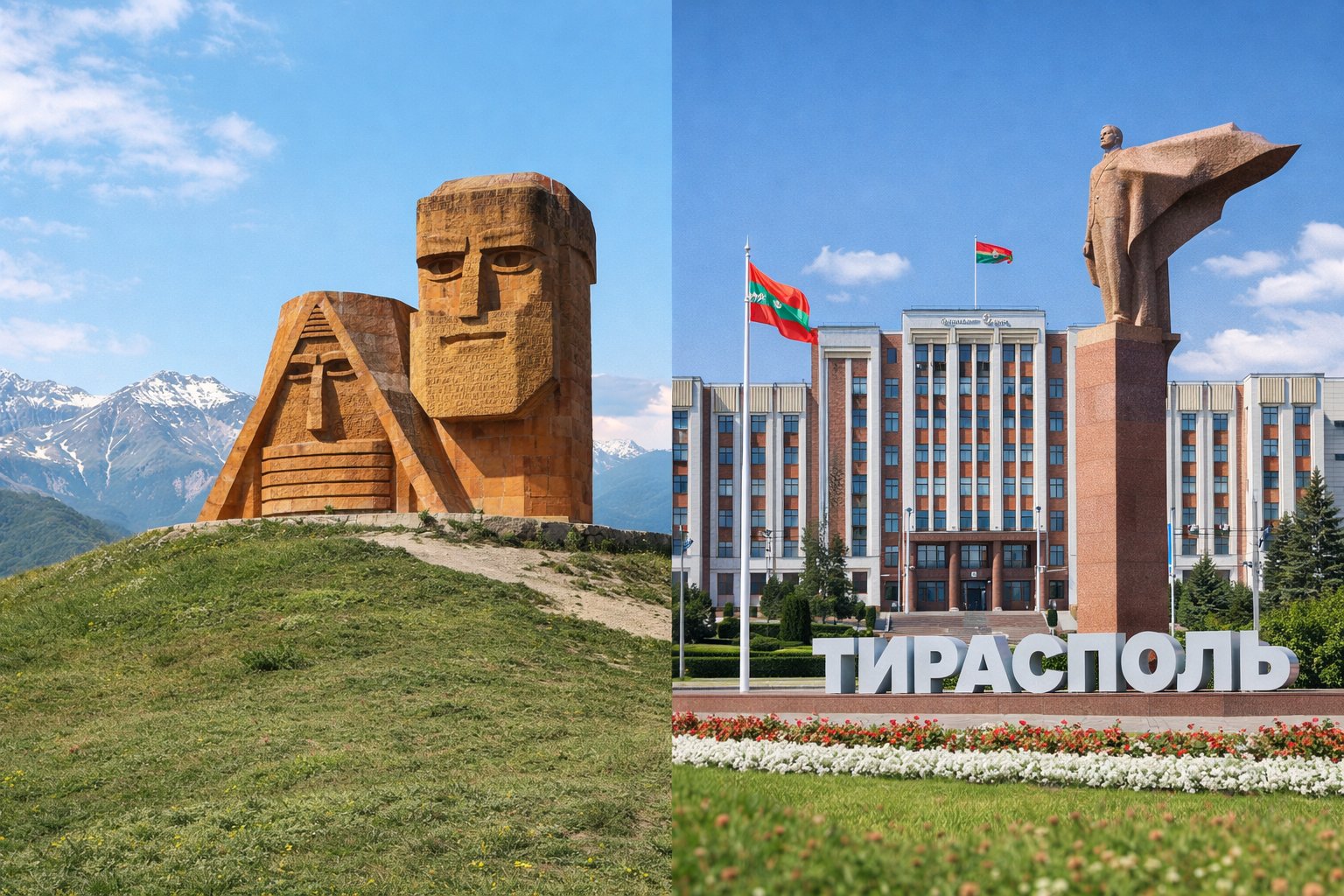
The Baku Court has pronounced severe sentences for the separatist leaders from Nagorno-Karabakh, including life imprisonment for five of them, following a trial that began in 2025, according to Reuters.
On February 5, 2026, the Military Court in Baku handed down prison sentences for several former officials from the former administration of the separatist region of Nagorno-Karabakh, the last enclave predominantly inhabited by ethnic Armenians on the internationally recognized territory of Azerbaijan. The trial began in January 2025, after the region was recaptured by Azerbaijani forces in 2023.
Those sentenced to life imprisonment are:
-
Arayik Harutyunyan – former president of the self-proclaimed Republic of Nagorno-Karabakh;
-
David Babayan – former foreign minister of the separatist region;
-
Davit Ishkhanyan – former president of the parliament of the separatist region;
-
Levon Mnatsakanyan – former commander of the army of the separatist region;
-
Davit Manukyan – former deputy commander of the army of the separatist region.
They were found guilty of serious charges including crimes against humanity and peace, war crimes, genocide, terrorism, and violent seizure of power.
Other leaders received prison sentences between 15 and 20 years:
-
Arkadi Ghukasyan – former president of the separatist region;
-
Bako Sahakyan – former president of the separatist region; and other people tried in the same process.
In addition, some civilians captured during the 2023 operation also received sentences between 15 and 19 years in prison for various offenses related to the conflict.
Direct link with Transnistria: what would the Azerbaijani precedent mean for the Republic of Moldova
The sentences pronounced in Azerbaijan create a relevant precedent for the Republic of Moldova, where the Transnistrian region has been outside the constitutional control of the state for over three decades. Legally, the situations are comparable: both Nagorno-Karabakh and Transnistria are internationally recognized territories of sovereign states, and the separatist structures there have no legal legitimacy.
The legislation of the Republic of Moldova theoretically allows for the prosecution of separatist leaders from Tiraspol. The penal code criminalizes attacks on territorial integrity and usurpation of state power, and the Constitution qualifies as illegal any authorities created outside the constitutional framework. In other words, if Chisinau were to restore effective control over the Transnistrian region, there would be a legal basis for investigating and prosecuting former leaders of the separatist administration, including for decisions and actions taken over the years.
The difference from the case of Azerbaijan, however, lies in the geopolitical context. While Baku resorted to military force to regain control over Karabakh, the Republic of Moldova has consistently opted for a peaceful and negotiated solution, given the presence of Russian troops on Transnistrian territory. This factor drastically limits Chisinau’s options, including the immediate application of criminal law.
At the same time, the Azerbaijani precedent sends a clear signal: the status of separatist leader does not offer unlimited term immunity. In the event of a resolution of the Transnistrian conflict — regardless of its form — the issue of legal responsibility of those who led the unconstitutional structures cannot be excluded from the equation. The case of Nagorno-Karabakh shows that, under certain conditions, states can move from political tolerance to criminal responsibility.