
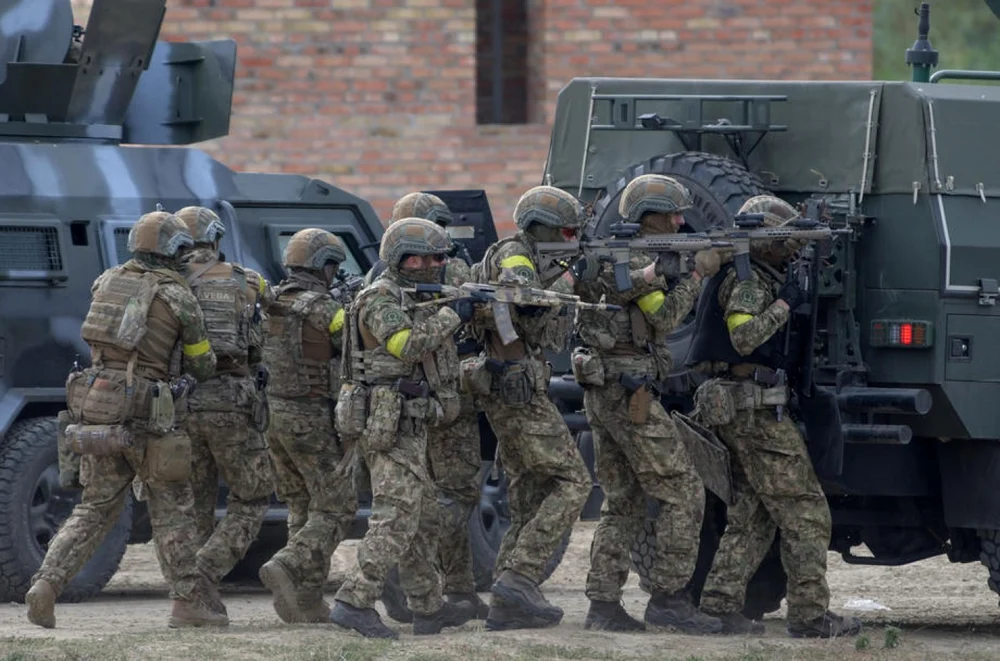
Belarus, Russia’s closest military ally, has recently conducted large-scale military exercises near the Suwałki Corridor, the narrow strip of land that connects the Baltic states to the rest of NATO and which has long been one of the alliance’s most vulnerable points, reports CNN.
French President Emmanuel Macron has convened the country’s political leaders for a confidential security briefing, subsequently announcing new measures to protect critical infrastructure against the increasingly frequent hybrid attacks from Russia. Polish Prime Minister Donald Tusk went even further, warning that Russia could launch drone or missile attacks against NATO states, disguised as accidents. The United Kingdom has already urged its citizens to start preparing for the possibility of a war, including by stockpiling canned food and drinking water, with the head of British defense declaring that the country is going through “the most dangerous” period in recent decades.
Germany is preparing its hospitals for a possible Russian attack, and Chancellor Friedrich Merz spoke of “decisive moments” in the defense of freedom and peace on the continent. Even Switzerland, known for its neutrality, has adopted a new national security strategy, which calls for increased resilience and self-defense in the event of an armed attack.
The American President, Donald Trump, has also announced progress regarding the establishment of a permanent American military base in Poland. Two weeks ago, he had sent the CIA director on a secret mission to deliver a clear warning to Moscow about any attack on NATO territory.
On both sides of the Atlantic, concern is growing that Russian President Vladimir Putin could extend the war beyond the borders of Ukraine.
An ever expanding battlefront
The United States has experienced, just this week, a demonstration of this threat. Federal prosecutors have indicted five individuals suspected of collaborating with Russian intelligence services in a network involved in planning global attacks and assassinations, including on American soil. According to the charges, the same network would have ordered attacks on civilian and military infrastructures in Europe.
The case fits into a pattern that Europeans have been facing for years: cyber attacks, sabotage, arson, drones and strikes on critical infrastructure. Last month, Germany accused Russia of a drone attack on a civilian airport.
Details, HERE