



The President of Ukraine, Volodîmîr Zelenski, signed a series of decrees at the beginning of January aimed at restructuring the leadership of the main state security institutions. The changes are taking place in the context of the ongoing war with Russia and internal controversies related to the functioning of anti-corruption institutions.
Official decisions: changes in RNBO, GUR, and SBU
According to the presidential decrees published on January 5, Zelenski has made several changes to the composition of the National Security and Defense Council (RNBO).
According to official documents:
-
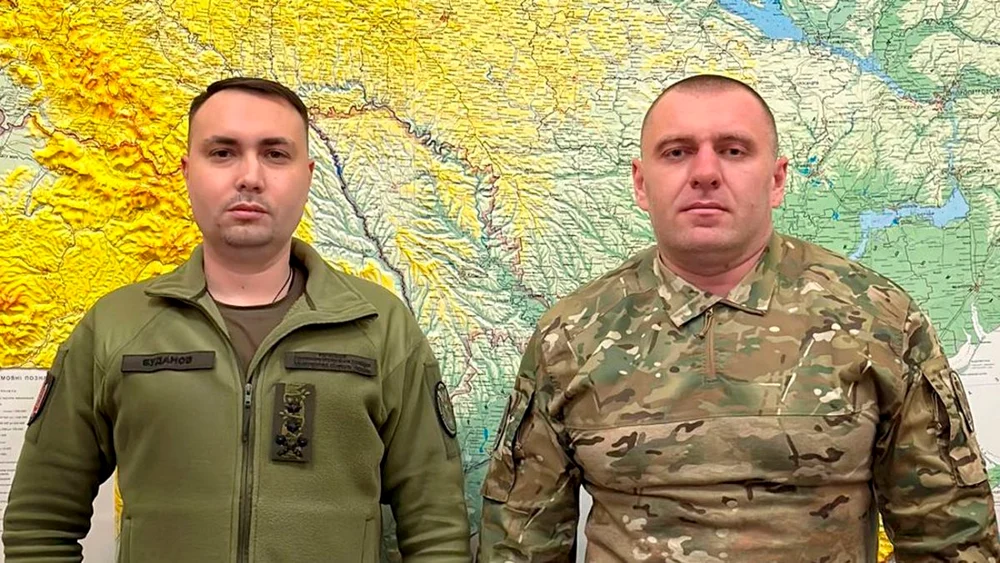
Kirilo Budanov, who recently took over the leadership of the Presidential Administration, has been included in the composition of the RNBO;
-
Oleg Ivașcenko has been withdrawn from the RNBO and appointed to lead the Main Directorate of Military Intelligence (GUR);
-
Major General Oleksandr Poklad has been appointed as the first deputy of the Security Service of Ukraine (SBU);
-
Andrii Tupikov, former head of the counterintelligence department, and Denis Kilîmnik have been appointed as deputy heads of the SBU, the latter also coordinating the Antiterrorist Center of the institution.
The information was confirmed by the decrees published by the Presidential Administration and official communications of the involved institutions.
Vasîl Maliuk’s departure from the leadership of the SBU
The changes were announced in parallel with Vasîl Maliuk’s withdrawal from his position as head of the SBU. Zelenski publicly confirmed that Maliuk will leave the leadership of the service, but will remain active within the institution, focusing on special operations against the Russian Federation.
“He knows best how to do this and will continue to act within the SBU system,” Zelenski said, adding that he has already discussed possible candidates to take over the leadership position.
In a separate statement, Maliuk affirmed that he will remain involved in what he described as asymmetric operations against Russia, intended to cause “maximum damage” to Moscow.
Political context and public accusations
Maliuk’s withdrawal comes after several days of speculation in the Ukrainian press about a possible dismissal, in the context of a scandal related to the functioning of anti-corruption institutions.
According to reports in the local press and statements by civic activists, Maliuk was perceived as one of the central figures involved in a coordinated action against the National Anti-Corruption Bureau (NABU) and the Specialized Anti-Corruption Prosecutor’s Office (SAPO).
The crisis erupted last summer, after the Ukrainian parliament passed a law limiting the degree of independence of the two institutions. Under Maliuk’s leadership, the SBU detained several NABU employees, accused of ties with the Russian Federation.
Authorities then claimed that the measures were counterintelligence in nature. In contrast, representatives of civil society and anti-corruption activists argued that the investigations targeted detectives involved in sensitive cases, including investigations that would have targeted people close to the presidential administration. The detained individuals were subsequently released.
What the reorganization indicates
The authorities in Kiev have not publicly presented a political interpretation of these changes, but the succession of decisions suggests a reconfiguration of the leadership of the security apparatus at a sensitive time, marked simultaneously by external pressures and internal tensions.
It remains to be seen whether the reorganization will lead to a clarification of the relationships between security structures and anti-corruption institutions or whether it will continue to fuel criticisms regarding their politicization.