
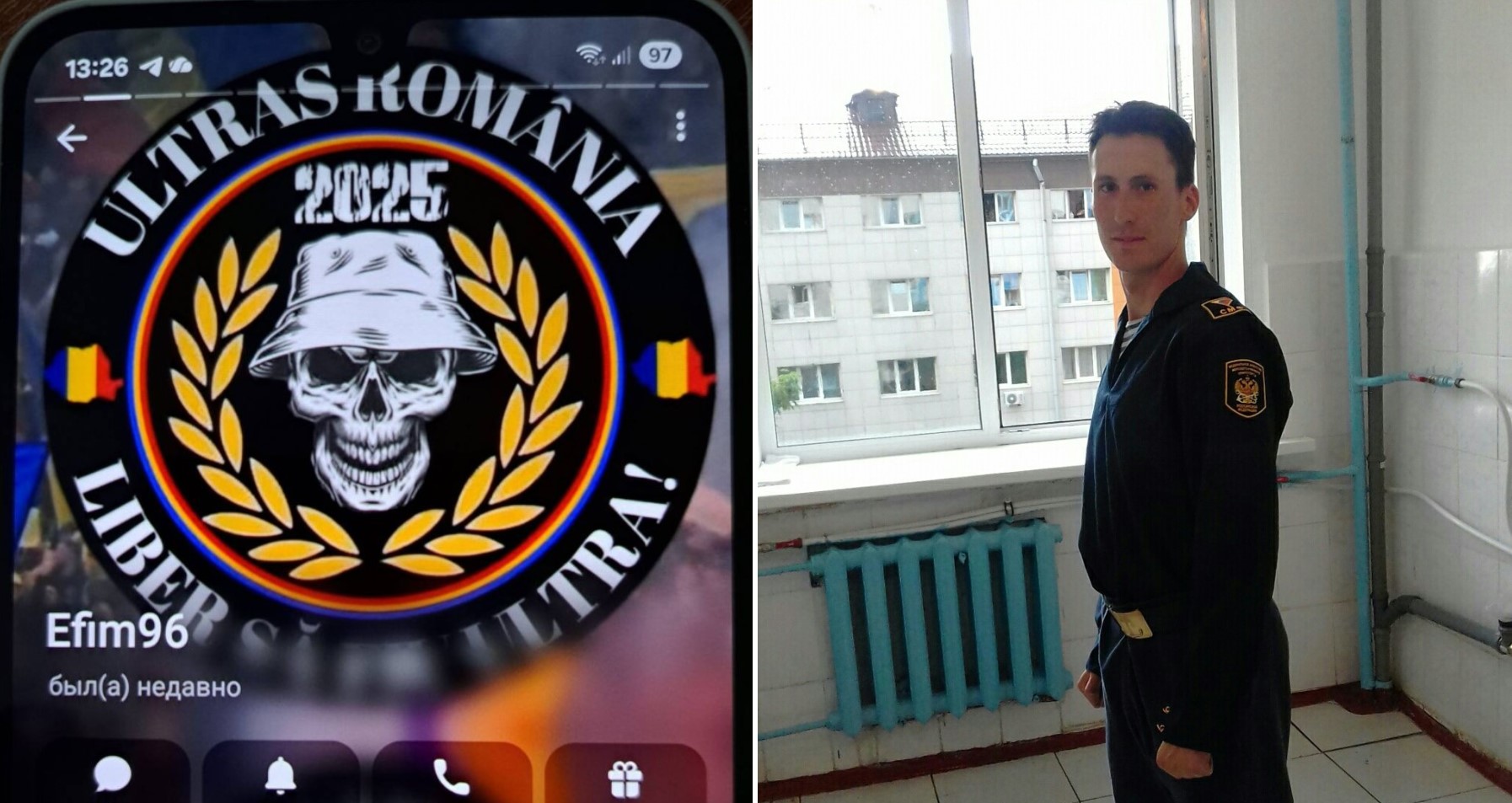
A discussion group created by citizens of the Republic of Moldova on the Telegram application, suggestively named “Moldavian Military Portal”, has become the target of an organized infiltration by individuals suspected of having connections with structures affiliated with the Ministry of Defense of the Russian Federation, notes deschide.md. According to the information analyzed from the community members’ conversations, certain users identified as Russian citizens would have used the group for information gathering and identifying individuals willing to participate in destabilizing actions.
Undercover “patriotic” infiltration
The strategy used by the suspect accounts was a well-calculated one. Initially, they joined the discussions without drawing attention, presenting themselves as supporters of the pro-European orientation of the Republic of Moldova and critics of Kremlin policies. To camouflage themselves, they used profile pictures with historical or cultural symbols, including the image of the ruler Stefan the Great, as well as images with supporters of the Romanian national football team. This strategy was meant to quickly gain the trust of the members and avoid suspicion.
One such infiltrated agent is also Efim Țapu, a 29-year-old with military studies in Russia, monitored by Deschide.MD reporters for several months.
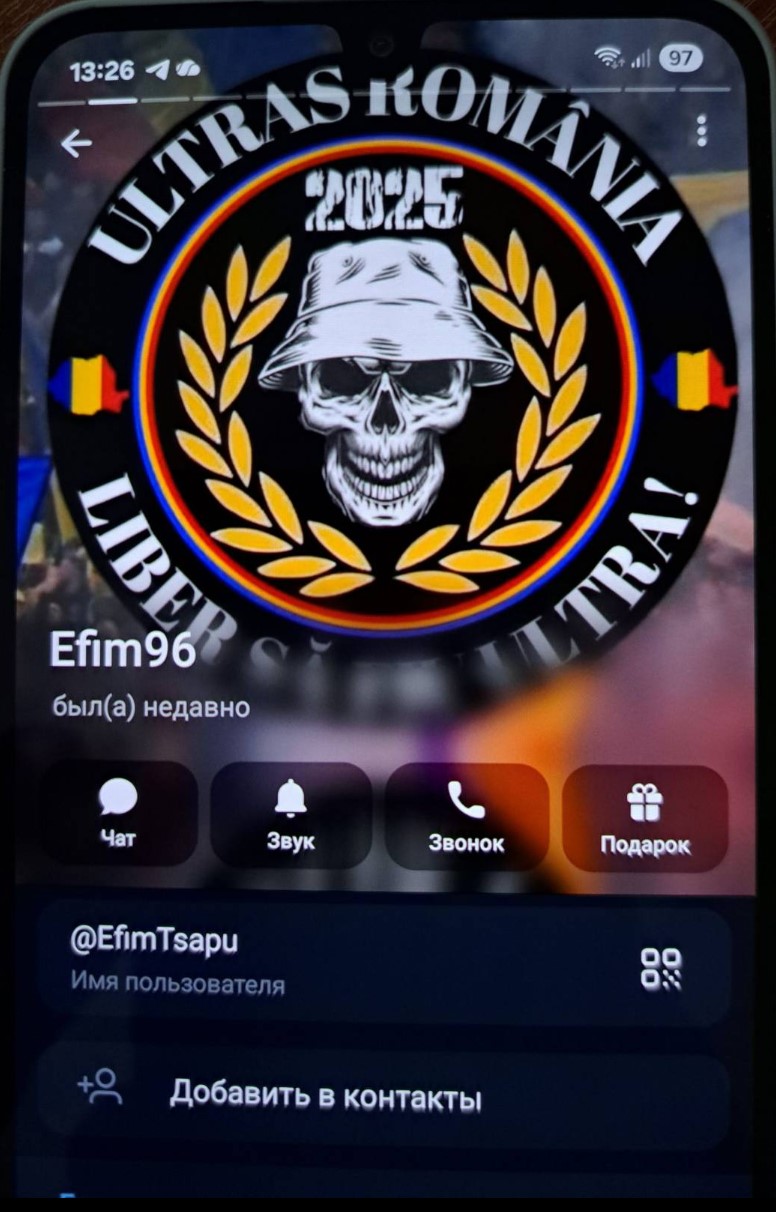
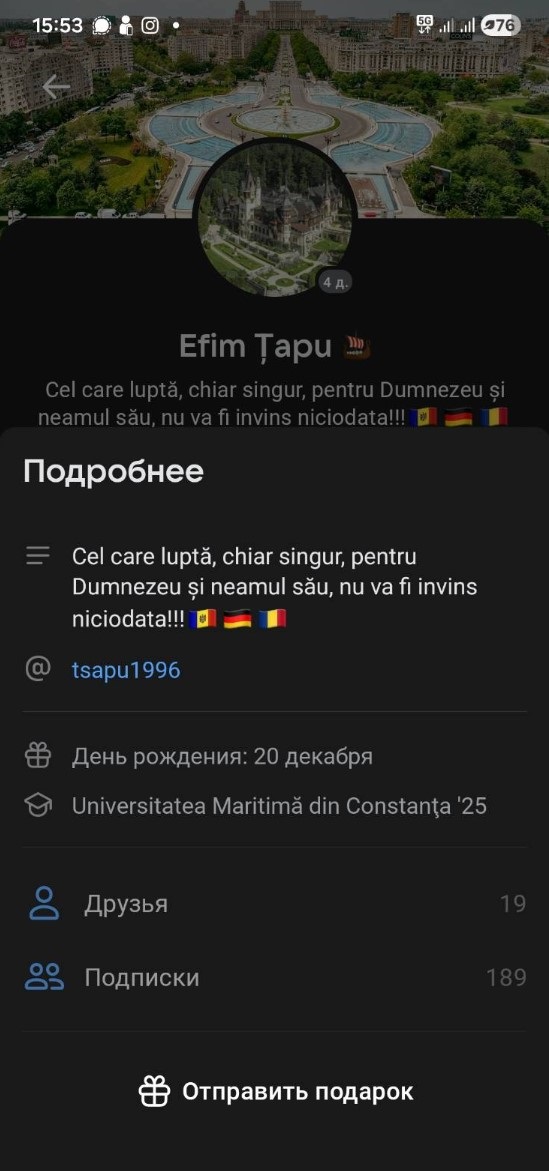
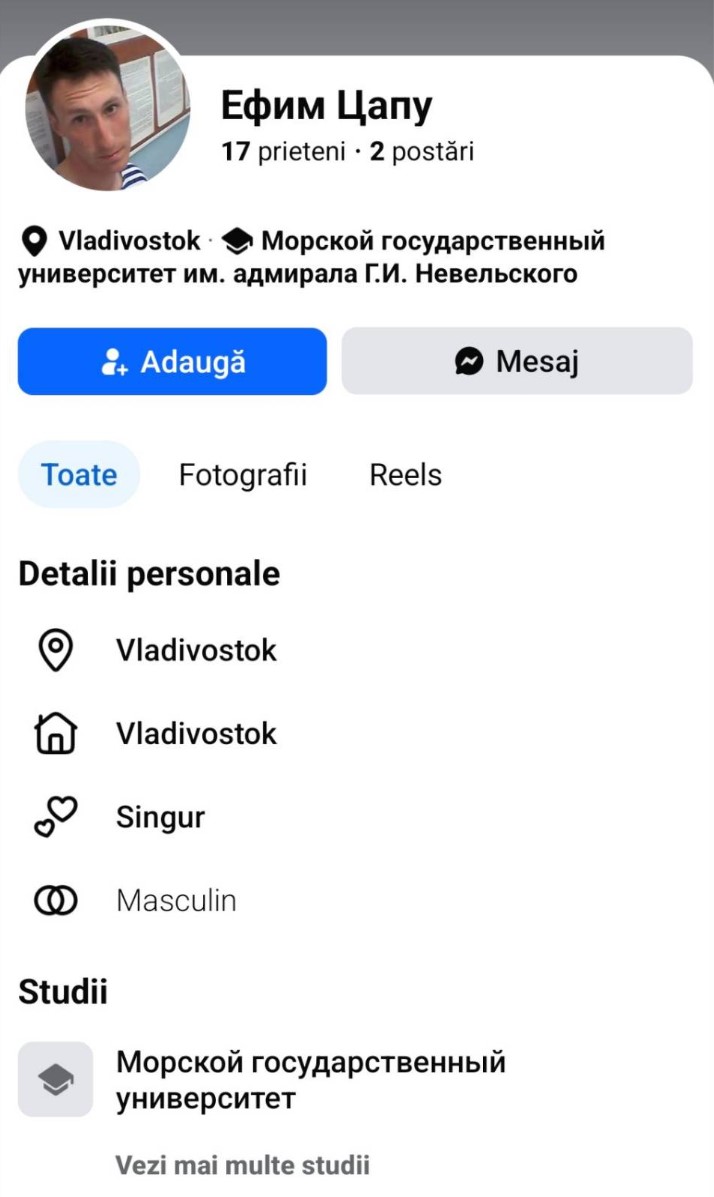
On his page on the Vkontakte (VK) platform – a popular social network in the Russian space – Țapu indicates that he studied at the Maritime University of Constanța. On another VK profile, as well as on his Facebook page, he already writes that he studied at the “Admiral G. I. Nevelskoi” State Maritime University in Vladivostok, Russia.
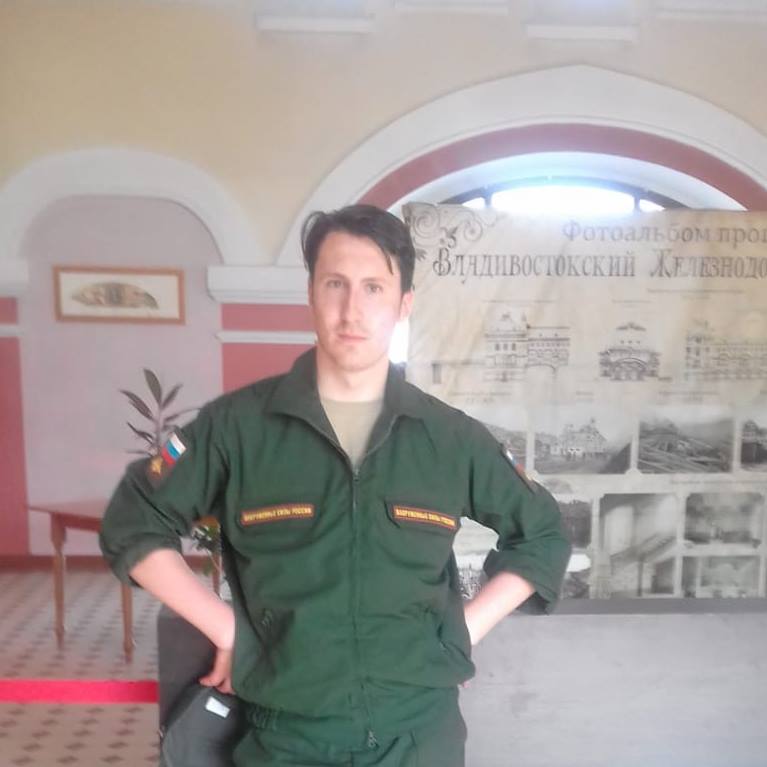
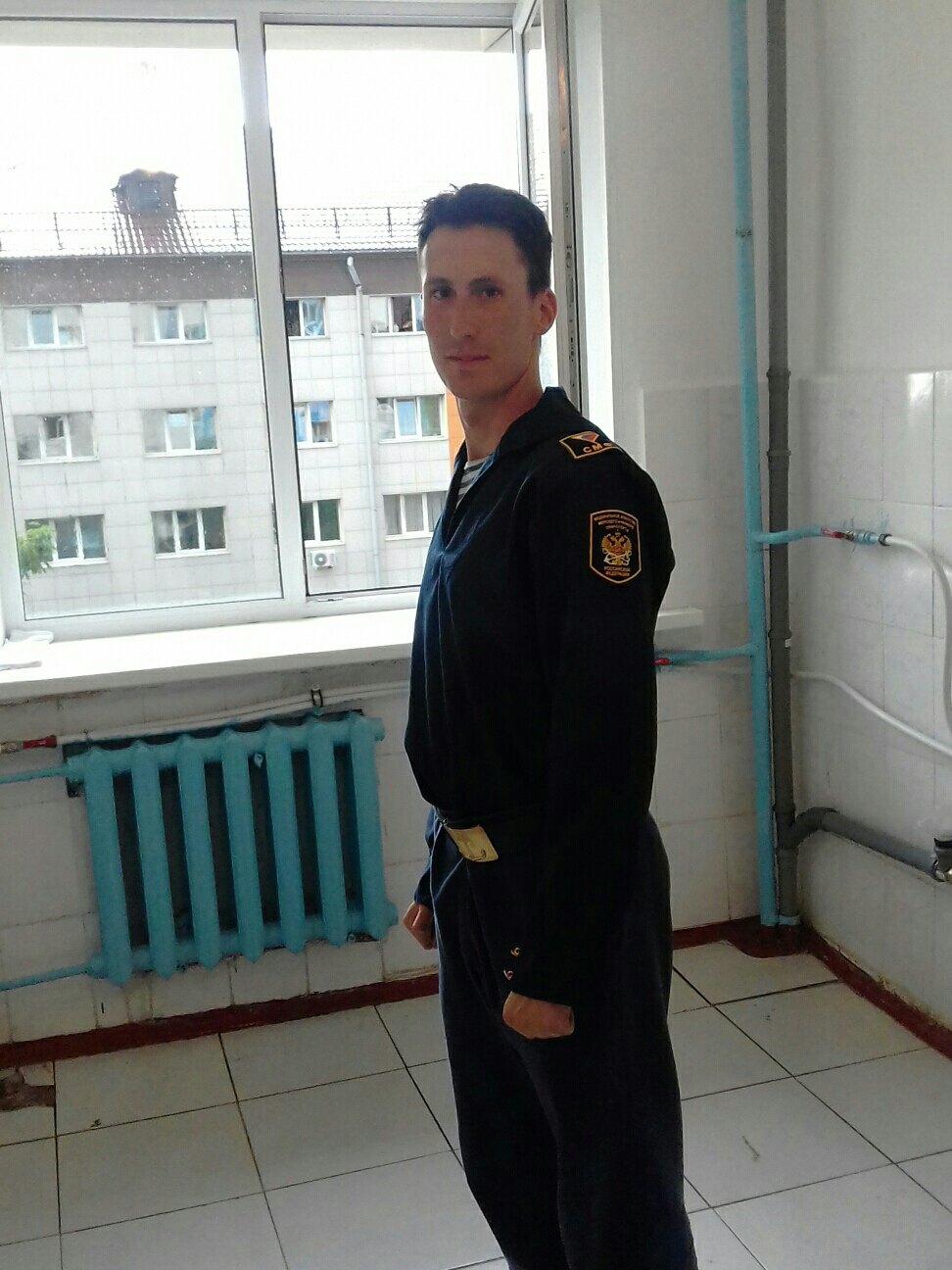
The fact that Țapu would have connections with the Russian Ministry of Defense is also demonstrated by the photos he published, wearing the Russian military uniform.
Collecting information about the Army of the Republic of Moldova
After integrating into the community, Țapu begins to direct conversations towards sensitive topics about:
- the military equipment acquisitions of the Ministry of Defense of the Republic of Moldova;
- the capabilities of the National Army;
- the evolution of the conflict in Ukraine and the military position of Chișinău.
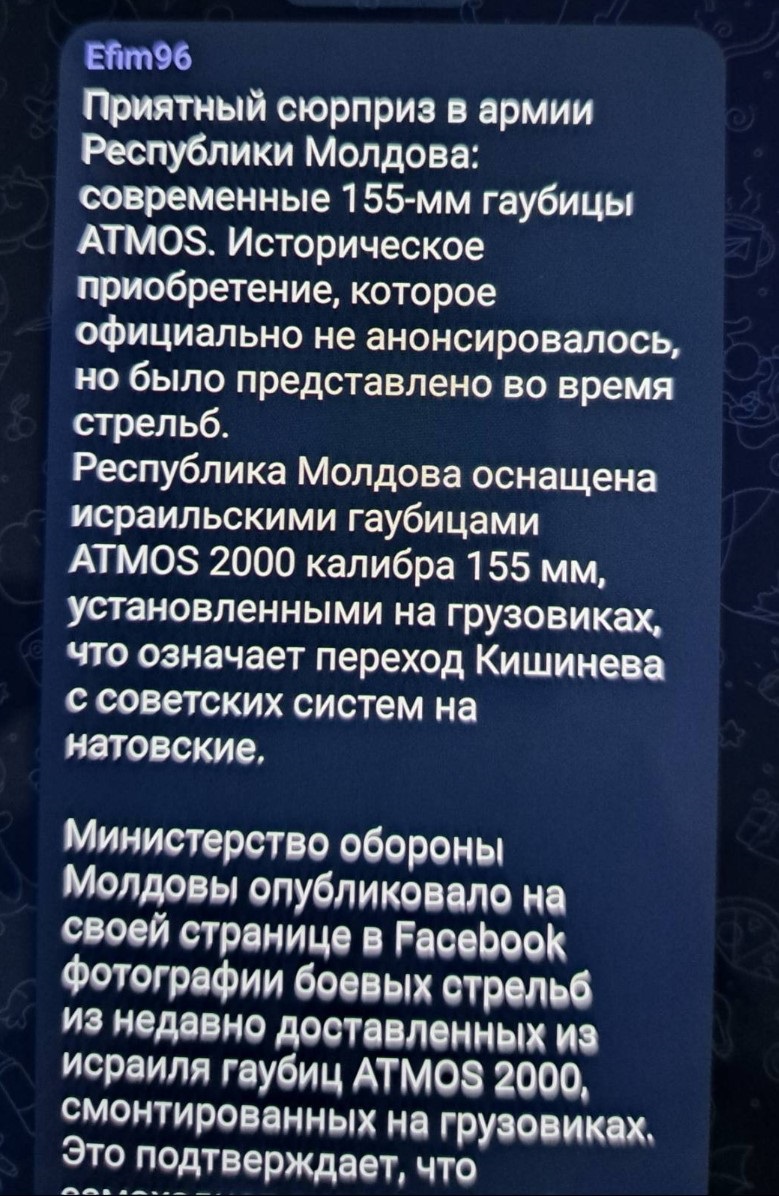
In one of the conversations, Efim Țapu praises the acquisition of the ATMOS self-propelled artillery systems.
“A pleasant surprise in the army of the Republic of Moldova: modern 155 mm ATMOS howitzers. A historic acquisition, which was not officially announced, but was presented during the shootings. The Republic of Moldova is equipped with Israeli ATMOS 2000 howitzers of 155 mm caliber, mounted on trucks, which means Chișinău’s transition from Soviet systems to NATO ones,” he writes.
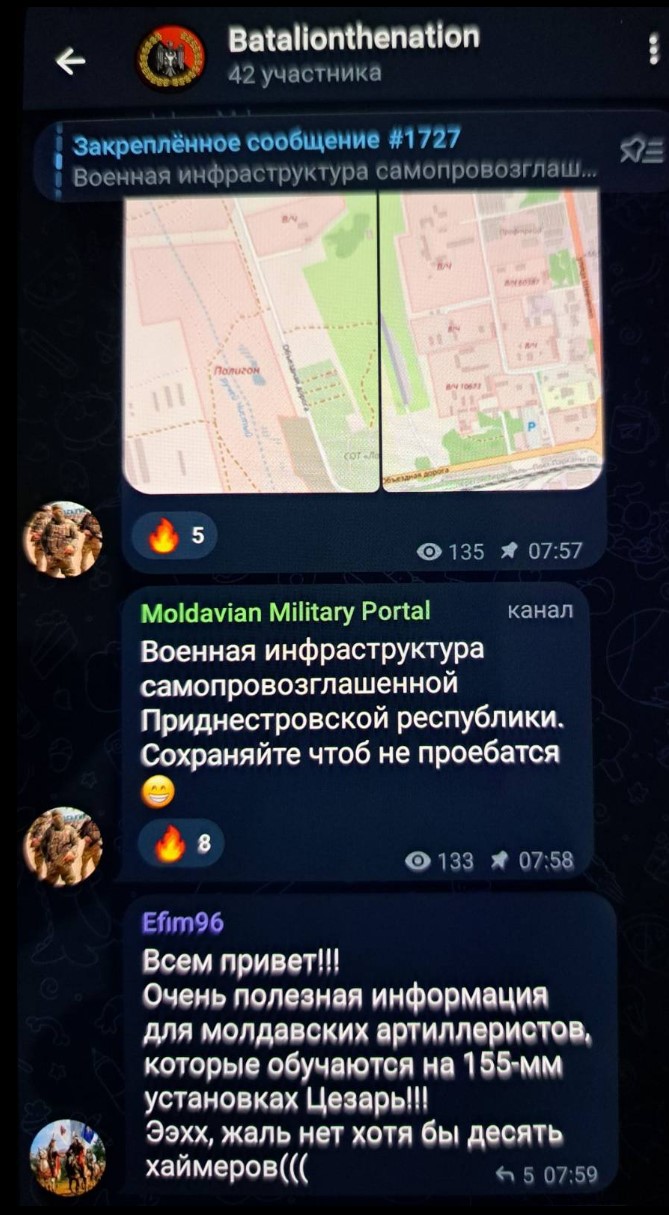
In another conversation, Țapu leaves a provocative comment regarding a possible armed attack on the Transnistrian region.
The Moldavian Military Portal channel publishes two photos accompanied by the following comment: “Military infrastructure of the self-proclaimed Transnistrian republic. Save it so you don’t get into trouble“.
Immediately, Țapu responds: “Hello everyone! Very useful information for Moldovan artillerymen who are training on 155 mm Caesar installations! Eh, it’s a pity there aren’t even ten HIMARS“.
The information and discussions held were subsequently reported to external coordinators, and Țapu and his colleagues requested instructions on how to continue data collection.
Recruitment attempts for provocations and sabotage
The most serious element is the attempt to identify individuals willing to participate in illegal actions. In the analyzed conversations, scenarios of provocation in relation to the soldiers from the Transnistrian region, as well as sabotage actions, would have been discussed.
In some cases, the infiltrated users would have discussed setting fire to cars in the European Union space, including on Romanian territory, offering financial rewards depending on the mission accomplished.
Russian social networks used for selection
The suspect profiles were also connected to VK. The analysis of these indicates that many of them were initially created by citizens of the Republic of Moldova. However, Russian citizens later joined these networks and the online community to monitor discussions, collect information, and identify vulnerable or influenceable individuals.
According to the analyzed data, they tried to exploit existing conversations to provoke tensions, stimulate radical actions, and generate destabilizing situations.
This case highlights the way in which local online communities can become targets of influence operations and the selection of individuals for provocations. Infiltration into seemingly patriotic groups allows external actors to obtain information about society, identify vulnerable individuals, and create challenges meant to destabilize the security situation in the region.