
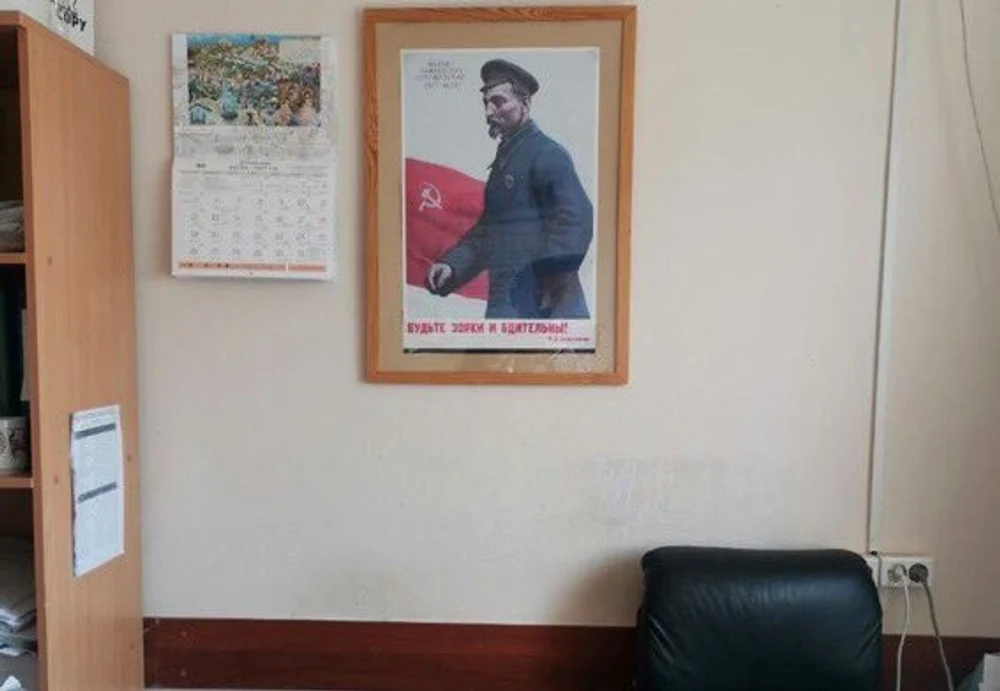
More than three decades after the disappearance of the Soviet Union, many of the authoritarian institutions and reflexes created during the Soviet era continue to influence political life in the former USSR republics. According to the Moscow Times, the persistence of this legacy cannot be explained solely by political leaders or the geopolitical context, but also by the lack of a real confrontation with the repressive past.
Leila Nazgül Seiitbek, president of the Freedom for Eurasia (FFE) organization, a human rights organization based in Vienna, focused on autocracy, corruption, and transnational repression in the post-Soviet space, starts the analysis from a personal experience: on social networks in Central Asia she encountered a quote attributed to Felix Dzerzhinsky, the founder of the Soviet secret police CEKA and one of the architects of the Red Terror.
“The fact that you do not have a criminal record is not your merit, but our failure.”
Although there is no evidence that Dzerjinski ever uttered these words, the idea reflects the philosophy he openly expressed. “We represent organized terror and this must be stated very clearly,” he declared.
More important than the authenticity of the quote is the fact that it continues to be displayed in the headquarters of the police and security services in some post-Soviet states, a sign that certain conceptions about the role of the state and the power institutions have survived the fall of the USSR.
The optimism after 1991 and its limits
After the dissolution of the Soviet Union in 1991, many Western states assumed that the former Soviet republics would naturally evolve towards democracy.
The initial developments seemed to confirm this expectation: elections were held, new constitutions were adopted, and the planned economies began the transition to a market economy. The symbols of the Soviet regime gradually disappeared from the public space.
The author argues that this optimism overlooked the resistance of institutions built during the Soviet era and the continuity of administrative and security personnel.
Read more HERE