


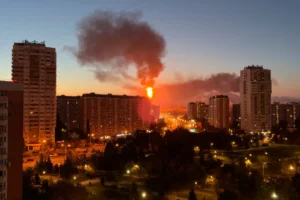


Russia is intensifying its sabotage operations and other hostile actions in NATO states, in a campaign that Western officials and analysts say aims to weaken support for Ukraine and divide the alliance.
From drone incursions and attacks on railway infrastructure to sabotage attempts and threats, Europe is trying to find a response strategy that will deter Moscow without provoking a military escalation. Experts warn that simply protecting the infrastructure is not enough and call for concrete measures against the networks organizing these operations, The New York Times points out in an analysis.
Russia is intensifying its sabotage operations and hybrid warfare campaign against NATO states, trying to weaken European support for Ukraine and provoke divisions within the alliance.
While European officials do not consider a large-scale Russian invasion of a NATO state imminent, they are faced with another problem: how can they respond to increasingly numerous and dangerous attacks without falling into the trap of uncontrolled escalation? The stakes are all the higher as an incident, whether intentional or accidental, could cause significant loss of human life and would force Western governments to make quick decisions in an extremely tense context.
Moscow “is trying to undermine the will to support Ukraine and, in a broader sense, to change the security architecture of Europe,” stated David Cattler, a former official of NATO’s intelligence services, who is currently working at the Center for European Policy Analysis, a think tank based in Washington.
From an operational standpoint, he explained, Russia uses means “difficult to attribute, which it considers significant enough to matter, but small enough not to trigger” a large-scale war. The debate among European officials is currently focused on how the targeted states should respond and on the possibility of countering Russian operations even on Russian territory.
The first reaction should be to keep calm and avoid a trap in which Moscow could draw Europe in by provoking disproportionate reactions. However, caution should not turn into passivity, warned Camille Grand, former high-ranking NATO official. Russia’s campaign continues a known pattern, he said, but “the increase in the number and nature of events is significant, as is their dangerous character.”
Read more HERE


