



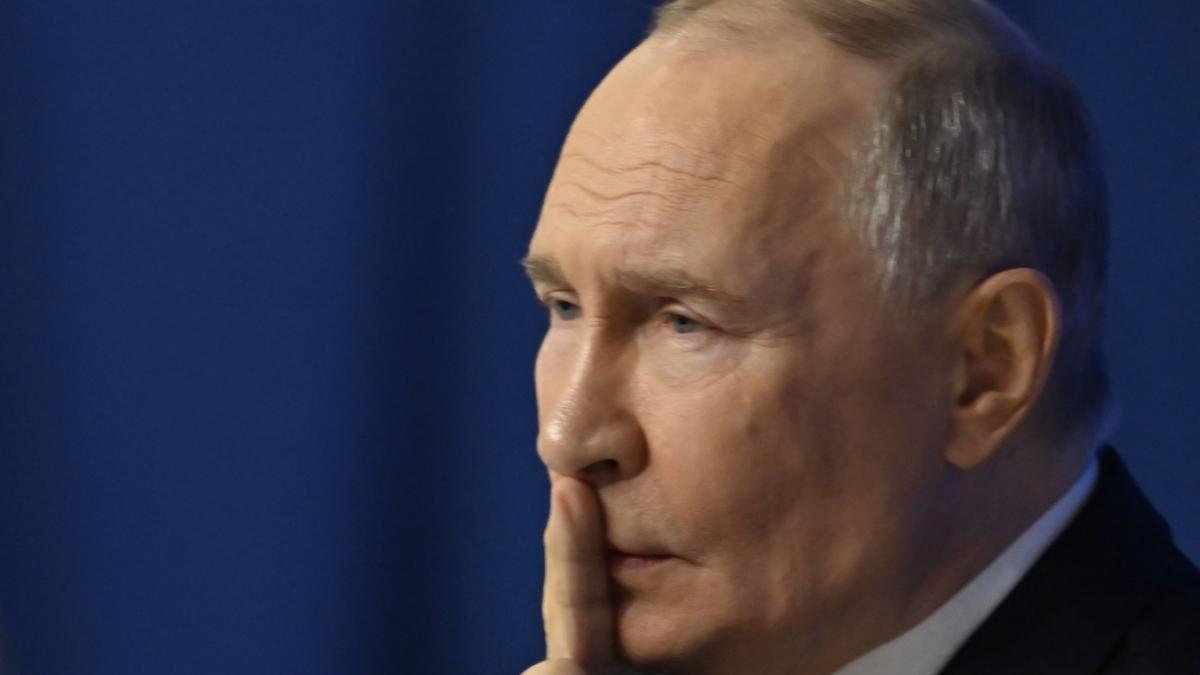
Regimes that go to war usually try to convince their population that the decision to fight is justified and that the sacrifices will remain bearable. In this spirit, Russian President Vladimir Putin has tried for over four years to protect the residents of Moscow from the consequences of the invasion of Ukraine.
Festivals and public events continued almost unhindered, and the effects of the shortage of goods were limited in the capital. Although over a million Russian soldiers were killed or injured, the Kremlin largely avoided massive recruitments from Moscow and Saint Petersburg, preferring to send to the front people from the remote regions of the Russian Federation.
However, this strategy is becoming increasingly difficult to maintain. At the beginning of the month, the annual parade dedicated to the victory over Nazi Germany was unusually short and lacked much of the usual military equipment, amid fears of possible Ukrainian drone attacks. Just a few days later, Ukraine launched hundreds of drones and cruise missiles at Moscow, in a spectacular counterattack following Russian bombings on Kiev and other Ukrainian cities.
The attack demonstrated that the air defense systems around the Russian capital can be penetrated. The narrative built by Putin — according to which the conflict would be just a “special military operation”, without direct impact on the elites and middle class in Russia — begins to crumble. Any illusion that Moscow can remain outside of the war seems to have disappeared, writes The Atlantic.
Wars change their course when one of the parties loses control over the events.
History shows that wars change their course when one of the parties loses control over events and can no longer convince the population that victory is near. A frequently cited example is the Tet Offensive of 1968, when attacks launched by North Vietnam and the Vietcong changed the perception of the American public opinion on the war, even though the offensive represented a military failure for the attackers.
An even more relevant parallel can be found in World War II Japan. After the attack on Pearl Harbor, Japanese propaganda presented military successes as decisive victories and insisted that the war against the United States was progressing favorably. Even after the Battle of Midway in June 1942 — a major turning point, in which Japan lost four aircraft carriers — the authorities continued to conceal the reality and disseminate false information about the situation on the front.
Details, HERE