
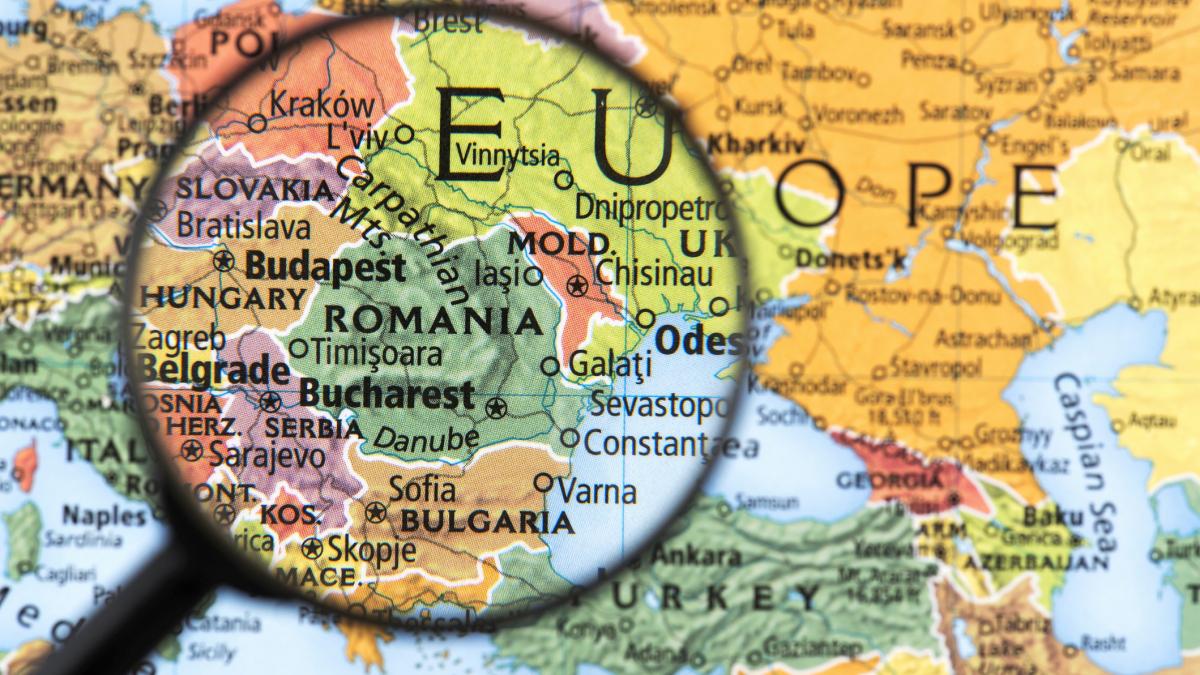
The Atlantic Council has made a radiography of Europe’s situation in the hybrid war waged by Putin’s Russia against it, analyzing who could be the Kremlin’s newest victim, given that Western intelligence services information is that Putin actually plans a at least limited attack on a NATO country.
On August 25, the CIA director, John Ratcliffe, went to Moscow on an unannounced visit. One of the reasons given for the trip was to warn Russian leaders not to attack NATO allies. Russia has long been waging a hybrid war in Europe, through acts of sabotage, disinformation, and cyber attacks.
Moreover, it continues its war against Ukraine, a conflict whose effects have already spread to other countries, through drones and missiles. However, Ratcliffe’s unexpected visit has sparked new concerns and has been compared to Bill Burns’s trip to Moscow, who was then the director of the CIA, shortly before Russia launched the invasion.
Romania, a possible target?
For Romania, aggressions from Russia are no longer a hypothetical threat, writes Alex Șerban, the director for Romania at the Atlantic Office.
Since Russia’s invasion of Ukraine, drones have repeatedly penetrated Romanian airspace or fallen on Romanian territory, including near inhabited areas, while the broader war in the Black Sea has brought naval mines, attacks on civilian ships, and increasing risks to the maritime and energy infrastructure near the country. (…)
Republic of Moldova
The Republic of Moldova is not a stranger to Russian aggression, nor to the threat of the Kremlin’s war expansion, writes Shelby Magid, the Deputy Director of the Eurasia Center at the Atlantic Council.
Although the leaders in Chisinau rightly distinguish between the scale of the tragedy and the injustice caused by Russia in neighboring Ukraine and the threat facing Moldovan citizens, there has long been an awareness that the Republic of Moldova is also in the Kremlin’s sights.
Russia has attempted to undermine the European path of the Republic of Moldova through extensive hybrid warfare campaigns, while simultaneously using the war in Ukraine to increase pressure on the country and test its vulnerabilities. This becomes increasingly evident through the repeated violations of the country’s airspace by Russian drones and the intensification of Russia’s attacks on infrastructure at the border between Ukraine and the Republic of Moldova.
For many years, the Republic of Moldova has been facing pressures exerted by Russia through a wide range of means: the Russian military presence in the separatist region of Transnistria, massive funding from Russia interfering in Moldovan elections, disinformation and political financing aimed at diverting the country’s course towards the EU, pressures in the energy sector, and now also the increasingly direct effects of the war in Ukraine.
Read more HERE