


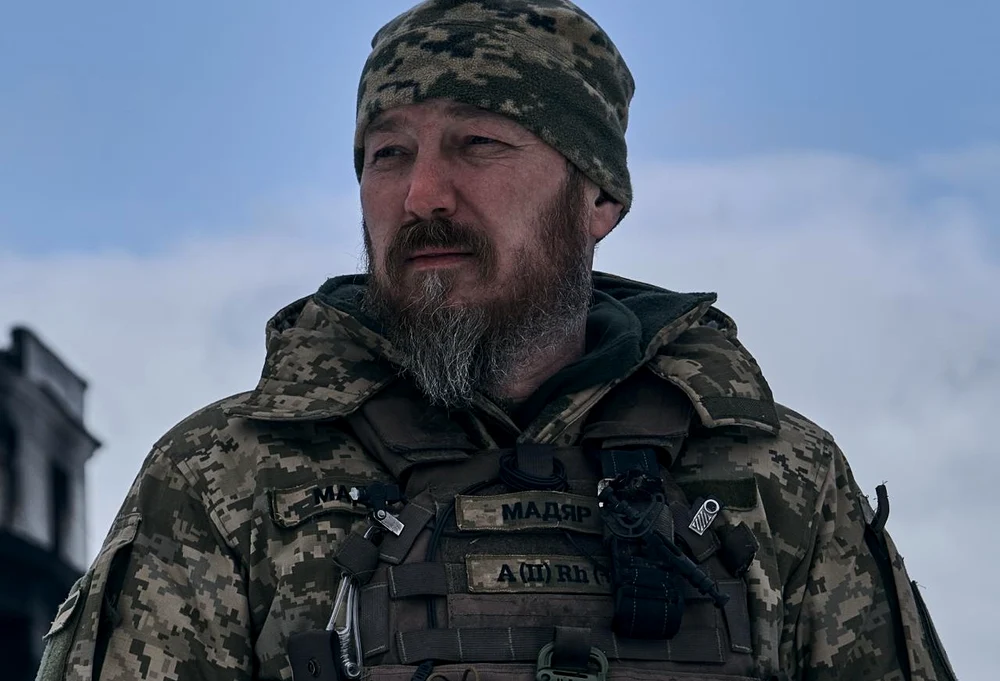
Robert Brovdi, the commander of the Unmanned Systems Forces of the Ukrainian army, known by the call sign “Madiar”, has listed five conditions that he considers necessary for ending the war with Russia.
Brovdi presented his evaluation on August 9, precisely on the day he turned 51 years old, in a post on his Telegram channel.
According to the Ukrainian commander, the war will end when Russia no longer has the ability to finance the conflict, to produce weapons, to protect its infrastructure behind the front, and to send new people to the battlefield.
The fifth condition, Brovdi argues, is reducing the Kremlin’s ability to create an impression of stability and control within the country.
“The only acceptable strategy is the systematic and asymmetric exhaustion of Russia, through the successive dismantling of these five pillars of its war machine”, wrote the commander.
“Russia does not intend to stop”
Brovdi warned that Russia does not intend to stop the war and that, in his opinion, the upcoming period will be even more difficult for Ukraine.
He believes that Ukraine’s response should be based on what he calls “intelligence and mathematics”, that is, on the efficient use of resources, technology, and asymmetric advantages.
Among the strong points of Ukraine, the commander of the Unmanned Systems Forces listed the intellectual capacity, technology, the desire for freedom and historical justice, as well as the involvement of society.
“The war has returned to Russian territory”
Brovdi also stated that the war has already reached Russian territory.
According to this, at the beginning of the large-scale invasion, Moscow estimated that it could occupy Kiev in three days. Currently, however, Ukrainian attacks can reach targets located on Russian territory.
The commander concluded his message with the statement: “We will resist. Moscow will fall. We will nourish Crimea again and rebuild it.”
Brovdi previously argued that long-range Ukrainian strikes should contribute to the exhaustion of Russia from within and make the war increasingly costly for Moscow.
In this strategy, he particularly emphasizes attacks on the Russian oil infrastructure, which generates revenue for war funding, as well as on military targets located behind the front lines.