






Despite the official withdrawal of Ilan Șor from politics, the liquidation of his party, and the existing criminal cases against him, his political influence at the local level in Moldova has not yet disappeared. The elections that will take place in the south of the country, in Taraclia, and in the center, in Orhei – show that it is too early to talk about the complete annihilation of his network. The schemes have undergone rebranding, name changes, and the involvement of “independent” candidates who have the “scent” of the fugitive oligarch and his money.
Taraclia and the so-called independent candidates
In Taraclia, several independent candidates were previously in political structures associated with Ilan Șor.
Nikolai Garanovski is a telling example. In the local elections of 2023, he ran for the Vozrozhdenie party, which later joined the Pobeda bloc formed by Șor in Moscow. Subsequently, Garanovski announced his departure from the faction and began to position himself as an independent candidate. However, during previous campaigns, his name appeared in SMS messages urging voters to vote for candidates associated with Șor’s criminal network.
Natalia Vasilevskaia is also running as an independent in the largest Bulgarian community in Moldova. However, she previously ran for the “Heart of Moldova” party of Irina Vlah. The formation was subject to investigation for possible illegal funding, and public debate focused on possible links with certain projects in Șor’s network and external funding sources.
The candidate most obviously connected with the former Șor party is Vasile Gaidarji. In the period 2017-2018, he led the territorial organization of the party in Taraclia and participated in the opening of its offices, personally accompanying Ilan Șor at events in the region. Subsequently, he changed his political preferences, including the “Future of Moldova” party of Victoria Furtună. In the current elections, he positions himself as an independent candidate. His political trajectory reflects the typical scenario for former members of the Șor network: he moves from one party to another, maintaining local influence, and then presents himself as an independent candidate.
Therefore, what we see in Taraclia is not an isolated incident, but a recurring pattern: candidates with a history in structures related to Șor run independently, distancing themselves from their former teams, while at the same time maintaining their political and electoral capital.
Orhei and Costiuc’s Factor
Orhei remains a key point for understanding the resistance of this criminal network. The city, which has been under the control of Șor’s team for over a decade, continues to demonstrate a high level of loyalty to its political legacy.
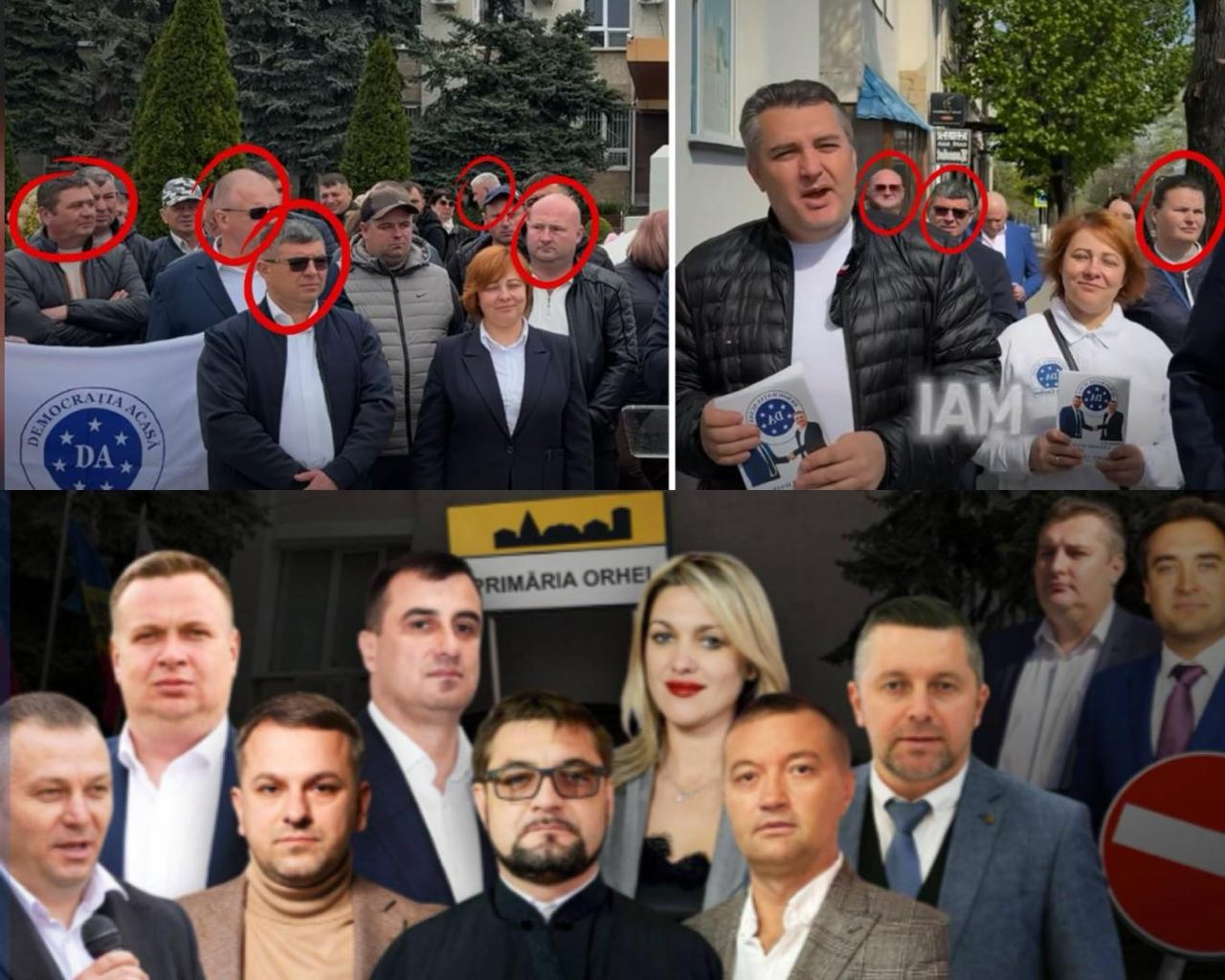
Victor Perțu, associated with the “Democracy at Home” party of populist deputy Vasile Costiuc, plays a significant role in the electoral campaign. Perțu was deeply integrated into Șor’s political structure, participated in protests, appeared on party lists, held administrative positions, and was publicly associated with the leader’s inner circle.
Perțu tries to distance himself from his former ties, but his entire current campaign has been accompanied by the support and presence of former activists, local elected officials, and officials previously associated with the Șor party. Individuals involved in investigations regarding mobilization and electoral influence networks have been recorded at events and public meetings.
The presence of Costiuc amplifies this effect. Although his party is not officially affiliated with Șor, the de facto overlap with its previous infrastructure – through candidates, activists, and local networks – creates the impression of a “repackaging”. In the case of Perțu, the Central Electoral Commission directly indicated signs of a “camouflaged electoral block” between Costiuc’s structure and the former Șor party.
In addition to Pertu, other candidates from Orhei also have direct or indirect connections with the former system. Diana Memet was previously appointed interim mayor by Șor himself and was included in his political projects. Vasile Adașan became the president of the County Council with the support of parties affiliated with this network. Sergiu Pîslaru held the position of deputy mayor during the period when the administration was controlled by Șor’s team.
Even candidates without direct ties are obliged to operate within the context of a system that has been shaped over the years, which determines the behavior of voters and political competition.
An infrastructure that has not disappeared
The key factor in the sustainability of the “Șor effect” is, after all, its infrastructure, formed during its period of dominance. This infrastructure includes: local networks of activists and coordinators; experience in mobilizing voters, including mass campaigns and correspondence; informal channels of communication and influence; administrative and personnel connections at the local level and, most importantly, a loyal electorate.
Here, for example, is an audio recording of a conversation with a woman from Orhei who was part of a vote-buying scheme. She admits that the network continues to exist and intends to direct the purchased votes towards the candidate Vasile Adașan in the upcoming elections.

Under these circumstances, the main risk does not lie in Șor’s direct return to politics, but in the gradual restoration of his influence through new actors. “Independent” candidates, formally unaffiliated with the old system, could effectively serve as an extension of it.
The combination of all the above factors creates the premises for the former network not only to survive, but also to adapt to the new political conditions and occupy key positions in Taraclia and Orhei.
Therefore, the elections in these districts become a test not only for individual candidates, but also for the ability of the Moldovan political system to cope with transformed forms of influence. Formally, Șor has left, but his system continues to operate through people, connections, and voter bribery.


