

Russia will significantly increase its defense spending in 2027, while funding for several civilian areas will be reduced. According to calculations by Alfa-Bank analysts, budget expenditures not allocated to the military, armament production, power structures, or interest payments on public debt will drop next year to about 9% of GDP, the lowest level since 2005.
For comparison, the proportion of these expenses was over 10% of GDP in 2025 and 2026, and about 12% during the 2023-2024 period. In 2021, before the large-scale invasion of Ukraine, they accounted for approximately 13% of GDP.
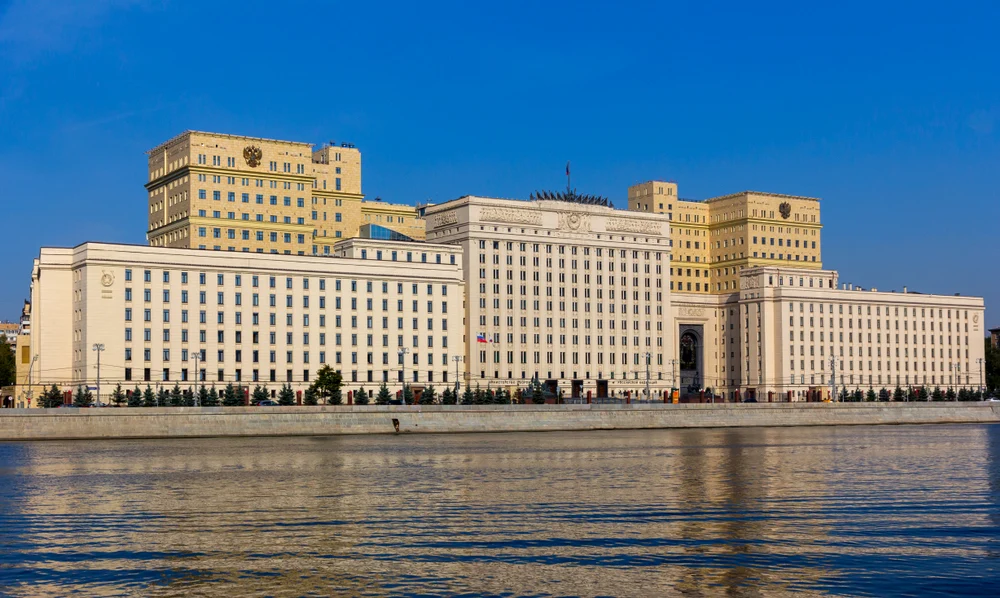
According to Reuters, the budget project for 2027 provides for defense expenditures of 17.1 trillion rubles, equivalent to about 35% of total federal expenditures. The amount is approximately 27% larger than initially projected and represents the highest level since the beginning of the war in Ukraine, writes The Moscow Times.
Moscow is preparing reductions in several civil sectors
To support the increase in military spending, Moscow is preparing cuts in several civil sectors. The funding of social policies, which includes pensions, allowances, and other forms of support, is expected to decrease by 7%, while education expenditures will be reduced by 6%, and health expenditures by 6.8%, according to documents analyzed by Reuters. Expenditures for the economy, which include infrastructure and support for certain sectors, are also expected to decrease.
In parallel, Russia will increasingly resort to borrowing to finance the budget deficit. Documents analyzed by Reuters indicate a 43% increase in the borrowing program for 2027, up to about 7.7 trillion rubles. Public debt is estimated to reach 21.7% of GDP next year, exceeding the 20% threshold previously considered by Russian authorities as a safe one.
According to data cited by Reuters, the interest on public debt is expected to represent approximately 9.4% of total budget expenditures by 2027. Thus, the Russian budget reflects an increasingly prioritized emphasis on military and security spending, to the detriment of civilian sectors.
Economists quoted by the international press warn about the long-term effects of this policy. Aleksandr Koliandr, director for Europe within the Eurasia Group, described the situation as a “mortgaging of the future” for the geopolitical objectives of the present, while Alexandra Prokopenko, researcher at the Carnegie Russia Eurasia Center, believes that tax increases, inflation, and sanctions, in combination with the budget structure, will put pressure on the Russian economy.
“It will be a slow decay (…) a continuous deterioration, similar to what our parents’ generation witnessed in their time. You still remember the times when life was good and new infrastructure was being built, but now everything around you is a bit dusty, starting to degrade, and daily life is gradually getting worse,” Koliandr said.