

Experts warn that Vladimir Putin could test NATO’s response capacity through a “large-scale hybrid attack” in the Baltic region, at a time when incidents attributed to Russia are multiplying along the eastern flank of the Alliance.
Russia is intensifying its pressures on neighboring states, in an attempt to get NATO to reduce its support for Ukraine. However, analysts warn that the scale of the threat could be greater and that a coordinated attack could test European solidarity and the unity of the Alliance.
Edward Lucas, founder of the Baltic Internal Security Centre, told The Sun that allies have long warned about Vladimir Putin’s imperial ambitions and Moscow’s intention to recreate, in some form, the old Soviet sphere of influence.
“We were very pleased in this regard. Now we are receiving alarm signals. And some are alarming,” said Lucas.
He added that the threat is not limited to Eastern Europe.
“The front line passes right through the middle of Europe and reaches here, in Great Britain”, he said.
New incidents in the Baltic region
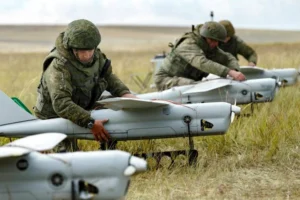
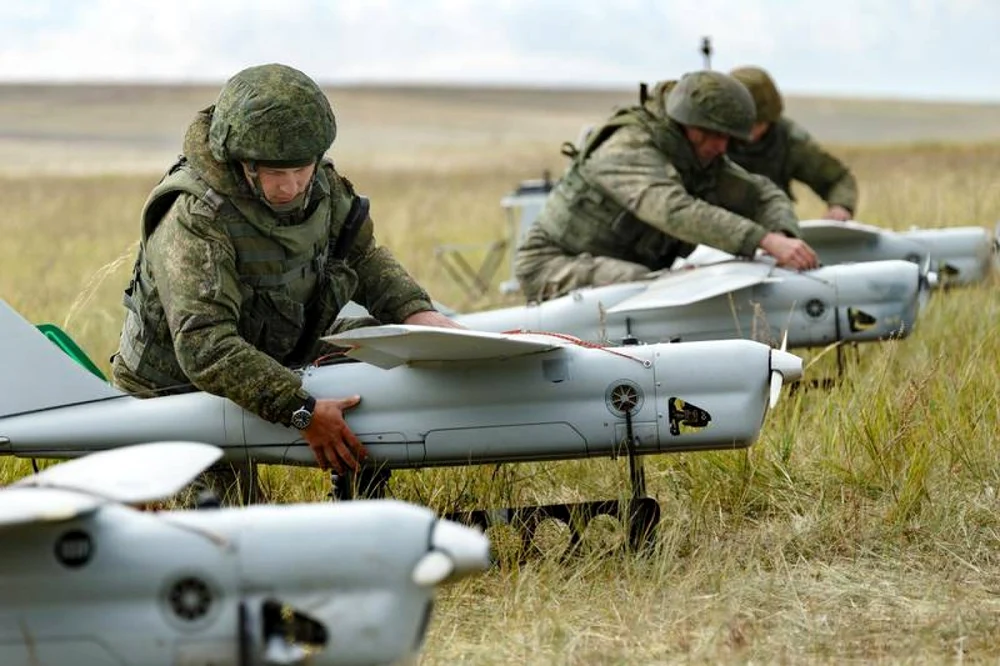
NATO planes were lifted off the ground to intercept a drone in Lithuania, following a new incident suspected to be linked to a Russian incursion into the airspace of the Baltic states.
Just a few hours earlier, another incident had taken place in the Baltic Sea: a Russian frigate had launched signal rockets near a Danish military helicopter, and another drone had landed on a beach in Poland.
The three incidents have fueled concerns about military activity and the pressure exerted by Russia on Latvia, Lithuania, and Estonia.
Last week, Moscow threatened with a “devastating” response after NATO activated its air policing mission in the Baltic region, in an attempt to discourage drone incursions near Estonia.
Military analyst Michael Clarke told The Sun that, in his opinion, Estonia is the most vulnerable of the three Baltic states.
“An attack on Estonia in the next two months is entirely plausible, and the forces there are on high alert for such a scenario”, Clarke said.
The United Kingdom maintains in Estonia a rapid reaction force composed of over 1,000 military personnel, equipped with advanced military technology.
In July, the British Ministry of Defence announced a new roadmap for military cooperation between the United Kingdom and Estonia, aimed at strengthening bilateral cooperation and NATO’s eastern flank.
“We are heading towards a certain type of military confrontation”, Clarke warned.
Read more HERE